
Everything About the Ragdoll Cat

Origin and History of the Ragdoll Cat
The Ragdoll Cat is one of the most affectionate and recognizable feline breeds in the world, known for its docile temperament, striking blue eyes, and tendency to go limp when picked up — the very trait that inspired its name.
The breed originated in California, USA, during the 1960s. A breeder named Ann Baker developed the Ragdoll through selective breeding, starting with a long-haired white female cat named Josephine. Josephine was known for her unusually calm demeanor and relaxed behavior when handled. Baker noticed that her kittens inherited this distinctive temperament, along with their semi-long silky coats and striking blue eyes.
To strengthen these traits, Baker bred Josephine’s offspring with other carefully selected long-haired domestic cats, including Burmese, Birman, and Persian-type cats. The result was a new breed that combined beauty, composure, and affectionate personality in one package.
By the late 1960s, Ann Baker had trademarked the name “Ragdoll” and established one of the earliest formal breeding programs in North America. However, disagreements over management led other breeders to branch out, most notably Denny and Laura Dayton, who helped promote the breed’s recognition in the wider cat-breeding community.
During the 1980s and 1990s, the Ragdoll Cat gained international recognition by major cat associations including The International Cat Association (TICA), Cat Fanciers’ Association (CFA), and Fédération Internationale Féline (FIFe).
Today, the Ragdoll Cat is celebrated for its calm, people-oriented temperament and elegant beauty. It is one of the most popular indoor cat breeds in the world — cherished for being as affectionate and loyal as a dog, yet as graceful and independent as a cat.

Positive Traits of the Ragdoll Cat
Trait | Description |
Exceptionally Affectionate | Ragdolls are known as “puppy-cats” because they crave human companionship. They love following their owners around and often greet them at the door. |
Gentle Temperament | This breed is calm, patient, and tolerant. They rarely use claws aggressively, even when handled by children. |
Highly Social | Ragdolls enjoy being part of the family and dislike isolation. They adapt easily to multi-pet households and family environments. |
Laid-Back Personality | Their signature trait — going limp when picked up — reflects their trust and easygoing nature. They are ideal for people seeking a peaceful companion. |
Good with Children and Elderly | Their gentle disposition makes them perfect for families with kids or older adults. They enjoy being cuddled and rarely scratch. |
Loyal and Trusting | Ragdolls often follow their favorite person from room to room and sleep beside them. Their loyalty is comparable to that of dogs. |
Low Aggression | Unlike many active breeds, Ragdolls are non-territorial and rarely display aggression toward people or pets. |
Adaptable to Routine | They adjust well to household schedules and environments. Their emotional stability makes them excellent indoor pets. |
Minimal Vocalization | Ragdolls communicate softly with gentle meows or purrs. They rarely meow excessively, preferring calm interaction. |
Elegant Appearance | Their long, soft coat, sapphire-blue eyes, and color-point patterns give them a luxurious and majestic look admired worldwide. |
Negative Traits of the Ragdoll Cat
Trait | Description |
Overly Dependent on Humans | Ragdolls form deep emotional attachments and dislike being left alone. Long hours of isolation can cause stress, sadness, or behavioral withdrawal. |
Low Independence | They rely heavily on human interaction and are not ideal for owners who travel frequently or work long hours away from home. |
Limited Street Awareness | Due to their trusting and calm personality, Ragdolls are unsuitable for outdoor roaming. They rarely sense danger and may not defend themselves well. |
Slow Reflexes | Compared to active breeds like Bengals or Abyssinians, Ragdolls have slower reaction times and prefer calm over agility. |
High Grooming Maintenance | Their long, silky fur requires regular brushing to prevent tangles and matting. Neglecting grooming may lead to skin irritation or shedding. |
Late Maturity | Ragdolls develop slowly — they often take up to 3–4 years to reach full physical and emotional maturity. |
Risk of Overeating | Because of their calm nature, Ragdolls can become overweight if fed freely or without portion control. |
Vulnerable to Stress | Sudden changes in environment, noise, or family routines can make them anxious or withdrawn. |
Possible Genetic Health Concerns | Like many purebred cats, Ragdolls are predisposed to certain hereditary conditions, particularly Hypertrophic Cardiomyopathy (HCM) and Bladder Stones. |
Not a High-Energy Breed | Owners looking for an active or athletic cat may find Ragdolls too passive or relaxed for their expectations. |
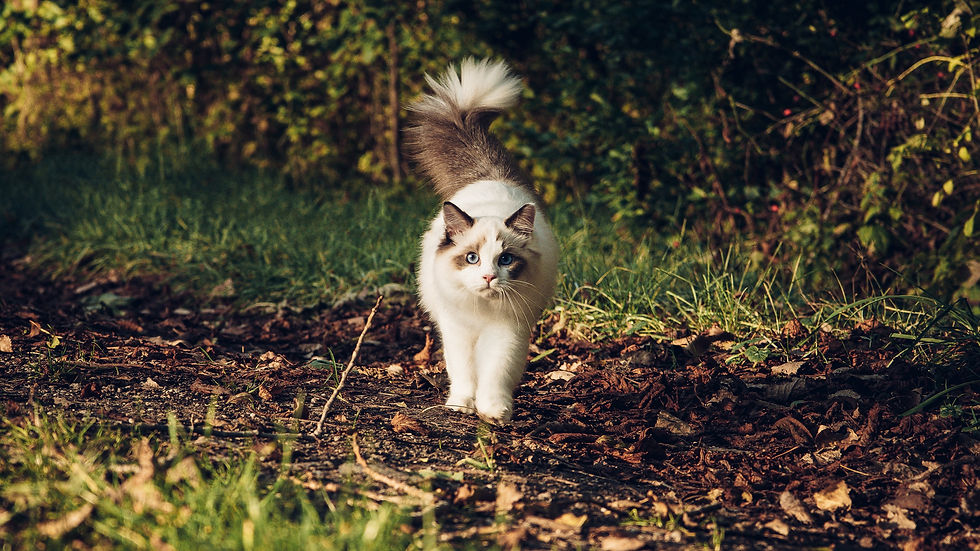
Physical Characteristics of the Ragdoll Cat
The Ragdoll Cat is a large, graceful, and luxurious breed, combining soft lines with a robust frame. Its appearance is defined by size, symmetry, and the captivating contrast between its silky coat and piercing blue eyes.
Body Type and Size:Ragdolls are among the largest domestic cat breeds. Males typically weigh between 6–9 kg (13–20 lbs), and females between 4.5–6.5 kg (10–14 lbs). They possess a semi-longhaired coat, a broad chest, and a muscular, rectangular body. Despite their substantial size, their demeanor is soft and gentle.
Head and Face:The head is broad and wedge-shaped, with full cheeks and a slightly rounded muzzle. The nose has a gentle dip, and the chin is well-developed, contributing to a balanced facial profile. The overall expression of a Ragdoll is sweet and serene, reflecting its calm temperament.
Eyes:One of the Ragdoll’s most distinguishing features is its vivid blue eyes — large, oval, and slightly slanted. The eye color ranges from light aquamarine to deep sapphire, depending on coat pattern and genetics. Their gaze conveys warmth, trust, and a gentle curiosity.
Ears:Medium-sized ears with rounded tips are set wide apart and slightly tilted forward. The inner ear often has tufts of fur, complementing the breed’s soft, elegant appearance.
Coat and Texture:The coat is silky, soft, and semi-long, lying close to the body with little undercoat, which makes it surprisingly resistant to matting compared to other long-haired breeds. The fur is densest around the neck and chest, forming a subtle “ruff” that enhances their regal look.
Color Patterns:Ragdolls are born completely white and gradually develop their color pattern as they grow. Recognized color variations include:
Seal Point – Dark brown points with cream body.
Blue Point – Grayish-blue points with pale silver body.
Chocolate Point – Warm milk-chocolate tones.
Lilac Point – Soft lavender-gray points.
Red (Flame) Point – Reddish points with creamy base.
Cream Point – Light ivory shades.
Tortie or Lynx Patterns – Combinations of stripes or patches on points.
Tail and Paws:The tail is long, plumed, and tapers elegantly. It balances the large body and adds fluidity to their graceful movement. Their paws are large and round, often with tufts of fur between the toes, providing insulation and softness.
Movement and Posture:Despite their size, Ragdolls are fluid and graceful in movement. They walk with a gentle sway, often carrying their tails upright as a sign of confidence and affection.
Overall Impression:The Ragdoll Cat embodies harmony — powerful yet peaceful, large yet delicate. Every aspect of its body, from the plush coat to the tranquil eyes, reflects the breed’s calm and affectionate nature. It’s not just a cat of beauty but a living embodiment of serenity and companionship.
Character and Behavior of the Ragdoll Cat
The Ragdoll Cat is often called the “gentle giant” of the feline world. Renowned for its affectionate, calm, and people-oriented personality, the breed is one of the most loving and docile companions a cat lover can own. Despite its luxurious appearance, the Ragdoll is far from aloof — it thrives on human interaction and forms powerful emotional bonds with its family.
Temperament and Personality:Ragdolls are calm, patient, and trusting by nature. Their signature trait — going limp when picked up — is not just a physical quirk but an expression of deep relaxation and trust. They are rarely aggressive, even when startled, and their even-tempered disposition makes them perfect for households seeking tranquility.
Affection and Human Bonding:The Ragdoll Cat is extremely affectionate. It loves being around people, following them from room to room, and greeting them at the door. Many Ragdolls choose to sleep beside or on their owners, showing unwavering loyalty. They crave companionship but in a gentle, unobtrusive way — they simply want to be near the people they love.
Social Behavior with Other Pets:Ragdolls adapt remarkably well to multi-pet households. They coexist peacefully with other cats and even with friendly dogs. Because they are non-aggressive and slow to assert dominance, Ragdolls rely on calm companionship rather than territoriality.
Behavior with Children:Few cat breeds are as suitable for children as the Ragdoll. Their patience allows them to tolerate handling and play as long as it remains gentle. They rarely bite or scratch in defense and prefer retreating to a quiet spot if overstimulated.
Emotional Stability:Ragdolls are emotionally steady and rarely anxious, as long as they feel secure in their environment. They dislike loneliness or neglect but adapt beautifully to structured, calm households. Loud or chaotic environments can cause them to withdraw temporarily, but they recover quickly once peace returns.
Activity and Interaction:Though not hyperactive, Ragdolls enjoy interactive play sessions and mild exercise. They are intelligent and responsive but tend to conserve energy rather than expend it recklessly. Their favorite activities include chasing feather wands, gentle fetch games, or simply lounging in a sunny window.
Unique Behavioral Traits:
Many Ragdolls are highly empathetic, seeming to sense their owners’ emotions and staying close during moments of sadness or illness.
They are often described as “dog-like” due to their loyalty and tendency to greet their owners at the door.
Some develop a habit of softly meowing or chirping as a way to communicate affection rather than to demand attention.
Summary:The Ragdoll Cat combines all the traits of an ideal companion — loving, calm, intelligent, and endlessly patient. It is not just a pet but a source of serenity and companionship, making every household feel warmer and more balanced.
Common Diseases of the Ragdoll Cat
Disease | Description | Risk Level |
Hypertrophic Cardiomyopathy (HCM) | The most common inherited heart disease in Ragdolls. It causes thickening of the heart muscle, potentially leading to heart failure. Regular echocardiograms and genetic testing (HCM gene test) are crucial. | High |
Polycystic Kidney Disease (PKD) | A genetic condition causing fluid-filled cysts in the kidneys, leading to renal failure over time. Screening in breeding lines prevents transmission. | Medium |
Calcium Oxalate Bladder Stones | Ragdolls are prone to urinary crystals and stones, which can cause pain and blockage. Increased water intake and wet food help prevent recurrence. | High |
Feline Infectious Peritonitis (FIP) | A viral disease triggered by a mutated coronavirus. It is not hereditary but more common in cats with weaker immune systems. | Medium |
Obesity | Due to their calm lifestyle, Ragdolls are prone to weight gain. Controlled feeding and light exercise are essential to prevent metabolic disorders. | High |
Periodontal Disease (Gingivitis/Stomatitis) | Dental inflammation resulting from plaque accumulation. Regular brushing and dental checkups help maintain oral health. | Medium |
Arthritis (Age-Related) | Large body size and limited activity may cause joint stiffness in older cats. Omega-3 supplements and joint protectants like glucosamine support mobility. | Medium |
Anesthetic Sensitivity | Ragdolls may have mild sensitivity to anesthesia due to slower metabolism. Always inform veterinarians to adjust dosages accordingly. | Low |
Respiratory Infections | Mild upper respiratory infections can occur, particularly in kittens. Vaccinations and proper hygiene reduce risk significantly. | Low |
Allergic Dermatitis | Occasional skin allergies may appear due to food or environmental triggers. A hypoallergenic diet and flea control usually resolve symptoms. | Low |
Health Overview: The Ragdoll Cat is generally healthy when bred responsibly, but attention to heart and urinary health is essential. Regular vet visits every 6–12 months, balanced nutrition, and hydration through wet food help maintain optimal health and prevent long-term complications.
Intelligence and Learning Ability of the Ragdoll Cat
The Ragdoll Cat possesses a quiet yet impressive intelligence. Unlike more impulsive or hyperactive breeds, its intelligence is expressed through observation, emotional awareness, and consistency rather than overt problem-solving. The Ragdoll learns routines quickly, understands human cues, and responds calmly to structured environments.
Learning Style and Behavior:Ragdolls are routine-driven learners. They prefer stability and repetition over sudden changes. Once they understand household patterns — feeding times, door sounds, or daily activities — they anticipate events with remarkable accuracy. This cognitive predictability gives them a strong sense of comfort and security.
Memory and Adaptation:Their memory is excellent, especially regarding people, voices, and places. Ragdolls easily remember familiar faces and will greet returning family members after long absences. They also remember rules — if trained not to jump on counters or scratch furniture, they rarely repeat the behavior.
Problem-Solving Intelligence:While not as mischievous as Bengals or Siamese cats, Ragdolls still display logical reasoning. They can open lightweight doors, find hidden toys, or locate their favorite resting spots intuitively. However, their intelligence is tempered by patience rather than impulse.
Emotional Intelligence:Perhaps the most defining aspect of Ragdoll intelligence is their empathy. These cats are exceptionally tuned to human emotions. They sense sadness, stress, or illness and will often stay close, purring softly as comfort. This emotional understanding deepens the bond between cat and owner, making Ragdolls seem almost human in sensitivity.
Trainability:Ragdolls respond very well to positive reinforcement — especially verbal praise and soft rewards. They can learn commands like come, sit, or fetch when taught patiently. Their trust and desire to please their humans make them receptive to clicker training and gentle behavioral correction.
Cognitive Enrichment:Mental stimulation enhances their learning potential. Puzzle toys, treat mazes, and interactive play sessions challenge their minds while maintaining their serene disposition. Unlike highly active cats, Ragdolls prefer slow, meaningful interaction over chaotic games.
Summary:The Ragdoll Cat combines intelligence with emotional depth. It is not the kind of cat that performs tricks to impress — rather, it learns quietly, remembers deeply, and understands intuitively. Its intelligence is measured not by noise or activity, but by harmony, awareness, and trust.
Play and Activity Level of the Ragdoll Cat
The Ragdoll Cat is a moderately active breed known for its balanced energy and calm approach to play. It enjoys interactive activities but rarely demands constant stimulation. Unlike high-energy breeds, the Ragdoll prefers short, relaxed play sessions combined with long naps in sunny spots.
Energy Profile:Ragdolls are low-to-moderate energy cats. They are playful in their youth but mellow as they mature. Even as adults, they maintain bursts of kitten-like enthusiasm — especially in familiar, stress-free environments.
Play Behavior:Their play style is graceful and gentle. They love chasing feather wands, rolling soft balls, and exploring cat trees at their own pace. They rarely engage in rough play or aggressive hunting behavior. Ragdolls may “fetch” small toys or bring them back as a gesture of affection, showing their intelligence and loyalty.
Social Play:Because of their strong emotional bonds, Ragdolls prefer interactive play with humans rather than solitary entertainment. They enjoy participation — children waving a toy wand, owners hiding treats, or family members engaging in quiet games. Their cooperative nature makes them excellent family companions.
Exercise Requirements:While not demanding, daily activity is necessary to maintain their weight and muscle tone. Two 10- to 15-minute play sessions per day — morning and evening — are enough to keep them fit and mentally stimulated.
Favorite Toys and Activities:
Feather teasers and laser pointers for gentle chasing.
Interactive puzzle feeders that reward curiosity.
Soft plush mice or crinkle balls for quiet play.
Climbing furniture or multi-level cat trees for light exercise.
Environmental Enrichment:Although Ragdolls aren’t strong climbers, they appreciate vantage points like window perches where they can watch birds or sunlight patterns. Rotating toys weekly keeps them engaged without overstimulation.
Temperament During Play:They play with kindness — even when excited, Ragdolls rarely extend claws or bite. Their calmness makes them safe playmates for small children and elderly owners alike.
Summary:The Ragdoll Cat blends playfulness with tranquility. It’s neither lazy nor hyperactive — it simply plays to connect, not to compete. When provided with gentle activity and love, it remains happy, healthy, and gracefully balanced throughout life.
Feeding and Diet Recommendations for the Ragdoll Cat
The Ragdoll Cat has a slow metabolism and a calm lifestyle, which means its diet must be carefully balanced to prevent obesity while still supporting its large frame and long coat. Because this breed grows slowly — often reaching full maturity at around 3–4 years — proper nutrition from kittenhood to adulthood is essential for long-term health and bone development.
Nutritional Requirements:Ragdolls need a high-protein, moderate-fat, low-carbohydrate diet. Protein supports muscle tone and tissue repair, while healthy fats provide energy and promote skin and coat health.
Protein: 35–45% (from high-quality animal sources such as chicken, turkey, or salmon)
Fat: 15–25% (mainly from fish oil or chicken fat)
Carbohydrates: Below 10%
Moisture: 70–75% (wet food or water intake)
Feeding Frequency:
Kittens: 3–4 small meals per day to sustain growth.
Adults: 2 balanced meals daily.
Seniors: Smaller, more frequent meals may improve digestion and prevent bloating.
Wet vs. Dry Food:
Wet food should form the main part of a Ragdoll’s diet, as it maintains hydration and supports kidney function.
Dry kibble helps clean teeth but should be limited to 30% of the total diet. Look for grain-free, high-meat-content formulas with no artificial fillers or dyes.
Hydration:Ragdolls are prone to urinary crystals and bladder stones, so hydration is vital. Provide multiple fresh water bowls or use fountain-style dispensers to encourage drinking. Mixing water or broth (without salt) into meals can further improve hydration.
Supplements:
Taurine: Essential amino acid for cardiac and eye health.
Omega-3 & Omega-6: Promote skin elasticity and prevent dryness or dandruff.
Glucosamine & Chondroitin: Support joint health, especially in older Ragdolls.
Probiotics: Improve digestion and nutrient absorption.
Foods to Avoid:Avoid processed, low-meat foods or any containing soy, corn, or artificial preservatives. Toxic foods include chocolate, onions, garlic, grapes, raisins, and alcohol. Dairy should also be avoided, as most adult cats are lactose intolerant.
Feeding Tips:
Keep portions measured — free-feeding leads to obesity.
Monitor body condition monthly; you should feel ribs but not see them.
Combine diet with daily light play sessions to prevent excess fat accumulation.
A well-planned, protein-rich diet ensures the Ragdoll Cat maintains its graceful build, silky coat, and calm energy throughout life — reflecting both inner and outer health.
Training Techniques for the Ragdoll Cat
The Ragdoll Cat is intelligent, affectionate, and emotionally responsive — qualities that make it one of the most trainable cat breeds. While they may not be as fast-learning or impulsive as Bengals or Siamese cats, Ragdolls respond beautifully to gentle, consistent, and reward-based training.
Training Mindset:Ragdolls are motivated by affection and positive experiences. Harsh corrections or loud voices can make them withdraw emotionally. Instead, they thrive on gentle communication, encouragement, and predictable routines.
Basic Training Areas:
Litter Training:Ragdoll kittens typically master litter habits quickly. Keep the box clean, accessible, and in a quiet location. Avoid scented litter — it can irritate sensitive noses.
Scratching Behavior:Provide sturdy scratching posts or vertical trees. Praise and reward your Ragdoll when it uses them. Never punish scratching behavior — simply redirect with toys or treats.
Command Training:Commands like come, sit, or stay can be taught using treats and repetition. Pair verbal cues with gestures. They respond particularly well to calm, melodic tones.
Clicker Training:Clicker training works wonders for Ragdolls. The click sound helps them link actions to rewards quickly. Start with simple commands, gradually increasing complexity.
Fetch and Recall:Many Ragdolls enjoy fetching soft toys or paper balls. Begin by tossing a toy short distances and rewarding retrieval. They quickly associate the game with fun and praise.
Routine Familiarization:Because Ragdolls are routine-oriented, they learn feeding times, door sounds, and even your walking patterns. Reinforce structure — they feel safe when life follows predictable patterns.
Socialization Training:Expose kittens to household noises, grooming sessions, and gentle handling from a young age. This prevents fear reactions and strengthens confidence as they grow.
Behavioral Correction:Rather than punishment, use positive redirection. For instance, if your cat jumps on counters, calmly move it to an acceptable perch and reward compliance. This builds trust while shaping behavior.
Mental Enrichment Through Training:
Puzzle feeders for slow eating and engagement.
Hide-and-seek games using treats or toys.
Name recognition and “find it” exercises for cognitive stimulation.
Bond Through Training:Ragdolls learn best when training feels like companionship. Their cooperative spirit means they view obedience not as submission but as shared understanding. Training becomes a form of communication — one that strengthens your mutual trust.
Summary:The Ragdoll Cat is a gentle learner who thrives on kindness and patience. When taught with love and consistency, it becomes not only obedient but emotionally connected — a reflection of the breed’s calm intelligence and loyal heart.
Coat, Skin, Eye, and Ear Care for the Ragdoll Cat
Area | Recommendation |
Coat Care | The Ragdoll Cat’s semi-long, silky coat is surprisingly low-maintenance compared to other long-haired breeds because it lacks a dense undercoat. Brush gently 2–3 times per week using a stainless-steel comb or soft-bristle brush to prevent tangles, especially around the neck, armpits, and tail. During seasonal shedding (spring and autumn), increase brushing to daily. Regular grooming also stimulates natural oil distribution, keeping the coat shiny and soft. |
Skin Health | Monitor for dryness, dandruff, or irritation — issues that may arise from low humidity or poor diet. A balanced diet rich in Omega-3 and Omega-6 fatty acids (fish oil or salmon) helps maintain skin elasticity and reduces flakiness. Avoid overbathing, as it strips natural oils. |
Ear Care | Check ears weekly for wax buildup or redness. Clean with a vet-approved ear solution on a cotton pad; never insert cotton swabs deep into the canal. Because Ragdolls have medium-sized, upright ears with tufts, they usually remain clean if maintained regularly. |
Eye Care | Ragdolls have large, bright blue eyes prone to mild tearing due to shape and fur contact. Clean gently with a damp cotton pad or sterile saline solution. Wipe from the inner corner outward. Persistent discharge, redness, or swelling requires veterinary evaluation. |
Dental Hygiene | Brush teeth once a week with feline toothpaste and provide dental treats or kibble to prevent tartar buildup. Good oral hygiene prevents gingivitis and systemic inflammation. |
Nail and Paw Maintenance | Trim nails every 2–3 weeks and check paw pads for dryness or debris. Apply paw balm if the skin appears cracked. Provide scratching posts to encourage natural maintenance. |
Bathing Routine | Bathing is rarely needed — once every 3–4 months or as necessary. Use lukewarm water and gentle, hypoallergenic shampoo. Dry completely using a soft towel or low-heat dryer to prevent chilling. |
Regular grooming not only keeps the Ragdoll Cat beautiful but also strengthens the bond between cat and owner. Grooming sessions provide opportunities for health monitoring — catching early signs of parasites, skin irritation, or ear infections before they worsen.
General Health and Life Expectancy of the Ragdoll Cat
The Ragdoll Cat is a generally healthy and resilient breed when responsibly bred and well cared for. However, its large size and relaxed nature make it more prone to specific conditions such as heart disease, urinary issues, and weight gain.
Life Expectancy:Ragdolls live an average of 13–17 years, though many reach 18–20 years with proper care. Lifespan is heavily influenced by diet quality, exercise, and routine veterinary monitoring.
Overall Health Profile:Their robust genetics, calm temperament, and indoor-adapted nature give them a strong foundation for longevity. However, the breed is known for a few genetic predispositions that require awareness and preventive care.
Preventive Veterinary Care:
Annual Checkups: Include full physical exams, dental assessments, and weight monitoring.
HCM Genetic Screening: Ragdolls are known carriers of the MyBPC3 gene linked to Hypertrophic Cardiomyopathy. Testing breeding cats prevents disease transmission.
Urinary Health Monitoring: Encourage hydration through wet food and water fountains to prevent bladder stones.
Senior Wellness Exams: After age 8, visit the vet twice yearly to detect early kidney, heart, or thyroid issues.
Common Health Concerns:
Hypertrophic Cardiomyopathy (HCM): A hereditary heart condition — regular echocardiograms and weight control reduce strain on the heart.
Bladder or Kidney Stones: Related to low hydration or mineral imbalances. Ensure constant access to clean water.
Obesity: Due to a sedentary nature, portion control and daily play sessions are vital.
Joint Strain and Arthritis: Large body weight can lead to hip or knee discomfort with age. Use joint supplements like glucosamine and omega oils.
Dental Disease: Prevented through weekly brushing and veterinary cleanings every 1–2 years.
Diet and Weight Management:The Ragdoll’s slow metabolism requires measured meals. Avoid free-feeding, as this breed gains weight easily. A lean body condition supports joint, heart, and organ health.
Emotional and Environmental Health:Ragdolls are sensitive to stress and loneliness. A predictable, loving household enhances both emotional and physical well-being. They thrive in stable environments with consistent affection and low noise.
Senior Cat Care:After 10 years of age, nutritional adjustments are key — focus on high-protein, low-fat formulas with added taurine and antioxidants. Routine bloodwork helps detect kidney or liver changes early.
Summary:The Ragdoll Cat is a model of strength, serenity, and longevity. With proactive care, ethical breeding, and a balanced diet, it remains a healthy, affectionate companion for nearly two decades — a symbol of trust and tranquility in feline form.
Ideal Owner and Living Environment for the Ragdoll Cat
The Ragdoll Cat is one of the most adaptable, affectionate, and family-friendly breeds ever developed. It thrives in homes filled with warmth, stability, and companionship. Its gentle demeanor and emotional intelligence make it ideal for owners seeking a calm yet deeply affectionate feline companion.
Ideal Owner Profile:Ragdolls are best suited for owners who enjoy spending time at home and value companionship. They crave attention and thrive in environments where they’re treated as part of the family. Perfect owners include families, retirees, or individuals who work from home and can provide consistent interaction.
Families and Companionship:Ragdolls are incredibly patient with children. They tolerate being picked up, cuddled, and gently played with — qualities that make them perfect for families. They’re also an excellent choice for multi-pet homes, as they adapt easily to other cats and well-behaved dogs.
For Singles and Seniors:This breed is also beloved among singles or elderly individuals seeking a quiet, loving companion. Ragdolls enjoy calm spaces and affectionate routines — they’ll happily spend hours lying beside their owners, purring softly.
Environmental Preferences:Ragdolls are indoor cats by nature. Their trusting personality and slow reflexes make them unsuited for outdoor dangers such as traffic or aggressive animals. They flourish in peaceful, temperature-controlled environments with safe spaces for rest and moderate activity.
Space and Comfort:Although large in size, Ragdolls adapt well to apartments as long as there’s space for movement and play. A tall cat tree, soft beds, and a few sunny spots are enough to make them happy. They enjoy cozy environments filled with love rather than large or overly stimulating spaces.
Noise and Stress Tolerance:Ragdolls prefer low-stress environments. Loud noises, chaotic schedules, or frequent moves can make them anxious. They thrive when life follows a steady rhythm — feeding, grooming, and playtime at consistent intervals.
Human Interaction:They are among the most human-oriented cat breeds. A Ragdoll will follow its owner from room to room, sit quietly during conversations, and sleep nearby. They’re not demanding but dislike solitude; long absences can cause mild separation anxiety.
Best Household Setup:
Indoor-only lifestyle with enrichment (toys, scratching posts, climbing furniture).
Family members who are gentle, calm, and consistent.
Predictable routines with regular affection and engagement.
Summary:The Ragdoll Cat fits perfectly into homes where peace, companionship, and emotional connection are valued. It’s not just a pet — it’s a comforting presence, blending seamlessly into the daily rhythm of a loving household.
Life Expectancy and Reproduction of the Ragdoll Cat
Life Expectancy Overview:The Ragdoll Cat typically lives 13–17 years, though many exceed 18–20 years with proper care. Their long lifespan reflects their calm temperament and strong genetic foundation. Proper nutrition, preventive veterinary care, and emotional well-being are the pillars of their longevity.
Factors Influencing Longevity:
Genetics: Ethical breeding and health screening for HCM and PKD significantly extend lifespan.
Diet: High-protein, low-carb diets prevent obesity and metabolic stress.
Hydration: Essential for kidney and urinary tract health.
Activity Level: Light, daily play maintains muscle tone and joint mobility.
Stress Management: Calm environments and consistent routines prevent anxiety-related illness.
Reproductive Maturity:Ragdoll Cats reach sexual maturity around 8–12 months, but breeding should not occur until the cat is fully mature (around 18 months). Their slow growth rate means breeding too early can compromise health and bone structure.
Breeding Characteristics:
Ethical breeders always test for Hypertrophic Cardiomyopathy (HCM) and Polycystic Kidney Disease (PKD) before mating.
Ragdolls typically produce 4–6 kittens per litter.
Queens (females) are gentle and maternal, while toms (males) are calm and affectionate toward kittens when socialized properly.
Gestation and Kitten Development:The gestation period lasts about 63–67 days. Kittens are born entirely white, and their iconic color-point pattern gradually develops over the first 8–12 weeks. Eye color deepens into brilliant blue around 10 weeks of age.
Spaying and Neutering:For non-breeding owners, spaying or neutering between 5–6 months is recommended. This prevents unwanted litters, reduces the risk of reproductive cancers, and helps maintain a balanced temperament. Neutered Ragdolls are notably calmer and less territorial.
Senior Ragdoll Care:After the age of 10, metabolism slows and joint care becomes crucial. Senior diets should focus on high-quality protein, joint supplements (glucosamine and chondroitin), and easy-to-digest ingredients. Twice-yearly veterinary exams are recommended to monitor heart, kidney, and thyroid function.
Breeding Ethics and Responsibility:Because Ragdolls are prone to specific hereditary conditions, only breeders who prioritize genetic health should reproduce them. Irresponsible breeding practices can lead to serious congenital diseases, reducing lifespan and quality of life.
Summary:The Ragdoll Cat is a long-lived, resilient breed when cared for properly. Its peaceful temperament, strong constitution, and loyal nature ensure years of companionship. With ethical breeding, proper nutrition, and emotional enrichment, a Ragdoll can easily share two decades of love, grace, and serenity with its human family.
Ragdoll Cat – Frequently Asked Questions (FAQ)
Is the Ragdoll Cat friendly and affectionate?
Yes. The Ragdoll Cat is one of the most affectionate cat breeds in the world. It loves spending time with people, often following its owners from room to room and curling up beside them. Its gentle, dog-like devotion makes it a perfect companion for those who seek emotional connection.
Does the Ragdoll Cat enjoy being held?
Absolutely. The breed’s name comes from its tendency to go limp and relaxed when picked up, just like a ragdoll. They enjoy cuddling and being held in their owner’s arms, especially when handled gently and with affection.
Is the Ragdoll Cat good with children?
Yes. The Ragdoll Cat is patient, calm, and tolerant — making it one of the safest breeds for families with children. It rarely scratches or bites, even when play gets a little rough, and prefers to quietly walk away if overstimulated.
Can the Ragdoll Cat live with other pets?
Definitely. Ragdolls are highly social and non-aggressive. They adapt beautifully to multi-pet households and often bond closely with other cats or even gentle dogs. Their peaceful temperament prevents territorial conflicts.
Does the Ragdoll Cat shed a lot?
Moderately. Ragdolls have semi-long, silky fur that sheds slightly year-round and more during seasonal changes. Weekly brushing prevents tangles and keeps shedding minimal.
Is the Ragdoll Cat intelligent?
Yes. The Ragdoll Cat is quietly intelligent and emotionally aware. It learns routines quickly, recognizes voices, and can be trained to perform simple commands like “come” or “fetch.” Their emotional sensitivity makes them intuitive companions.
Can the Ragdoll Cat live in an apartment?
Yes. Ragdolls adapt very well to indoor and apartment living. They don’t require large spaces or outdoor access — just cozy resting spots, window perches, and regular affection from their owners.
How long does the Ragdoll Cat live?
On average, between 13 and 17 years, though many reach 18–20 years with proper care. A healthy diet, regular vet visits, and a stress-free home environment are the keys to longevity.
Does the Ragdoll Cat like to play?
Yes. Ragdolls love interactive play, though their style is gentle and unhurried. Feather wands, treat puzzles, and soft toys are their favorites. They enjoy bonding time but aren’t hyperactive.
Is the Ragdoll Cat hypoallergenic?
No cat is completely hypoallergenic. The Ragdoll produces standard levels of the Fel d 1 protein, which triggers allergies. However, because it sheds less than most long-haired breeds, some allergy sufferers tolerate Ragdolls better.
What colors does the Ragdoll Cat come in?
Ragdolls appear in a variety of beautiful color points — seal, blue, chocolate, lilac, red, and cream, often combined with bicolor, mitted, or lynx patterns. All purebred Ragdolls have striking blue eyes.
Does the Ragdoll Cat require a lot of grooming?
Not excessively. Despite its length, the Ragdoll’s coat is low-maintenance and doesn’t mat easily. Brushing two to three times a week keeps it clean and glossy.
How often should I groom my Ragdoll Cat?
Brush your Ragdoll Cat 2–3 times per week, and daily during heavy shedding seasons. Regular grooming reduces hairballs and keeps the coat free of tangles.
Does the Ragdoll Cat meow a lot?
No. Ragdolls are soft-spoken and communicate through gentle meows or purrs. They use quiet vocalizations to express needs but are never noisy or demanding.
Is the Ragdoll Cat prone to obesity?
Yes, if overfed. Ragdolls love food and have a slower metabolism, so portion control is essential. Combine measured feeding with light daily play to maintain a healthy weight.
What should I feed my Ragdoll Cat?
Provide a high-protein, low-carbohydrate diet based on animal proteins like chicken or fish. Wet food supports hydration, while a small amount of grain-free dry kibble helps maintain dental health.
Can I train a Ragdoll Cat?
Yes. Ragdolls respond beautifully to positive reinforcement. They can learn commands, use scratching posts properly, and even fetch toys. Clicker training and gentle praise work best.
Does the Ragdoll Cat like to be alone?
No. Ragdolls dislike long periods of solitude. They’re happiest when surrounded by family or another friendly pet. Leaving them alone for too long can cause sadness or lethargy.
Is the Ragdoll Cat suitable for first-time cat owners?
Yes. Their calm, forgiving temperament and low-maintenance coat make them ideal for beginners. Ragdolls are patient learners and rarely display aggressive or destructive behavior.
What health problems are common in Ragdoll Cats?
The breed is predisposed to Hypertrophic Cardiomyopathy (HCM) and bladder stones. Regular vet checkups, genetic screening, and a high-protein, low-mineral diet help prevent complications.
At what age is the Ragdoll Cat fully grown?
Ragdolls mature slowly and typically reach full size and coat length between 3 and 4 years of age. Their gradual development contributes to their calm temperament and stable health.
How can I keep my Ragdoll Cat active?
Engage them with short, gentle play sessions twice a day. Use feather toys, rolling balls, or puzzle feeders. They enjoy activity but also need long naps in comfortable spots.
Can the Ragdoll Cat live with elderly people?
Yes. Their gentle, quiet nature makes them perfect for seniors. They require minimal grooming effort and provide emotional comfort through their calm, loving presence.
Can the Ragdoll Cat go outside?
Only under supervision. Because of their trusting and slow-reacting nature, Ragdolls should not roam freely outdoors. A secure catio or harness training allows safe outdoor exploration.
How much does a Ragdoll Cat cost?
Prices vary depending on lineage and country. On average:
USA: $1,200–$2,500
UK: £900–£1,800
Europe: €1,000–€2,000
Turkey: ₺25,000–₺45,000Always buy from responsible breeders who perform genetic health screenings.
Sources
Cat Fanciers’ Association (CFA)
The International Cat Association (TICA)
American Veterinary Medical Association (AVMA)
Mersin Vetlife Veterinary Clinic – Haritada Aç: https://share.google/XPP6L1V6c1EnGP3Oc