
Heartgard Plus: Uses, Dosage, Side Effects and Complete Safety Guide for Dogs

What Is Heartgard Plus?
Heartgard Plus is a widely used monthly oral preventive medication designed to protect dogs against heartworm disease and common intestinal parasites. It is formulated as a chewable tablet, making administration easier compared to topical or injectable alternatives. The product is primarily indicated for dogs to prevent infection caused by Dirofilaria immitis (heartworms) and to treat and control infections caused by roundworms and hookworms.
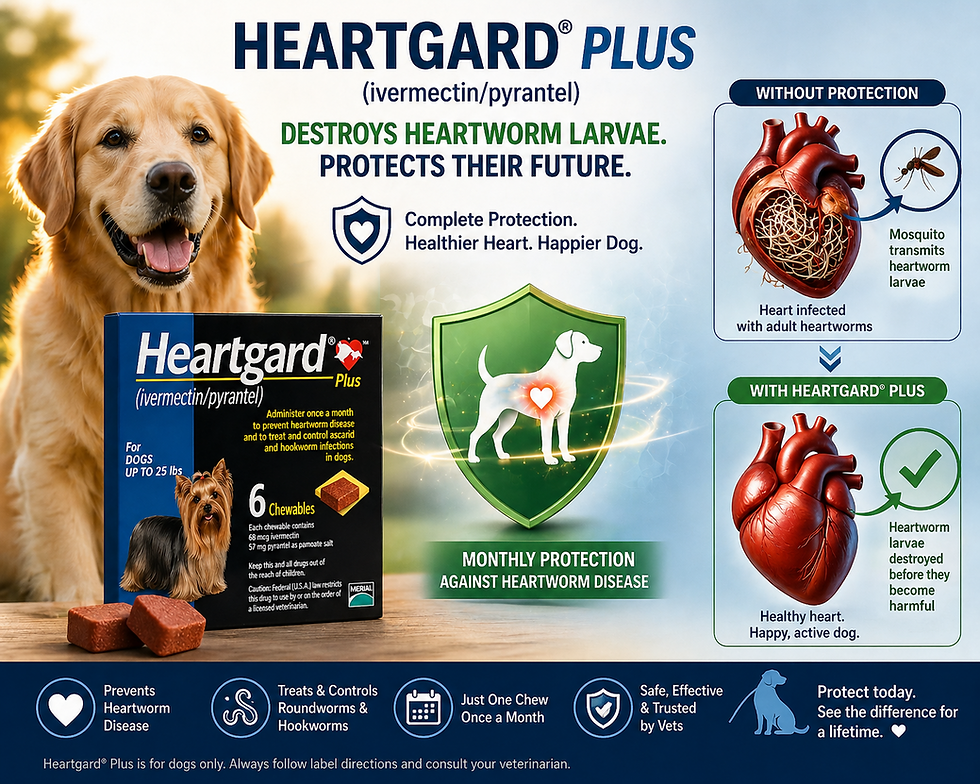
Heartworm disease is a serious and potentially fatal condition transmitted by mosquitoes. Once larvae enter the dog’s bloodstream, they migrate and mature into adult worms that live in the heart and pulmonary arteries. Without preventive medication, this process can lead to severe cardiovascular damage, respiratory distress, and eventually death. Heartgard Plus works by eliminating the larval stages of the parasite before they can develop into harmful adult worms.

In addition to heartworm prevention, the medication also targets:
Roundworms (Toxocara canis, Toxascaris leonina)
Hookworms (Ancylostoma caninum, Uncinaria stenocephala)
This dual-action profile makes Heartgard Plus a practical choice for routine parasite control programs, especially in regions where both heartworms and intestinal parasites are prevalent.
The chewable formulation is typically flavored to improve palatability, which increases compliance among dog owners. Consistent monthly use is critical, as missing doses may leave dogs vulnerable to infection during mosquito exposure periods.
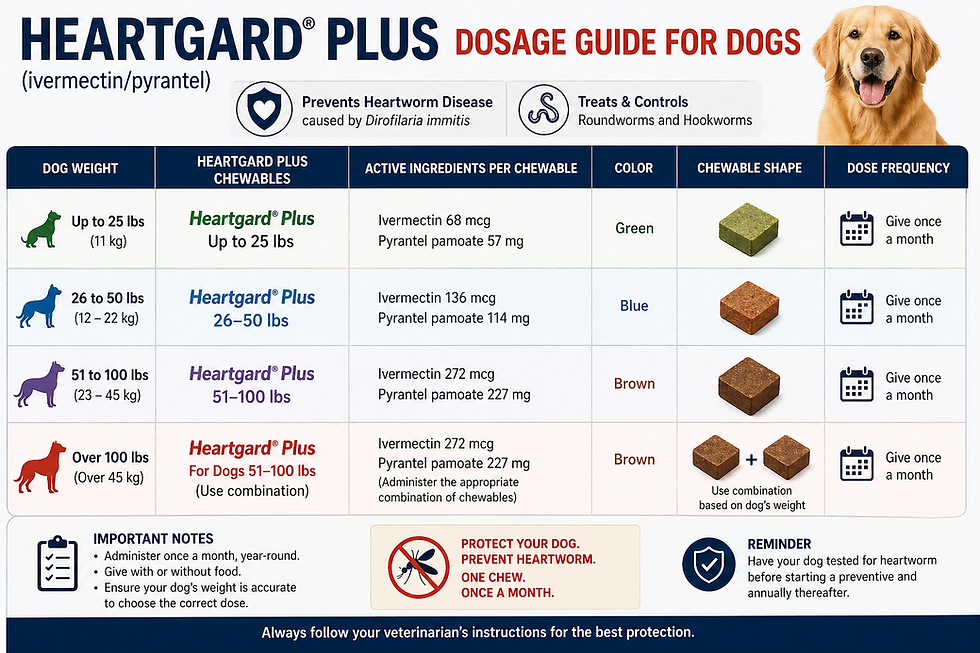
Dosage and Monthly Protection Duration of Heartgard Plus
Correct dosing of Heartgard Plus is critical to maintain continuous protection against heartworms and intestinal parasites.
Standard Dosage Principle
Typical Dosage Categories
(Exact strengths vary by manufacturer packaging)
Up to ~11 kg (25 lbs) → Low-dose formulation
12–22 kg (26–50 lbs) → Medium-dose formulation
23–45 kg (51–100 lbs) → High-dose formulation
Dogs over 45 kg typically require combination dosing using multiple tablets.
Duration of Protection
Each dose of Heartgard Plus provides:
Protection against heartworm larvae acquired in the previous 30 days
Treatment and control of existing intestinal worms at the time of dosing
This means the product works retroactively within a monthly window, eliminating larvae before they mature.
Why Monthly Timing Matters
Heartworm larvae develop continuously after mosquito exposure
Missing or delaying doses allows larvae to progress into stages that are no longer susceptible to preventive doses
Consistent monthly intervals ensure there is no gap in protection
Missed Dose Risk Window
A delay of a few days → usually low risk if corrected quickly
Extended gaps (weeks) → significantly increased infection risk
In such cases, testing may be required before restarting
Weight Changes and Dose Adjustment
Growing puppies should be re-weighed frequently
Dose must be adjusted as the dog moves into a higher weight category
Using a lower-dose tablet in a heavier dog reduces effectiveness
Cost of Heartgard Plus (USA & EU Price Comparison)
The cost of Heartgard Plus varies depending on dog weight, package size, and region, but it remains one of the more accessible monthly heartworm preventatives when evaluated against the cost of treating heartworm disease.
Average Prices in the United States (USD)
In the U.S. market, pricing is typically structured based on the dog’s weight category:
Small dogs (up to ~25 lbs / 11 kg):
~ $30 – $45 for a 6-month supply
Medium dogs (26–50 lbs / 12–23 kg):
~ $40 – $60 for a 6-month supply
Large dogs (51–100 lbs / 24–45 kg):
~ $55 – $80 for a 6-month supply
Monthly cost usually ranges between $5 to $13 per dose, depending on the size of the dog and retailer.
Average Prices in Europe (EUR)
In European markets, prices can be slightly higher due to import and regulatory factors:
Small dogs:
~ €35 – €55 for a 6-month supply
Medium dogs:
~ €50 – €70 for a 6-month supply
Large dogs:
~ €65 – €95 for a 6-month supply
Monthly cost typically falls between €6 to €16 per dose.
Cost vs. Treatment Comparison
Preventive use of Heartgard Plus is significantly more economical than treating an established infection:
Annual prevention cost: ~ $60 – $150
Heartworm treatment cost: ~ $500 – $2000+ (or higher depending on complications)
This large difference highlights why consistent preventive use is considered the standard approach in canine health management.
Factors Affecting Price
Dog’s body weight (dose strength)
Package size (6-month vs. 12-month packs)
Veterinary clinic vs. online pharmacy pricing
Regional availability and import costs
Side Effects and Possible Adverse Reactions of Heartgard Plus
Heartgard Plus is generally well tolerated when used at recommended doses. However, as with any medication, side effects and adverse reactions can occur in some dogs.
Common Mild Side Effects
These are usually temporary and resolve without intervention:
Vomiting shortly after administration
Temporary lethargy
These reactions are typically associated with gastrointestinal sensitivity or individual variation in response to the chewable formulation.
Less Common but Notable Reactions
Mild coordination issues (rare)
Transient behavioral changes
Rare but Serious Reactions
Although uncommon, more severe reactions may occur, especially in sensitive individuals:
Tremors
Ataxia (loss of coordination)
Seizures (very rare, usually linked to sensitivity)
Severe depression or weakness
These are more likely in:
Dogs with MDR1 gene mutation
Cases of accidental overdose
Concurrent use with interacting drugs
Microfilariae-Related Reactions
In dogs that are unknowingly heartworm-positive:
The death of circulating microfilariae may trigger:
Weakness
Pale gums
Rapid breathing
This is why pre-treatment testing is important.
When to Seek Professional Help
Immediate attention is recommended if:
Neurological signs appear
Vomiting persists beyond a few hours
The dog becomes unresponsive or severely lethargic
Active Ingredients and Mechanism of Action of Heartgard Plus
Heartgard Plus contains two active ingredients that work synergistically to provide broad-spectrum parasite control:
Ivermectin
Ivermectin is a macrocyclic lactone that targets the larval stages of heartworms (L3 and early L4). It works by binding to glutamate-gated chloride channels in the parasite’s nerve and muscle cells. This interaction increases the permeability of the cell membrane to chloride ions, leading to:
Paralysis of the parasite
Disruption of neural transmission
Eventual death of the larval stage
Importantly, ivermectin in Heartgard Plus is administered at a low preventive dose, which is specifically designed to eliminate immature larvae before they reach adulthood. It does not kill adult heartworms, which is why consistent monthly administration is essential.
Pyrantel (as Pyrantel Pamoate)
Pyrantel is an anthelmintic that targets intestinal nematodes, particularly roundworms and hookworms. Its mechanism differs from ivermectin:
Acts as a depolarizing neuromuscular blocking agent
Causes spastic paralysis in worms
Prevents worms from maintaining their position in the intestinal wall
Leads to expulsion of parasites through normal intestinal motility
This complementary mechanism ensures that while ivermectin handles heartworm prevention, pyrantel addresses gastrointestinal parasites effectively.
Combined Effect
The combination of ivermectin and pyrantel provides:
Systemic protection against heartworm larvae
Localized intestinal action against common worms
A preventive + treatment hybrid approach in one monthly dose
This dual mechanism is one of the key reasons Heartgard Plus remains a standard choice in preventive veterinary protocols worldwide.
Uses of Heartgard Plus in Dogs (Indications)
Heartgard Plus is indicated for the prevention and control of multiple parasitic infections in dogs. Its clinical value comes from its ability to target both cardiopulmonary parasites and intestinal nematodes within a single monthly dose.
Primary Indication: Heartworm Prevention
The most critical use of Heartgard Plus is the prevention of heartworm disease caused by Dirofilaria immitis. After a mosquito bite, infective larvae enter the bloodstream and begin a complex migration process toward the heart and pulmonary arteries. The medication eliminates these larvae during their early developmental stages (L3 and L4), preventing them from maturing into adult worms.
This preventive action is essential because:
Adult heartworms can live for years inside the heart
Treatment of established infections is complex, risky, and costly
Early-stage elimination is significantly safer and more effective
Secondary Indications: Intestinal Parasite Control
Heartgard Plus is also indicated for the treatment and control of the following gastrointestinal parasites:
Roundworms (Toxocara canis, Toxascaris leonina)
Common in puppies and young dogs, these parasites can cause poor growth, vomiting, and abdominal distension.
Hookworms (Ancylostoma caninum, Uncinaria stenocephala)
These blood-feeding parasites can lead to anemia, diarrhea, and general weakness, especially in young or immunocompromised dogs.
Preventive Health Strategy
Regular monthly use of Heartgard Plus supports:
Continuous parasite life cycle interruption
Reduced environmental contamination (eggs and larvae)
Lower zoonotic risk (some parasites can infect humans)
Target Population
The product is commonly used in:
Puppies (from recommended minimum age and weight)
Adult dogs in endemic heartworm regions
Multi-dog households where parasite transmission risk is higher
Because of its broad indication profile, Heartgard Plus is often included in routine preventive care protocols rather than being used only after a problem appears.
Why Heartworm Prevention Is Essential in Dogs
Heartworm disease remains one of the most dangerous yet preventable parasitic diseases affecting dogs worldwide. Understanding why prevention is critical helps explain the importance of consistent use of medications like Heartgard Plus.
Transmission Is Silent and Inevitable Without Protection
Heartworms are transmitted through mosquito bites, meaning:
Even indoor dogs are at risk
A single infected mosquito can initiate infection
Exposure is often unavoidable in many climates
Because mosquitoes are widespread, especially in warm and humid regions, the risk persists year-round in many areas.
Disease Progression Is Slow but Severe
After infection:
Larvae circulate in the bloodstream
They migrate to the pulmonary arteries
They mature into adult worms over several months
Once adult worms establish themselves:
They can grow up to 30 cm in length
They obstruct blood flow in the heart and lungs
They cause chronic inflammation and vascular damage
Clinical signs may include:
Persistent cough
Exercise intolerance
Weight loss
Advanced heart failure in severe cases
Treatment Is Risky and Expensive
Treating heartworm disease is significantly more challenging than preventing it:
Requires adulticide therapy (e.g., melarsomine)
Carries risk of pulmonary embolism as worms die
Demands strict exercise restriction for weeks to months
Costs substantially more than preventive care
This makes prevention with products like Heartgard Plus the safer and more economical approach.
Subclinical Cases Are Common
Many infected dogs show no obvious symptoms in early stages. This silent progression means:
Owners may not detect the disease until it is advanced
Damage may already be significant at diagnosis
Routine prevention eliminates this uncertainty by stopping infection before it starts.
Public Health and Environmental Considerations
Heartworm prevention also contributes to:
Reducing the overall parasite reservoir in the environment
Lowering transmission rates within dog populations
Supporting community-level parasite control
How to Administer Heartgard Plus (Step-by-Step Guide)
Proper administration of Heartgard Plus is essential to ensure full effectiveness and consistent protection.
Step 1: Determine the Correct Dose
Select the appropriate chewable tablet based on the dog’s current body weight
Never split doses unless specifically instructed
Use weight-appropriate packaging to ensure accurate dosing
Step 2: Offer the Chewable Tablet
Administer once monthly
Most dogs will accept it as a treat due to its flavored formulation
It can be given:
Directly by hand
Mixed with a small amount of food if necessary
Step 3: Ensure Full Consumption
Observe the dog to confirm the entire dose is consumed
If the dog partially eats or spits out the tablet, re-administer the full dose
Step 4: Maintain a Fixed Schedule
Administer the product on the same date each month
Set reminders to avoid missed doses
Consistency is critical for continuous protection
Step 5: Missed Dose Protocol
If a dose is missed:
Administer as soon as possible
Resume the regular monthly schedule
Prolonged gaps may increase the risk of infection
Step 6: Seasonal vs. Year-Round Use
In high-risk regions: year-round administration is recommended
In lower-risk climates: follow region-specific guidance, but consistency remains key
Practical Tips for Better Compliance
Pair administration with a routine (e.g., first day of each month)
Track doses using a calendar or mobile reminder
Store medication in a safe, dry place at recommended temperatures
Pre-Administration Checklist for Heartgard Plus
Before administering Heartgard Plus, a structured pre-check helps ensure maximum safety and effectiveness. Skipping these steps can lead to reduced efficacy or, in rare cases, complications.
Confirm Heartworm Status
Dogs older than 6–7 months should ideally be tested for heartworm infection before starting prevention
Administering preventive medication to a dog with existing adult heartworms may lead to complications related to circulating microfilariae
Annual testing is recommended even for dogs on regular prevention
Verify Body Weight
Accurate dosing depends on the dog’s current weight
Underdosing may reduce effectiveness
Overdosing increases the risk of adverse reactions
Check Age and Minimum Requirements
Ensure the dog meets the minimum age and weight criteria indicated on the product label
Puppies require careful dose selection as they grow rapidly
Review Medical History
Evaluate whether the dog has:
Neurological sensitivities or known drug reactions
A history of parasite-heavy infections
Chronic illnesses that may require adjusted protocols
Breed Sensitivity Considerations
Certain breeds (e.g., Collies, Australian Shepherds, Shelties) may carry the MDR1 gene mutation, which can increase sensitivity to macrocyclic lactones like ivermectin. Although Heartgard Plus is formulated at a low preventive dose, caution is still advised:
Consider genetic testing in high-risk breeds
Monitor closely after first administration
Check for Concurrent Medications
Ensure compatibility with other medications or supplements
Avoid overlapping treatments that may contain similar active compounds
Assess Environmental Risk
High mosquito exposure → strict monthly compliance required
Multi-pet households → increased parasite transmission risk
Comparison of Heartgard Plus with Other Heartworm Preventatives
When choosing a heartworm preventive, differences in spectrum of protection, administration method, and added parasite coverage become important. Heartgard Plus is often compared with other widely used options.
Key Comparison Factors
Active ingredients
Parasite coverage (heartworm, fleas, ticks, intestinal worms)
Administration form (oral, topical, injectable)
Frequency (monthly vs. long-acting)
Safety profile
Comparison Table
Product | Active Ingredients | Parasite Coverage | Form | Frequency |
Heartgard Plus | Ivermectin + Pyrantel | Heartworm, roundworm, hookworm | Oral chew | Monthly |
Afoxolaner + Milbemycin | Heartworm, fleas, ticks, intestinal worms | Oral chew | Monthly | |
Sarolaner + Moxidectin + Pyrantel | Heartworm, fleas, ticks, intestinal worms | Oral chew | Monthly | |
Fluralaner | Fleas, ticks (no heartworm) | Oral chew / topical | Every 12 weeks | |
Revolution | Selamectin | Heartworm, fleas, some mites, limited intestinal worms | Topical | Monthly |
Key Differences
Heartgard Plus focuses on core internal parasite protection, especially heartworms
Products like Simparica Trio and NexGard Spectra provide broader coverage, including fleas and ticks
Bravecto is not a heartworm preventive and must be combined with another product
Revolution offers a topical alternative, useful for dogs that resist oral medications
When Heartgard Plus Is Preferred
When the goal is targeted heartworm + intestinal parasite prevention
When separate flea/tick control is already in place
When a simpler, focused parasite protocol is desired
Safety Considerations When Using Heartgard Plus
Heartgard Plus has a long history of safe use when administered correctly. However, like all medications, certain precautions are necessary to minimize risk.
General Safety Profile
Contains low-dose ivermectin, specifically calibrated for heartworm prevention
Safe for most dogs when used according to weight and schedule
Widely used in routine preventive care programs
Breed Sensitivity (MDR1 Gene)
Some breeds may have increased sensitivity to ivermectin due to the MDR1 gene mutation, including:
Although the dose in Heartgard Plus is low:
Most dogs tolerate it well
First-time use should be monitored carefully in high-risk breeds
Use in Heartworm-Positive Dogs
Preventive doses do not eliminate adult heartworms
Administration in infected dogs may lead to reactions related to microfilariae
Testing before starting prevention is strongly recommended
Overdose Risk
Giving higher-than-recommended doses may increase the risk of:
Neurological signs (ataxia, tremors)
Always follow weight-based dosing guidelines
Drug Interactions
Caution is advised when combining with:
Other macrocyclic lactones
Certain antiparasitic or neurological medications
Storage and Handling
Store at recommended temperatures
Keep out of reach of children and other animals
Ensure correct product variant is used (based on weight category)
Owner Responsibility
Safe use depends on:
Consistent monthly administration
Monitoring after dosing (especially first use)
Maintaining routine parasite screening
Use of Heartgard Plus in Puppies, Pregnant, and Lactating Dogs
The use of Heartgard Plus in special populations requires careful consideration, although it is widely used under appropriate conditions.
Use in Puppies
Approved for puppies from a minimum age and weight threshold (as indicated on the label)
Particularly important because puppies are highly susceptible to intestinal parasites
Regular dosing supports healthy growth and reduces parasite burden
Use in Pregnant Dogs
Generally considered safe when used at recommended preventive doses
May be included in parasite control programs during pregnancy
However, individual risk assessment is recommended
Use in Lactating Dogs
Can be administered during lactation
Helps reduce transmission of intestinal parasites to puppies
Supports overall litter health
Dose Adjustments in Growing Dogs
Puppies gain weight rapidly
Dose should be reassessed frequently
Underdosing can reduce effectiveness
When Veterinary Consultation Is Necessary Before Using Heartgard Plus
Although Heartgard Plus is widely used, certain situations require professional evaluation before starting or continuing treatment.
Situations Requiring Consultation
High-Risk Breeds
Dogs with potential MDR1 mutation
First-time administration in sensitive breeds
Irregular Dosing History
Missed multiple monthly doses
Long gaps in preventive coverage
Restarting after prolonged interruption
FAQ
What is Heartgard Plus used for in dogs?
Heartgard Plus is used primarily for the prevention of heartworm disease caused by Dirofilaria immitis. It also treats and controls common intestinal parasites such as roundworms and hookworms. This dual action makes it a key component of routine parasite prevention programs. By eliminating heartworm larvae before they mature, it protects dogs from a potentially fatal disease while also maintaining gastrointestinal health.
How often should Heartgard Plus be given to dogs?
Heartgard Plus should be administered once every 30 days. Consistent monthly dosing is critical because the medication works by killing heartworm larvae acquired during the previous month. Missing doses or delaying administration may allow larvae to develop into stages that are no longer affected by preventive treatment.
Can Heartgard Plus kill adult heartworms?
No, Heartgard Plus does not kill adult heartworms. It is designed to eliminate immature larval stages (L3 and L4) before they mature. Dogs with adult heartworm infections require a different treatment protocol, typically involving adulticide therapy. This is why prevention is much safer and more effective than treatment.
Is Heartgard Plus safe for all dog breeds?
Heartgard Plus is safe for most dog breeds when used at recommended doses. However, certain breeds such as Collies, Australian Shepherds, and Shelties may have the MDR1 gene mutation, which can increase sensitivity to ivermectin. Although the dose used is low, monitoring after the first administration is recommended in these breeds.
What happens if I miss a dose of Heartgard Plus?
If a dose is missed, it should be given as soon as possible, and the regular monthly schedule should be resumed. Short delays are usually low risk, but longer gaps can increase the likelihood of infection. In cases of extended missed dosing, testing for heartworm infection may be necessary before restarting the medication.
Can Heartgard Plus be given with food?
Yes, Heartgard Plus can be given with or without food. Most dogs accept it as a chewable treat due to its palatable formulation. If needed, it can be mixed with a small amount of food to ensure full consumption.
Does Heartgard Plus protect against fleas and ticks?
No, Heartgard Plus does not provide protection against fleas or ticks. It specifically targets heartworms, roundworms, and hookworms. For full parasite protection, it may need to be combined with a separate flea and tick control product.
At what age can puppies start using Heartgard Plus?
Puppies can start using Heartgard Plus once they reach the minimum age and weight specified on the product label. Early use is important because puppies are highly susceptible to intestinal parasites and can also be exposed to heartworm larvae in endemic areas.
Is Heartgard Plus safe during pregnancy and lactation?
Heartgard Plus is generally considered safe for pregnant and lactating dogs when used at recommended doses. However, individual assessment is always advisable to ensure there are no additional risk factors.
Do dogs need a heartworm test before starting Heartgard Plus?
Yes, dogs older than 6–7 months should ideally be tested for heartworm infection before starting Heartgard Plus. This helps avoid complications related to existing infections and ensures that the preventive program starts safely.
What are the most common side effects of Heartgard Plus?
The most common side effects include mild vomiting, diarrhea, reduced appetite, and temporary lethargy. These are usually short-lived and resolve without treatment. Serious side effects are rare but may include neurological signs in sensitive dogs.
Can Heartgard Plus be used year-round?
Yes, in many regions, especially where mosquitoes are present year-round, Heartgard Plus should be used continuously throughout the year. Year-round use ensures uninterrupted protection against heartworm infection.
How do I know if Heartgard Plus is working?
Effectiveness is typically confirmed through:
Absence of clinical signs of heartworm disease
Regular annual heartworm testing
Lack of intestinal parasite symptoms
Consistent use combined with routine testing provides the most reliable confirmation.
Can Heartgard Plus be used with other parasite medications?
Yes, but caution is required. Heartgard Plus is often combined with flea and tick products, but overlapping active ingredients should be avoided. Always ensure compatibility when using multiple treatments.
Is Heartgard Plus enough for complete parasite protection?
Heartgard Plus provides excellent protection against heartworms, roundworms, and hookworms, but it does not cover fleas, ticks, or all parasite types. A complete parasite control plan may require additional products depending on the dog’s environment and risk level.
Keywords
Heartgard Plus, heartworm prevention dogs, ivermectin pyrantel dosage, dog parasite control, Heartgard Plus side effects
Sources
Source | Link |
American Heartworm Society | |
U.S. FDA Animal Drugs | |
European Medicines Agency (EMA) | |
Merck Veterinary Manual | |
Mersin Vetlife Veterinary Clinic |