
Frontline Plus for Dogs and Cats: Uses, Dosage, Application, Side Effects, and Safety

What Is Frontline Plus?
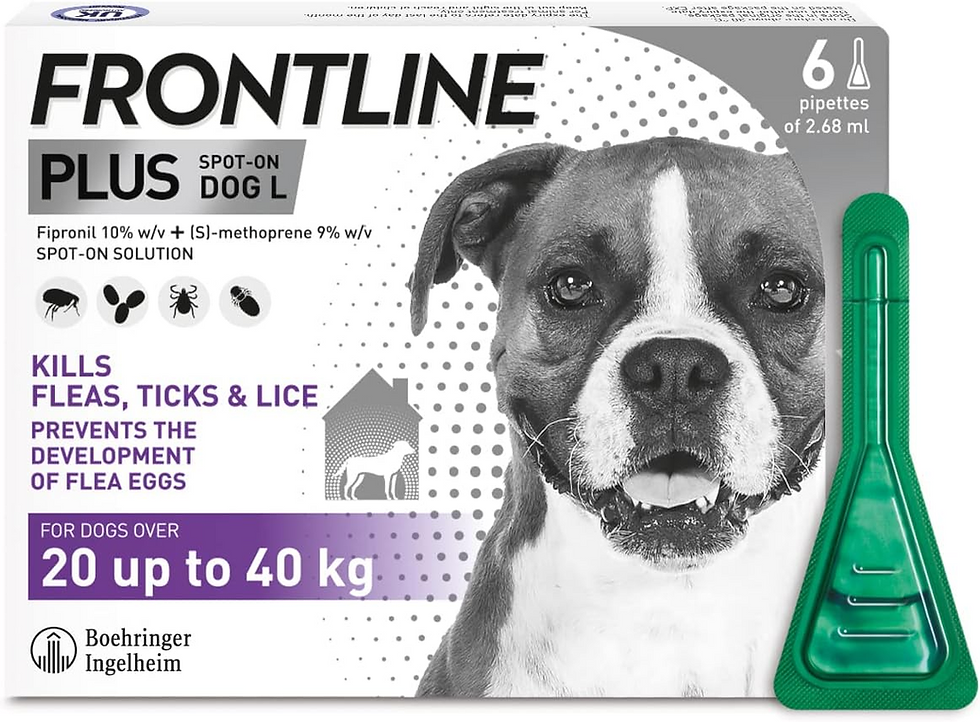
Frontline Plus is a topical parasite-control product available in separate formulations for dogs and cats. It combines two active ingredients—fipronil and (S)-methoprene—to treat fleas and help interrupt their life cycle. Depending on the locally approved label, its indications also include specified tick species and chewing lice.
The product comes in single-use applicators, commonly called pipettes. It is applied directly to the skin after parting the coat, rather than given by mouth or injected. Selecting the correct species-specific product and pipette size is essential; the dog formulation should not be substituted for the cat formulation.
Frontline Plus addresses both existing adult fleas and the development of immature flea stages. However, managing an established household infestation may also require cleaning bedding, vacuuming resting areas, and an appropriate parasite-control plan for other pets. Applying a product to one animal does not immediately remove every flea stage already present in the home.
The exact product label matters. Approved uses, minimum weight, application intervals, and precautions can differ between markets. Always follow the instructions supplied with the product purchased in your country.

What Are the Active Ingredients in Frontline Plus?
Frontline Plus contains fipronil and (S)-methoprene. These ingredients have complementary roles: one targets adult parasites, while the other disrupts the development of immature fleas.
The following table shows the active ingredient percentages listed for the U.S. Frontline Plus formulations:
Product | Fipronil | (S)-Methoprene |
Frontline Plus for Dogs | 9.8% | 8.8% |
Frontline Plus for Cats | 9.8% | 11.8% |
These percentages describe the formulation, not the amount to administer to an individual animal. They should not be used to calculate a homemade dose or divide a dog applicator for use on cats.
Fipronil is an insecticide and acaricide, meaning it acts against insects and ticks or related arthropods. In Frontline Plus, it provides activity against adult fleas and the other parasites specified on the label.
(S)-Methoprene is an insect growth regulator. It mimics an insect juvenile hormone and interferes with the development of immature fleas, helping reduce the production of a new generation of adult fleas. Its role should not be confused with fipronil’s activity against adult ticks.
Although both products contain the same two active ingredients, their formulations and applicator instructions differ. Use the product labeled for your pet’s species and follow its specific weight and age requirements.

How Does Frontline Plus Work?
Frontline Plus combines an adult parasite-killing ingredient with an insect growth regulator. This allows it to act against existing fleas while interfering with the development of the next generation.
Fipronil disrupts nerve signaling in susceptible parasites by blocking certain chloride channels, including those controlled by the neurotransmitter GABA. This produces uncontrolled nervous system activity and ultimately kills the parasite.
(S)-Methoprene mimics an insect juvenile hormone. It interferes with the development of flea eggs and immature stages, helping interrupt the flea life cycle.
After topical application, the active ingredients distribute across the animal’s skin and hair coat. Parasites are killed through contact with the treatment rather than needing to ingest it through a blood meal. However, contact activity does not guarantee that a flea or tick will never bite or attach. The manufacturer warns that transmission of tick-borne infections cannot be completely excluded.
Treating your pet does not instantly eliminate an established household infestation. Flea stages already present in bedding, carpets, and resting areas can continue the infestation cycle. Environmental cleaning and a coordinated treatment plan are therefore important alongside correct product application.

Which Parasites Does Frontline Plus Treat and Control?
Frontline Plus primarily targets fleas, specified tick species, and chewing lice. The exact approved parasite list and duration of protection depend on the species-specific product and its country of registration.
Parasite or life stage | Role of Frontline Plus |
Adult fleas | Fipronil kills susceptible adult fleas on the treated animal. |
Flea eggs and immature stages | (S)-Methoprene disrupts development, helping reduce the emergence of new adult fleas. |
Ticks | Fipronil acts against the tick species listed on the applicable product label. |
Chewing lice | Species-specific labels include activity against certain chewing lice. |
For example, the manufacturer’s Indian leaflets list Trichodectes canis for dogs and Felicola subrostratus for cats. These are examples from those particular labels, not a substitute for checking your local package instructions.
Frontline Plus may also form part of a veterinary management plan for flea allergy dermatitis, because controlling fleas helps address the trigger. It does not directly replace treatment for associated skin inflammation or secondary infection.
Do not treat Frontline Plus as an all-purpose parasite treatment. The cited labels do not provide indications for heartworm prevention or treatment of intestinal worms. Likewise, activity against fleas and ticks should not be assumed to establish effectiveness against every type of mite. Select any additional parasite protection with your veterinarian.
Frontline Plus for Dogs vs. Cats: What Are the Differences?
Frontline Plus for dogs and cats contains the same two active ingredients: fipronil and (S)-methoprene. However, the formulations and pipette sizes differ. The dog and cat products should not be treated as interchangeable.
The U.S. labels list the following active ingredient concentrations:
Active ingredient | Frontline Plus for Dogs | Frontline Plus for Cats |
Fipronil | 9.8% | 9.8% |
(S)-methoprene | 8.8% | 11.8% |
The dog product comes in several pipette sizes selected by body weight. The cat product uses a different formulation supplied in a 0.5 mL pipette. Always choose the product labeled for your pet’s species. Do not divide a dog pipette to create a dose for a cat.
Frontline Plus Dosage and Pipette Sizes by Body Weight
Frontline Plus is supplied in premeasured applicators. Product selection depends on the animal’s species, weight, age, and the instructions on the specific package.
The table below describes the U.S. dog label held in the EPA archive. Packaging and eligibility requirements can differ between countries, so check the current leaflet supplied with your product before use.
Dog’s body weight on the U.S. label | Volume in one applicator |
5–22 lb | 0.67 mL |
23–44 lb | 1.34 mL |
45–88 lb | 2.68 mL |
89–132 lb | 4.02 mL |
These are whole-applicator sizes, not instructions for measuring liquid from a larger pipette. The cited dog label specifies use from eight weeks of age and no more than one application per month. For dogs weighing more than 132 lb, it explicitly advises against using two applicators; seek veterinary guidance.
For cats, the cited U.S. label specifies one complete 0.5 mL applicator and excludes kittens younger than eight weeks. It also instructs users not to reapply within 30 days. Check your current package for any minimum body-weight requirement before treating a kitten or a small cat.
If your pet falls close to a weight boundary, weigh them accurately and ask your veterinarian which pack is appropriate. Do not estimate a smaller dose by partially emptying a pipette.
How to Apply Frontline Plus Correctly
Frontline Plus must be applied directly to the skin, not simply onto the coat. Before opening the applicator, confirm that the product matches your pet’s species, age, and body weight. Read the instructions supplied with your particular package.
The U.S. labels describe the following application method:
Open the applicator. Remove it from its packaging and open the tip according to the package instructions.
Expose the skin. For dogs, part the coat between the shoulder blades. For cats, part the coat at the base of the neck, above the shoulder blades.
Apply the entire contents. Position the tip just above the exposed skin and squeeze the contents onto one spot.
Let the application site dry. Avoid touching the treated area while it is wet, and prevent your pet from licking or swallowing the product.
In households with several pets, prevent animals from grooming each other’s application sites. Follow any separation period stated on the package. Children should not handle the treated area until it has dried, and the person applying the product should wash their hands afterward.
Do not apply an extra pipette if you are unsure whether the first application reached the skin. Contact your veterinarian for advice. Applying more product can exceed the labeled dose; the cited U.S. dog label prohibits more than one application per month.
How Quickly Does Frontline Plus Work, and How Long Does It Last?
Frontline Plus does not kill every parasite immediately upon application. Its speed of action depends on the parasite and the claims established for the particular product.
For example, the manufacturer’s Indian leaflet for Frontline Plus for Dogs states that fipronil kills fleas within 24 hours and ticks and lice within 48 hours after exposure. These figures describe that specific product’s labeling; they should not automatically be applied to every cat or dog formulation sold worldwide.
It is also useful to distinguish three different timelines:
Timeline | What it means |
Speed of parasite killing | How long the product takes to kill parasites after exposure |
Duration of protection | How long a treatment remains effective against a particular parasite |
Time to control a household infestation | How long it takes to address fleas on pets and developing stages in their surroundings |
The duration of protection can differ between fleas and ticks. For example, the cited U.S. cat label describes flea control for up to six weeks but recommends monthly application when tick control is needed. It also states that the product must not be reapplied within 30 days. Follow your current package’s schedule rather than extending the interval based on a claim for one parasite.
Seeing fleas after treatment does not, by itself, prove that the product has failed. An established infestation includes stages in bedding, carpets, and other areas where pets spend time. Comprehensive control requires treating eligible pets appropriately and addressing their environment. The Companion Animal Parasite Council notes that moderate to severe infestations may take several months to bring under control.
Can You Bathe Your Pet Before or After Applying Frontline Plus?
Check the bathing instructions on your specific Frontline Plus package before scheduling a bath or swimming session. A product’s waterproof claim does not mean that bathing immediately after application is appropriate.
For example, the manufacturer’s Indian leaflet for dogs advises avoiding bathing or water immersion during the first 48 hours after application. It also advises against bathing more frequently than once a week because the effect of that frequency on efficacy has not been established. Some shampoo routines can shorten the duration of flea protection.
The corresponding cat leaflet also recommends avoiding bathing for two days after treatment. However, it explicitly notes that this recommendation is based on information from dogs, because direct data on bathing and shampooing in cats were unavailable.
If your pet needs a bath before treatment, follow the preparation instructions on the local package. For pets receiving regular medicated baths, ask your veterinarian to coordinate the shampoo and parasite-control schedules.
Do not automatically apply another pipette if your pet gets wet earlier than recommended. Ask your veterinarian or the manufacturer whether any action is needed; an extra application may exceed the permitted treatment frequency.
What Are the Possible Side Effects of Frontline Plus?
Frontline Plus can cause local skin reactions and, less commonly, signs affecting other parts of the body. The manufacturer’s Indian leaflets describe the listed suspected adverse reactions as very rare.
Reported signs include:
Type of reaction | Signs described in the manufacturer’s leaflets |
Application-site reactions | Redness, itching, localized hair loss, scaling in cats, or skin discoloration in dogs |
More widespread skin reactions | Generalized itching or hair loss |
Salivation or digestive signs | Excessive drooling or vomiting |
Neurological signs | Increased sensitivity to stimulation, reduced responsiveness, or other reversible nervous signs |
Respiratory signs | Respiratory symptoms are listed in the dog leaflet |
These reports describe possible reactions; they do not mean that every symptom occurring after treatment was necessarily caused by the product.
Brief drooling can occur after licking the application site because of the formulation’s carrier. However, persistent drooling, vomiting, or unusual behavior should not be dismissed as a harmless taste reaction. Contact your veterinarian and explain which product was used, when it was applied, and whether licking occurred.
Seek urgent veterinary attention for breathing difficulty, collapse, seizures, or marked loss of coordination. Keep the packaging available so the veterinary team can identify the formulation and dose. Do not apply another flea treatment while a suspected reaction is being assessed.
Which Pets Should Not Use Frontline Plus?
Frontline Plus is not suitable for every animal. Before treatment, check the product’s species designation, minimum age, minimum weight, and health precautions.
The manufacturer’s Indian dog and cat leaflets identify these restrictions:
Animal or situation | Restriction |
Puppies or kittens younger than eight weeks | Do not use these formulations |
Dogs weighing less than 2 kg | Do not use the dog product described in these leaflets |
Cats weighing less than 1 kg | Do not use the cat product described in these leaflets |
Sick animals or animals recovering from illness | Use is contraindicated in these leaflets |
Rabbits | Do not use; serious reactions, including death, may occur |
Cats being considered for the dog formulation | Do not use; the dog formulation can cause overdosing |
These weight limits are specific to the cited Indian products. They should not replace the eligibility requirements on a package sold in another country.
If your pet has previously reacted to Frontline Plus or another topical parasite treatment, discuss that history with your veterinarian before applying it again. Bring the previous product’s name and a description of the reaction.
Can Frontline Plus Be Used on Puppies, Kittens, Pregnant, or Nursing Pets?
Some Frontline Plus formulations are labeled for young animals and for use during pregnancy or lactation. Eligibility depends on the exact product and the animal’s age, weight, and health.
For puppies and kittens, meeting the minimum age alone is insufficient when the label also specifies a minimum weight. For example, the Indian leaflets require puppies to be at least eight weeks old and weigh at least 2 kg; kittens must be at least eight weeks old and weigh at least 1 kg.
Do not estimate a smaller dose for an underage or underweight animal by using part of a pipette. Ask your veterinarian to select an appropriate parasite-control option.
The same manufacturer leaflets permit use during pregnancy and lactation. This does not remove the other restrictions, including those concerning illness and recovery.
When treating a nursing mother, prevent kittens or puppies from licking the application site. The leaflets specifically instruct users to prevent animals from licking one another after treatment. Ask your veterinarian how to manage contact while the site dries without disrupting the young animals’ feeding and warmth.
What Should You Do If Your Pet Licks or Swallows Frontline Plus?
Prevent further licking and contact your veterinarian if your pet swallows the product, chews an applicator, or develops symptoms. Keep the packaging available and explain your pet’s weight, the formulation used, the approximate amount involved, and when the exposure occurred.
The manufacturer’s leaflets note that licking the application site can cause brief excessive salivation because of the formulation’s carrier. However, drooling alone cannot establish how much product was swallowed or whether the exposure is harmless. Persistent drooling, vomiting, or unusual behavior warrants veterinary advice.
Take these steps while obtaining advice:
Remove access to the applicator and prevent pets from licking each other.
Do not induce vomiting or give home remedies unless your veterinarian specifically instructs you to do so.
Seek emergency care for severe signs, including seizures, collapse, breathing difficulty, or marked loss of coordination.
Ask whether the application site should be washed. For reactions to topical flea products, veterinary advice may include bathing with mild dish soap and rinsing thoroughly, provided the animal is stable enough to bathe safely. Do not delay emergency care to attempt bathing.
The usual instruction to avoid bathing after treatment is intended to preserve effectiveness. Suspected adverse reactions require a different approach: the animal’s immediate safety takes priority.
Why Does Your Pet Still Have Fleas After Using Frontline Plus?
Seeing fleas after treatment does not automatically mean Frontline Plus has failed. Fleas on your pet are only one part of an infestation. Developing stages in the environment can continue supplying newly emerged adult fleas.
The Companion Animal Parasite Council recommends addressing both pets and their surroundings. Established infestations may take several months to control, and every pet in the household needs an appropriate, species-specific management plan.
Possible reasons for continued flea sightings include:
Possible reason | What to check |
Fleas are emerging from the environment | Bedding, carpets, furniture, and other resting areas need attention |
Another household pet remains untreated | Ask your veterinarian about suitable protection for every pet |
The product was deposited mainly on the coat | Confirm that the application reached the skin |
Treatment was delayed or the wrong pack was selected | Review the application dates and your pet’s current weight |
Bathing did not follow the package instructions | Review the timing and frequency of bathing or shampoo use |
Application directly to the skin and adherence to bathing instructions are specified in the manufacturer’s leaflets.
Vacuum regularly and wash pet bedding as part of environmental control. Heavy infestations may require additional treatment of the home, selected with professional guidance.
If flea numbers are not declining despite correct treatment and environmental measures, ask your veterinarian to reassess the plan. Do not shorten the application interval or add another insecticide on your own. Continued flea sightings alone do not establish insecticide resistance.
Can Frontline Plus Be Combined With Other Flea and Tick Treatments?
Do not combine Frontline Plus with another flea or tick treatment unless your veterinarian has checked the specific products. This includes oral treatments, spot-on solutions, insecticidal shampoos, sprays, and collars.
Using different brand names does not necessarily mean using different active ingredients. Combining products can duplicate treatment or increase exposure to pesticides. The EPA identifies overly frequent applications and simultaneous use of multiple pesticide products as possible contributors to adverse reactions.
Before recommending a combination or switching treatments, your veterinarian needs to know:
The full names and active ingredients of all parasite products being used.
When each product was last administered.
Your pet’s species, age, weight, health conditions, and other medications.
Whether the aim is to address persistent fleas or provide protection against additional parasites.
The manufacturer’s Indian Frontline Plus leaflets list no known drug interactions. That statement does not establish that every possible combination has been tested or is appropriate. Follow the product instructions and obtain advice before adding treatment.
If fleas remain visible, review application technique and environmental control before adding another product. When switching treatments, ask your veterinarian when to start the replacement; there is no single waiting period that applies to every combination.
Frontline Plus vs. Other Frontline Products: What Is the Difference?
Frontline is a product family, and its products do not all contain the same ingredients. Similar packaging or brand names should not be used to decide whether products are interchangeable.
The following examples illustrate differences between selected U.S. formulations:
Product | Active ingredients | Main distinction |
Frontline Plus for Dogs | Fipronil + (S)-methoprene | Combines an ingredient targeting adult fleas and ticks with an insect growth regulator |
Frontline Plus for Cats | Fipronil + (S)-methoprene | Uses a cat-specific formulation and pipette size |
Frontline Gold for Dogs | Fipronil + (S)-methoprene + pyriproxyfen | Adds a second insect growth regulator, pyriproxyfen |
Frontline Shield for Dogs | Fipronil + permethrin + pyriproxyfen | Contains permethrin and includes repellency claims; for dogs only |
The Plus formulations are documented in EPA labels, Gold’s ingredients appear in California’s pesticide registration database, and Shield’s formulation is documented in its EPA registration.
Frontline Shield must not be used on cats. Its manufacturer also specifies different eligibility and application instructions: dogs must be at least nine weeks old and weigh at least five pounds, and application may involve one to four sites depending on weight. Instructions written for Frontline Plus should therefore not be transferred to Shield.
Product names and availability vary between countries. Choose according to the exact formulation, approved species, parasite coverage, and local package instructions—not simply whether the name includes “Plus,” “Gold,” or “Shield.”
Frequently Asked Questions About Frontline Plus
Is Frontline Plus a Dewormer?
No. Frontline Plus targets external parasites listed on its label. It does not treat intestinal roundworms, hookworms, or tapeworms and does not replace heartworm prevention. Your veterinarian can recommend additional protection based on your pet’s needs.
Can I Use Frontline Plus for Dogs on My Cat?
No. Use the formulation labeled for cats. The dog and cat products have different formulations and pipette sizes. Do not divide a dog pipette to estimate a cat dose. The manufacturer warns that using the dog product on cats can cause overdosing.
Can I Apply Frontline Plus Again If I Still See Fleas?
Do not apply an extra dose before the interval specified on your package. The cited U.S. dog label prohibits more than one application per month, and the cat label states not to reapply within 30 days. Continued flea sightings should prompt a review of application technique and environmental control.
Does Frontline Plus Prevent Every Tick Bite?
No. Ticks may still attach, and treatment cannot completely exclude transmission of tick-borne infections. Continue checking your pet for ticks even when parasite prevention is used correctly.
Why Is My Pet Drooling After Frontline Plus?
Licking the product can cause brief drooling because of the formulation’s carrier. However, excessive salivation is also a reported adverse sign. Contact your veterinarian if drooling persists, other symptoms develop, or your pet swallows product from an applicator.
Can My Children Touch My Pet After Treatment?
Avoid contact with the application site until it has dried, and follow any additional precautions on the package. The manufacturer’s leaflets advise keeping children from handling treated animals while the site remains wet and avoiding bed-sharing with recently treated pets.
Does Seeing Fleas Mean They Are Resistant to Frontline Plus?
No. Fleas can continue emerging from the environment, and untreated pets can maintain an infestation. Established infestations may take several months to control. Persistent problems require veterinary reassessment; flea sightings alone do not demonstrate resistance.
References
The sources below are official manufacturer documents, government resources, and professional parasitology guidelines. Product labels are country-specific. Archived labels document the versions cited in this article; the current leaflet supplied with your product should guide its use.
Organization | Source and relevance | Full URL |
U.S. Environmental Protection Agency (EPA) | Frontline Plus for Dogs — U.S. label accepted May 11, 2016; ingredients, pipette sizes, application, and precautions | |
U.S. Environmental Protection Agency (EPA) | Frontline Plus for Cats — U.S. label accepted April 24, 2012; formulation, application, and treatment intervals | |
Boehringer Ingelheim / Frontline India | Frontline Plus for Dogs — manufacturer leaflet; parasite coverage, contraindications, bathing, and adverse reactions | |
Boehringer Ingelheim / Frontline India | Frontline Plus for Cats — manufacturer leaflet; eligibility, safety, pregnancy, and lactation | |
Companion Animal Parasite Council (CAPC) | Fleas — professional guidelines on flea biology, treatment, and environmental control | |
U.S. Food and Drug Administration (FDA) | Safe Use of Flea and Tick Products in Pets — product selection and response to adverse reactions | |
U.S. Environmental Protection Agency (EPA) | What to Do if Your Pet Has an Adverse Reaction to a Flea and Tick Product | |
California Department of Pesticide Regulation | Frontline Gold for Dogs — official product registration and active ingredients | |
U.S. Environmental Protection Agency (EPA) | Frontline Shield for Dogs — U.S. label accepted January 21, 2020 | |
Boehringer Ingelheim Animal Health | Frontline Shield for Dogs — official product information, eligibility, and safety precautions |


Comments