
Why Do Dogs Eat Poop? Causes, Health Risks and How to Stop It

Why Do Dogs Eat Poop? Understanding Coprophagia
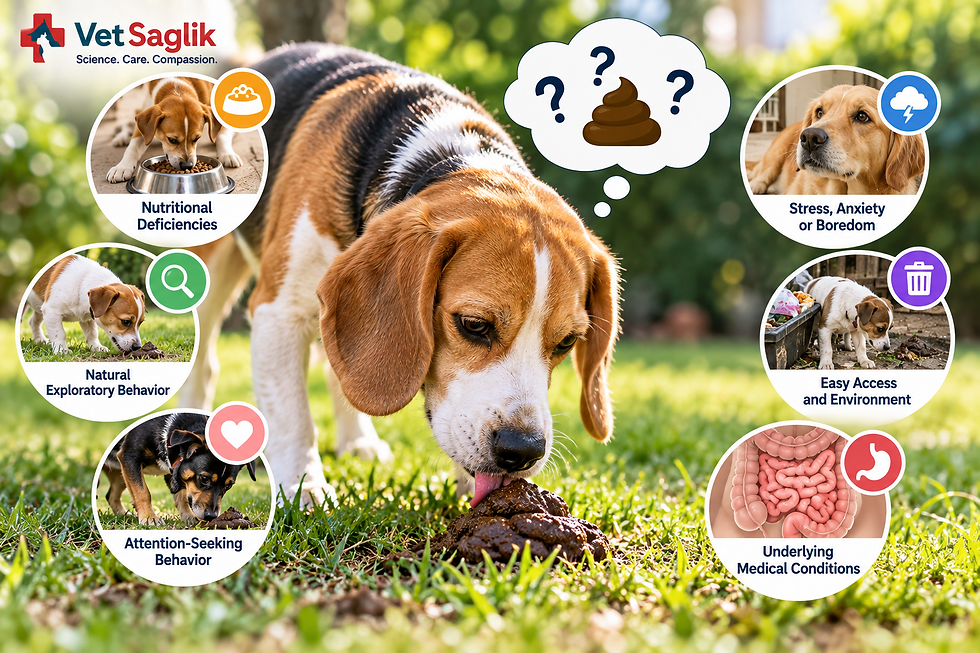
Dogs may eat poop because of habit, curiosity, hunger, stress or an attraction to the smell and taste. In some cases, an underlying medical problem contributes. The behavior is called coprophagia, and seeing it does not automatically mean that your dog is ill, poorly fed or missing an essential nutrient.
Discovering that your dog has eaten feces can be upsetting, especially if they have just finished a normal meal or immediately try to lick your face. However, dogs do not share our instinctive disgust toward feces. Their scavenging behavior means that something we consider waste may still attract their interest.
Coprophagia can involve a dog’s own stools, another dog’s stools or feces from another species. These situations should be distinguished because both the circumstances behind the behavior and the potential exposures differ. A puppy investigating its surroundings, a mother cleaning up after her puppies and an adult dog suddenly developing a persistent stool-eating habit should not all be assessed in exactly the same way.
Eating their puppies’ stools is a normal part of maternal care. In other dogs, stool eating may become an established habit, particularly when feces are readily available. Stress, boredom and hunger can also play a role, but the behavior alone cannot identify which explanation applies to an individual dog.
The most useful starting point is to observe when it happens, whose stools your dog eats and whether anything else has changed. Note changes in appetite, body weight, stool consistency or energy. A sudden onset accompanied by other symptoms deserves veterinary assessment rather than an assumption that the dog simply needs a different food or a supplement.
Is Sniffing Poop Normal, or Does It Mean Your Dog Wants to Eat It?
Sniffing poop does not necessarily mean that your dog intends to eat it. Dogs use scent to explore their surroundings and gather information. An odor that seems unpleasant to a person can be interesting to a dog, so stopping to investigate another dog’s stools can be part of ordinary scent exploration.
The important distinction is what happens after your dog approaches. Looking at or sniffing feces is different from licking, picking up or swallowing it. Coprophagia refers to eating feces; interest in the smell alone is not enough to describe a dog as having this behavior.
What you observe | How to interpret it |
Your dog briefly sniffs the area and moves on | Consistent with scent exploration; it does not establish stool eating. |
Your dog repeatedly returns to smell the same spot | Shows continued interest, but does not prove an intention to eat. |
Your dog licks or picks up feces | Direct contact that warrants calm interruption before further ingestion. |
Your dog chews or swallows feces | Actual stool eating that should be addressed through prevention and assessment of the circumstances. |
You do not need to discourage all sniffing during walks. Instead, guide your dog away from feces and allow them to explore cleaner areas. If they tend to grab stools, supervise closely and reward them for responding to a recall or “leave it” cue. Avoid shouting or turning the encounter into a chase.
When discussing the concern with your veterinarian, describe the behavior precisely. “My dog stops to smell other dogs’ poop” provides different information from “My dog swallows poop whenever we go outside.” That distinction helps determine whether the main issue is normal exploration, a preventable eating habit or a change that needs further investigation.

Why Do Dogs Eat Their Own Poop?
Dogs may eat their own poop because an initially exploratory behavior has become a habit, because they find it appealing, or because hunger, stress or attention reinforce the behavior. The fact that the stool is their own does not identify a single cause.
For some dogs, the opportunity is immediate: they finish defecating, turn around and investigate what they have left behind. If this repeatedly leads to eating, the sequence can become part of their toileting routine. This does not necessarily indicate that their regular food is inadequate.
Your reaction may also influence what happens next. Shouting, chasing or rushing toward your dog can turn the encounter into an attention-filled event. Punishment during toilet training may contribute to anxiety around elimination. However, the idea that every dog eats feces to “hide the evidence” is an oversimplification; it is only one possible explanation in some situations.
Rather than assuming a motive, record the circumstances:
Does your dog turn toward the stool immediately after defecating?
Does it happen only when stools remain in the garden?
Did the behavior begin after a change in routine or household?
Have appetite, body weight or stool consistency also changed?
These observations help distinguish an established habit from a new behavior that needs medical investigation. Sudden stool eating accompanied by weight loss, vomiting, diarrhea or unusual hunger should be discussed with your veterinarian. Stool eating alone does not establish a nutritional deficiency or justify adding supplements.
A practical first step is to accompany your dog during toilet breaks, calmly call them away when they finish and reward them at a short distance. Then collect the stool promptly. This creates an alternative routine while preventing immediate access.
Why Do Dogs Eat Other Dogs’ Poop?
Some dogs are interested in other dogs’ stools even when they ignore their own. The smell or taste may be appealing, and scavenging tendencies can make feces another item to investigate and consume. This preference does not, by itself, prove that either dog has a disease.
Access matters too. Shared gardens, busy walking routes and homes with several dogs provide more opportunities to encounter stools. A dog may repeatedly eat another dog’s feces simply because it is available before anyone removes it. Observational research has associated coprophagia with multi-dog households, although that association does not establish why an individual dog develops the behavior.
If your dog consistently targets the stools of one particular household dog, mention this to your veterinarian. It may be sensible to assess the other dog as well, particularly if their stools, weight or general health have changed. The preference itself is not a diagnostic test for poor digestion or illness.
Eating another dog’s feces also creates an exposure concern because you may not know that animal’s health or parasite status. Contaminated stools can carry infectious agents; their appearance alone cannot establish that they are safe.
For owners, the most useful distinction is between a dog that encounters stools occasionally and one that actively searches for them. Note where it happens and whether you can redirect your dog before ingestion. In shared spaces, supervise toilet breaks and remove each dog’s stools promptly. On walks, reward your dog for moving away from feces rather than allowing repeated opportunities to eat it.

Why Do Puppies Eat Poop?
Puppies may eat poop while exploring their surroundings with their mouths. They investigate unfamiliar objects, textures and smells, and sometimes that exploration includes feces. Finding your puppy doing this does not automatically mean they are sick or receiving inadequate food.
During early life, mother dogs lick their puppies to stimulate elimination and consume their waste to keep the nesting area clean. Puppies may also investigate their own stools or those of their littermates. However, normal maternal care and persistent stool eating in a growing puppy are different situations.
Some puppies lose interest as they mature, but there is no guaranteed age at which every puppy stops eating poop. Repeated access can allow the behavior to continue, so prevention should begin when you first notice it rather than waiting for your puppy to outgrow it.
Build a predictable toilet routine with frequent opportunities to go outside. Stay nearby, call your puppy away once they finish and reward them before collecting the stool. If an indoor accident happens, clean it calmly. Punishing a puppy for toileting or eating feces can create confusion and anxiety around elimination.
Although exploration can explain the behavior, it should not be used to dismiss other symptoms. Tell your veterinarian if stool eating occurs alongside diarrhea, vomiting, poor growth, weight loss or unusual hunger. Mention whether your puppy eats only their own stools or also encounters feces from unfamiliar animals.
The aim is to prevent ingestion while your puppy learns a better routine. You do not need to stop ordinary sniffing or make every toilet break a confrontation.
Can Hunger, Boredom, Stress or Learned Habits Cause Poop Eating?
Hunger, boredom, stress and learned habits can contribute to stool eating, sometimes in combination. However, you cannot reliably identify the cause from the behavior alone. Looking at the dog’s feeding routine, environment and the timing of episodes is more useful than assigning a label immediately.
Hunger: Review what your dog actually eats, including whether another pet takes their food. Appetite can also change with activity, medication or illness. Do not automatically increase portions simply because your dog eats stools; first check whether their current intake and body condition are appropriate.
Boredom: A dog with little opportunity for activity or interaction may spend more time investigating whatever is available. Walks, suitable play and food-based enrichment can provide other activities, but removing access to stools remains necessary.
Stress: Changes in routine, prolonged isolation or punishment around toileting may contribute in some dogs. Consider whether episodes coincide with stressful situations. Stool eating alone does not diagnose an anxiety disorder.
Learned habits: Repetition and the owner’s response can help maintain the behavior. A dramatic reaction may provide attention, while chasing can make calm interruption harder. Reward moving away and prevent access before the dog picks up the stool.
Keep a brief record of when episodes happen, recent meals, time spent alone and any accompanying symptoms. This can help your veterinarian or a qualified behavior professional identify patterns and choose a plan suited to your dog.
Does Eating Poop Mean Your Dog Has a Nutritional Deficiency?
No. Eating poop does not automatically mean that your dog lacks vitamins, minerals or other nutrients. Many dogs display this behavior for reasons unrelated to a deficiency. Stool eating alone cannot tell you whether a diet is nutritionally adequate or whether your dog needs supplements.
Nutrition still deserves a careful review. An inadequately balanced diet or excessive calorie restriction can contribute to hunger and unusual eating behavior. However, this is different from assuming that every dog eating feces has a vitamin deficiency.
Start by checking the basics:
Is the main food complete and balanced for your dog’s life stage?
Are portions appropriate for their weight, body condition and activity?
Are treats or table scraps replacing a substantial part of their meals?
Does another pet prevent them from eating their full portion?
Has their weight changed despite an apparently normal appetite?
A complete and balanced diet is intended to provide the required nutrients for the life stage stated on its label. An improvised homemade diet, or a diet made largely of treats and leftovers, may not provide the same nutritional balance.
There is also an important distinction between receiving nutrients and absorbing them effectively. A dog can eat an appropriate diet yet have a medical condition that interferes with digestion or absorption. Weight loss, persistent loose stools or unusually large stools make that possibility more relevant.
Avoid choosing vitamins, minerals or digestive enzymes solely because your dog eats poop. Your veterinarian can review the diet and decide whether testing or a specific supplement is justified. Changing food repeatedly without identifying a problem may leave the original behavior unexplained.
What Medical Conditions Can Contribute to Poop Eating?
Medical problems can contribute to stool eating by increasing hunger or interfering with digestion and nutrient absorption. They are not the explanation for every case, but they deserve consideration when the behavior starts suddenly or accompanies other changes.
Exocrine pancreatic insufficiency (EPI) is one condition that may be investigated when a dog remains very hungry while losing weight and passing large amounts of loose stool. In EPI, the pancreas does not supply enough digestive enzymes, so food is not digested normally. Stools may be pale, bulky and particularly foul-smelling. These signs warrant assessment, but neither stool appearance nor coprophagia alone confirms EPI.
Intestinal disorders that impair nutrient absorption can also be relevant, especially when there is persistent diarrhea or weight loss. The concern is the combination of findings rather than the stool-eating behavior in isolation.
Conditions that increase appetite, including diabetes mellitus and Cushing’s disease, may contribute to food seeking and stool eating in some dogs. Certain medications, particularly corticosteroids, can also increase appetite. Tell your veterinarian if the behavior began after a medication was started or changed; do not stop prescribed treatment on your own.
Intestinal parasites are another consideration during an assessment, particularly when digestive symptoms or an uncertain parasite-control history are present. Eating poop does not prove that a dog has worms, and the behavior should not be used to select a deworming treatment without further evaluation.
Your veterinarian will interpret coprophagia alongside the dog’s age, diet, medications, weight trend, physical examination and other symptoms. An otherwise well dog with a longstanding habit may need a different investigation from a dog that has recently become ravenous, lost weight and developed diarrhea.
Why Has My Dog Suddenly Started Eating Poop?
A sudden change deserves more attention than a familiar, longstanding habit. It does not automatically indicate illness, but it is worth asking what changed around the time your dog first began eating stools.
Start with recent changes in opportunity and routine. A new dog in the household, access to a shared garden or a different walking route may expose your dog to feces that were previously unavailable. Changes in time spent alone, daily activity or household stress may also be relevant.
Next, consider feeding and medication. Has the daily food portion been reduced? Has another pet started taking food from the bowl? Has your dog recently begun a medication that increases appetite? These details help your veterinarian distinguish changes in access or hunger from a possible health problem.
New stool eating accompanied by increased hunger, weight loss or persistent digestive symptoms warrants a veterinary appointment. Conditions affecting digestion, nutrient absorption or appetite can contribute, even when your dog still appears enthusiastic about meals. Some medications, including corticosteroids, can also increase food seeking.
Before the appointment, record when the behavior began, how often it happens and whether your dog eats their own stools or those of other animals. Include changes in drinking, urination, body weight and stool consistency, together with a list of medications and supplements.
A single episode in an otherwise well dog is different from a rapidly developing, persistent pattern. Prevent further access while you observe, and contact your veterinarian if the behavior continues or anything else seems abnormal. Avoid immediately changing diets or starting supplements, because doing so may complicate the assessment without addressing the cause.
Can Dogs Get Sick from Eating Poop? Health Risks Explained
Yes, dogs can become ill after eating contaminated feces, although illness does not follow every episode. The risk depends on what the stool contains, its source, environmental conditions and the individual dog’s susceptibility.
One concern is exposure to intestinal parasites. Giardia cysts can be infectious as soon as they are passed in feces, and infection occurs when a susceptible animal swallows them. Exposure can involve the stool itself or contaminated water, food and surfaces.
Other parasites have different life cycles. Most roundworm eggs require time in the environment before becoming infectious. This means that fresh stool and older contaminated soil do not carry identical risks. However, fresh poop should not be considered safe, because some other infectious agents do not require that waiting period.
Canine parvovirus is another important example. It spreads through contact with infected feces and contaminated surroundings, and a dog does not need to visibly eat a pile of poop to be exposed. Young, unvaccinated or incompletely vaccinated dogs are particularly susceptible.
You also cannot reliably judge infection risk by appearance. A dog that looks healthy may shed Giardia cysts, so normally formed stools from an apparently well animal are not proof of safety.
Eating feces can additionally leave contamination around the mouth or on the coat. Pick up stools promptly, wash your hands after handling waste and prevent face licking after an episode. These hygiene measures are sensible precautions, not an indication that everyone exposed will become ill.
Keep vaccination and parasite prevention appropriate to your dog’s age, location and lifestyle, and tell your veterinarian about repeated stool eating. Preventive care reduces particular risks, but it does not make feces safe to consume.
What Should You Do If Your Dog Has Just Eaten Poop?
Stay calm, prevent further access and check how your dog is behaving. A single episode in an otherwise well dog is not automatically an emergency. Your next steps depend on the source of the feces, any other material swallowed and whether symptoms develop.
Call your dog away or calmly guide them away on a leash. Remove the remaining stool without turning the situation into a chase. Punishment does not undo the exposure and may make future incidents harder to manage.
Note what happened: approximately when your dog ate the feces, how much they swallowed and whether it came from a known dog, an unfamiliar animal or an unknown source. Tell your veterinarian if your dog also swallowed a bag, litter or other material.
If there is visible contamination around the lips or muzzle, gently wipe the outside with a damp cloth if your dog tolerates it. Avoid forcing the mouth open, pouring water into it or using household disinfectants or human mouthwash. Keep fresh drinking water available and prevent face licking while you clean up.
Do not induce vomiting unless a veterinary professional specifically directs you to do so. Salt, oil and attempts to gag your dog can cause harm; hydrogen peroxide also requires professional guidance.
Watch appetite, energy, vomiting and stool consistency over the following days. Looking normal immediately afterward does not exclude an infection developing later. For example, parvovirus symptoms typically take several days to appear following infection.
Contact your veterinarian promptly if the feces came from an animal known to have an infectious disease, particularly if your dog is a puppy or incompletely vaccinated. Do not give leftover antibiotics or an extra deworming dose on your own; treatment and testing should match the exposure and your dog’s circumstances.
When Should You Take Your Dog to the Vet for Poop Eating?
Veterinary urgency depends on accompanying symptoms and exposure risks, not simply on how unpleasant the behavior looks. A comfortable, otherwise healthy dog with an occasional episode usually needs a different response from a puppy that develops vomiting and lethargy.
Seek emergency care for collapse, breathing difficulty, severe abdominal pain, or repeated unsuccessful retching with a swollen abdomen. These signs may indicate a serious problem unrelated to the stool itself and should not be dismissed as a simple consequence of eating something unpleasant.
Contact your veterinarian promptly if your dog develops:
Repeated vomiting or difficulty keeping water down.
Blood in vomit or diarrhea.
Marked lethargy, weakness or refusal to eat.
Signs of dehydration, such as sticky gums.
Persistent or worsening digestive symptoms.
Puppies and dogs with existing illnesses merit earlier advice. Do not wait for several warning signs to appear together.
Arrange a non-emergency appointment for persistent stool eating, sudden onset in an adult dog, or associated weight loss and unusual hunger. Increased thirst, urination or a recent medication change are also useful details to report because they may help identify an underlying contributor.
Even without physical symptoms, repeated stool eating is worth discussing if supervision and prompt cleanup are not enough. Your veterinarian can review medical and dietary factors, then help you develop a behavior plan or recommend appropriate behavioral support.
Bring your observations, a medication list and details of the current diet. Ask the clinic whether they would like a fresh stool sample and how it should be collected and stored.
How Do Vets Investigate Coprophagia in Dogs?
Veterinarians investigate stool eating by looking at the whole dog, rather than treating coprophagia as a diagnosis on its own. The aim is to identify any medical or nutritional contributors and understand the circumstances that maintain the behavior.
The assessment usually begins with a detailed history and physical examination. Your veterinarian will ask about the onset, frequency and source of the feces, together with your dog’s diet, medications, appetite and digestive health. Body weight and changes in body condition are particularly useful when assessing whether food intake and nutrient use are adequate.
Fecal testing for parasites is often part of the initial investigation. Additional tests depend on the findings; persistent loose stools, weight loss or unusual hunger may justify further investigation rather than an immediate assumption that the problem is entirely behavioral.
For example, a dog with weight loss, increased appetite and bulky stools may need testing for exocrine pancreatic insufficiency. A blood test measuring trypsin-like immunoreactivity, usually called TLI, helps diagnose this condition. Vitamin B12, also called cobalamin, may be assessed alongside it. These tests are selected because of the overall clinical picture, not because every dog that eats poop needs pancreatic testing.
If the assessment does not identify a medical explanation, attention shifts toward access to stools, toileting routines, stress and learned behavior. Medical and behavioral contributors can also coexist, so treating an illness may not immediately eliminate an established habit.
Bring a short behavior diary and accurate feeding information to the appointment. Record the food name, daily quantity, treats and supplements rather than describing the diet only as “good quality.” These details help your veterinarian make specific recommendations.
How to Stop a Dog from Eating Poop: Practical Steps
The foundation is to prevent access while teaching your dog what to do instead. Cleanup, supervision and reward-based training work together; relying on a verbal command alone leaves opportunities for the behavior to continue.
Remove stools promptly. Check the garden before letting your dog out, and collect new stools immediately. In a multi-dog household, supervise each dog’s toilet breaks.
Create a predictable routine after toileting. Once your dog finishes, call them a few steps away and reward them for coming to you. Then collect the stool. Keep rewards ready so you can respond before they turn back.
Use a leash where needed. During training, a leash can help prevent access to feces on walks or in the garden. Guide your dog away calmly rather than pulling sharply or chasing them.
Practice recall and “leave it” away from feces first. Begin with easy distractions in a clean environment. Reward a reliable response before expecting the same behavior around something highly tempting. Do not deliberately place feces as a training lure.
Review feeding with your veterinarian. Confirm that the diet and portions suit your dog. If hunger or a diagnosed digestive disorder contributes, address that specifically rather than adding food or supplements at random.
Provide suitable activity and enrichment. Regular interaction, walks and safe food puzzles offer alternatives to searching the garden for something to consume. Address suspected anxiety with professional help.
Keep the household response consistent. Everyone should supervise, clean up and reward moving away in the same calm manner. Avoid punishment, which can add stress without resolving the cause.
Track progress by recording actual ingestion and successful redirection. Fewer incidents under supervision are useful progress, but they do not necessarily mean your dog will ignore stools when alone. Continue preventing access as the new routine develops, and seek behavioral support if the problem remains difficult to manage.
Do Pineapple, Supplements or Stool Deterrents Actually Work?
There is no food additive or supplement that reliably stops every dog from eating poop. Before trying a product, distinguish between treating a diagnosed medical problem and attempting to change an otherwise healthy dog’s behavior.
Pineapple: The popular claim is that pineapple makes stools taste unpleasant. However, there is no reliable evidence that it consistently prevents coprophagia. Increasing the quantity is not a solution and may cause digestive upset. If your dog enjoys a small, appropriately prepared piece, consider it a treat rather than a treatment.
Vitamins and digestive enzymes: These have a role when a specific deficiency or digestive disorder has been identified. For example, pancreatic enzyme replacement is used for dogs with exocrine pancreatic insufficiency. That does not mean a healthy dog eating stools needs enzymes or a multivitamin. Treatment should address a demonstrated need rather than the assumption that coprophagia proves poor digestion.
Commercial stool deterrents: These products usually aim to make feces less appealing after an additive is fed. Reported success is limited, and they should not replace supervision, prompt cleanup or veterinary assessment. Veterinary guidance notes that such products may help only a small proportion of dogs.
Their intended effect also has an obvious limitation: adding something to your dog’s meals cannot change the stools of unfamiliar dogs encountered on a walk.
If you want to try a product, discuss its ingredients and suitability with your veterinarian, especially if your dog has a medical condition or follows a prescribed diet. Continue preventing access and record actual episodes. Fewer incidents after starting a supplement do not necessarily prove that the supplement caused the improvement if supervision or cleanup changed at the same time.
What Should You Avoid When Trying to Stop Poop Eating?
Avoid methods that frighten, hurt or deliberately make your dog feel ill. Reward-based training is recommended for addressing unwanted behavior; punishment can harm welfare without resolving the underlying motivation.
Do not shout, hit your dog or rub their nose in feces. Punishing indoor accidents can create anxiety around toileting, while chasing a dog that has found stools may encourage them to swallow quickly before you intervene. Calm prevention and rewarding movement away are more useful responses.
Avoid deliberately leaving stools available after coating or filling them with irritating substances. Do not experiment with hot sauce, household chemicals or other unpleasant mixtures. This creates another ingestion risk and does not teach a safe alternative behavior.
Do not give laxatives, human medicines or extra deworming treatments simply to make stools less attractive. Likewise, avoid restricting food to “teach a lesson” or adding large amounts of supplements without a nutritional assessment. A feeding or medical problem requires an appropriate plan.
Do not withhold necessary toilet breaks to prevent access to stools. Accompany your dog instead, reward them for coming away afterward and clean up promptly. The goal is to manage the environment while allowing normal elimination.
Finally, avoid interpreting every setback as disobedience or failure. An established habit may remain tempting even when your dog responds well during training. If progress stalls, review the plan with your veterinarian or a qualified professional who uses reward-based methods rather than escalating punishment.
Frequently Asked Questions About Dogs Eating Poop
Is it normal for dogs to eat poop?
Stool eating is a recognized canine behavior and does not automatically indicate illness. It can occur during puppy exploration or normal maternal care, while some adult dogs develop a persistent habit. However, being relatively common does not make it something to encourage. Prevent access and discuss new or persistent behavior with your veterinarian.
Why does my dog eat poop even after a meal?
Hunger is only one possible contributor. A dog may find stools appealing or continue eating them because of an established habit, stress or the attention the behavior produces. Eating after a meal does not prove that the food lacks nutrients or that the dog needs a larger portion.
Does sniffing poop mean my dog will eat it?
No. Dogs investigate their surroundings through scent, and sniffing alone is not coprophagia. Watch whether your dog simply investigates and moves on or begins licking, picking up or swallowing the stool. Calmly redirect them before ingestion while allowing opportunities to sniff cleaner areas.
Will my puppy grow out of eating poop?
Some puppies stop as they mature, but there is no guaranteed age or outcome. Supervised toilet breaks, prompt cleanup and rewarding your puppy for coming away help prevent repeated opportunities. Do not rely on age alone to resolve a persistent habit.
Does eating poop mean my dog has worms?
No. The behavior cannot diagnose a parasite infection. However, consuming contaminated feces can expose dogs to certain parasites, and parasites may also be considered when investigating digestive symptoms. Your veterinarian can recommend suitable testing and prevention based on the circumstances.
Can a vaccinated dog get sick from eating poop?
Yes. Vaccination protects against specific diseases; it does not cover every infection associated with fecal exposure. For example, Giardia is an intestinal parasite transmitted by swallowing infectious cysts. Keeping vaccinations appropriate is important, but it does not make stool eating safe.
Should I give my dog pineapple or vitamins to stop poop eating?
Pineapple is not a proven solution, and stool eating alone does not justify vitamin supplementation. A nutritional deficiency or digestive disorder should be assessed before treatment is selected. Supervision, cleanup and reward-based training remain central to managing access and behavior.
Should I make my dog vomit after eating poop?
Do not induce vomiting unless a veterinary professional specifically instructs you to do so. Home methods can cause harm. Instead, prevent further access, note what was eaten and contact your veterinarian if there are symptoms, a known hazardous exposure or uncertainty about other material swallowed.
How long does it take to stop a dog from eating poop?
There is no reliable timetable that applies to every dog. Progress depends on the contributors, how established the behavior is and how consistently access is prevented. Measure improvement through fewer ingestion episodes and better responses to redirection, while continuing supervision. Seek help if the behavior persists despite a consistent plan.
References
Source | Full URL |
American Kennel Club — Why Dogs Eat Poop and How to Stop It | |
PDSA — Why Do Dogs Eat Poo? | |
American Kennel Club — Why Does My Dog Sniff Everything? | |
U.S. Food and Drug Administration — “Complete and Balanced” Pet Food | |
Companion Animal Parasite Council — Giardia | |
Companion Animal Parasite Council — Ascarid | |
American Veterinary Medical Association — Canine Parvovirus | |
Cornell University College of Veterinary Medicine — Canine Parvovirus | |
PDSA — Vomiting in Dogs | |
ASPCA — Is It Ever Safe to Induce Vomiting? | |
American Veterinary Society of Animal Behavior — Humane Dog Training Position Statement |


Comments