
International Cat Day 2026: 8 Science-Backed Ways to Make Your Cat Happier Today


When Is International Cat Day 2026 and Why Is It Celebrated?
International Cat Day 2026 will be celebrated on Saturday, August 8. Established in 2002 by the International Fund for Animal Welfare, the annual event raises awareness of feline welfare while celebrating the companionship cats bring to millions of homes. International Cat Care became the official custodian of the event in 2020.
The day is more than an opportunity to share cat photographs. It encourages people to consider whether cats’ physical, behavioral, and emotional needs are genuinely being met. Providing appropriate nutrition, preventive veterinary care, safe shelter, positive human interaction, and opportunities to express natural behaviors can all improve feline well-being.
International Cat Day can therefore serve as a practical annual reminder: look at your home from your cat’s perspective and identify one or two changes that could make daily life safer, healthier, and more engaging.

How Can You Tell Whether Your Cat Is Truly Happy?
A happy cat generally feels safe enough to eat, sleep, groom, play, explore, and interact without remaining constantly alert. Relaxed body posture, soft facial expressions, normal grooming, regular appetite, playful behavior, upright tail greetings, and choosing to spend time near trusted people can all be positive signs. Some cats may also purr, knead, slowly blink, or expose their abdomen when relaxed, although these behaviors should always be interpreted in context.
Happiness does not look identical in every cat. A social cat may seek frequent physical contact, while a more independent cat may show trust simply by resting nearby. Age, personality, previous experiences, health, and the home environment all influence how a cat expresses comfort and contentment.
Behavioral changes can be more informative than any single “happy cat” signal. Hiding more than usual, reduced play, aggression, inappropriate elimination, overgrooming, appetite changes, disturbed sleep, or avoiding contact may indicate stress, pain, or illness. Because cats often conceal discomfort, a persistent change in normal behavior should prompt a veterinary assessment rather than being dismissed as moodiness.
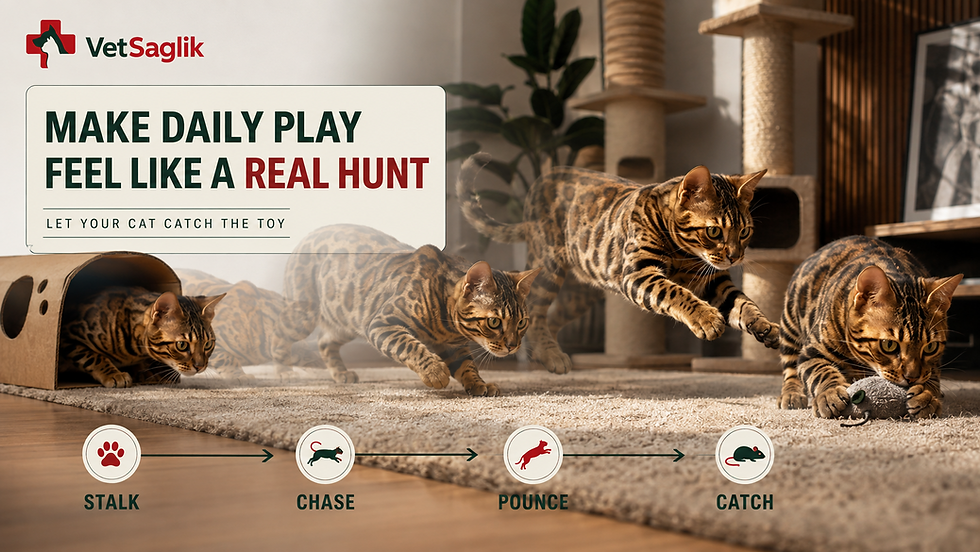
1. Make Daily Play Feel Like a Real Hunt
Play is not merely entertainment for cats; it allows them to express natural predatory behaviors. Indoor cats may have food and shelter but still experience frustration when they lack opportunities to stalk, chase, pounce, and capture. Research on feline environmental enrichment suggests that appropriate play can support activity, reduce boredom, and improve behavioral well-being.
Use wand toys, feather toys, small moving toys, or objects that imitate prey. Move the toy away from your cat, pause occasionally, and let it disappear behind furniture to make the activity resemble hunting. Allow your cat to catch the toy regularly, especially at the end of the session. Constantly presenting prey that can never be captured may cause frustration.
Several short sessions are usually more effective than one long session. Around 5–10 minutes of interactive play once or twice daily can be a practical starting point, although younger and more energetic cats may need more. Rotate toys to preserve novelty, supervise toys containing strings or feathers, and store them safely after play. If using a laser pointer, finish by directing your cat toward a physical toy or small food reward that can actually be caught.
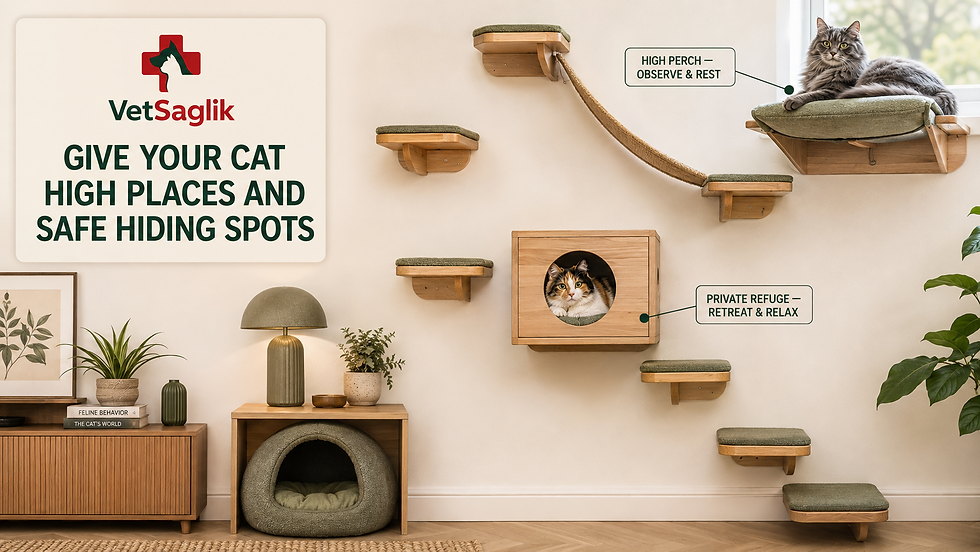
2. Give Your Cat High Places and Safe Hiding Spots
Cats naturally use height to observe their surroundings, avoid perceived threats, and rest without being disturbed. Access to elevated areas can increase a cat’s sense of control, particularly in busy homes, multi-cat households, or environments shared with children and dogs. A cat tree, secured shelf, window perch, or the top of stable furniture can provide valuable vertical territory.
Hiding places are equally important. A cardboard box, covered bed, carrier left open, or quiet space beneath furniture gives a cat somewhere to retreat when overwhelmed. Hiding should not automatically be discouraged; when a suitable refuge is available, many cats become more confident because they know they can withdraw if necessary.
Provide more than one elevated resting place and hiding area when several cats share the home. Resources should be distributed throughout the living space rather than grouped in a single room, allowing each cat to access them without confronting another animal. Make sure shelves and climbing structures are stable, easy to reach, and suitable for the cat’s age and mobility. Senior cats may need lower platforms, ramps, or intermediate steps.
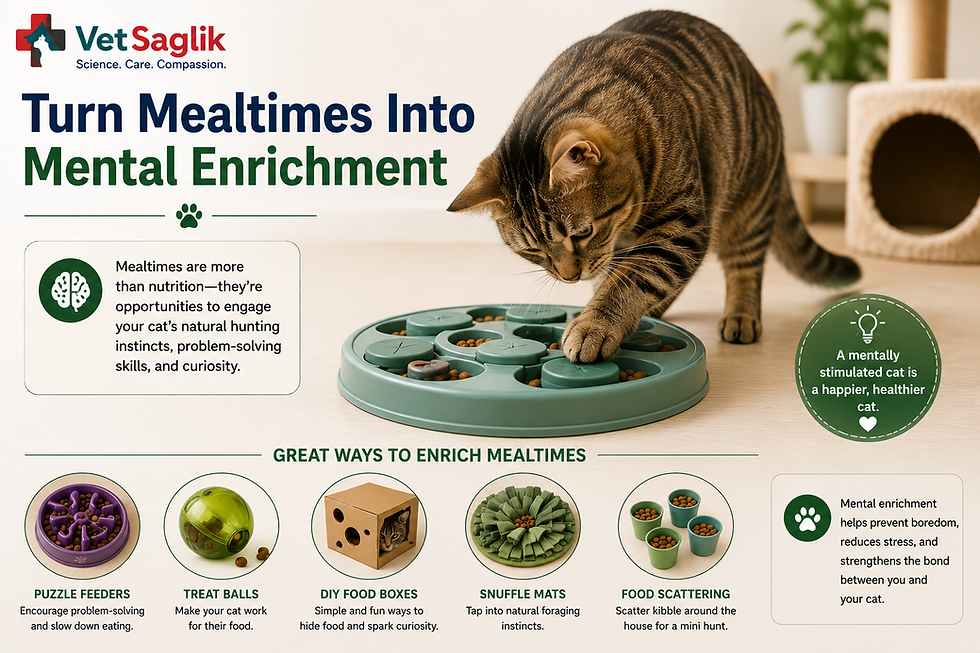
3. Turn Mealtimes Into Mental Enrichment
Eating from the same bowl in the same place every day provides little mental or physical stimulation. In nature, cats spend considerable time locating, pursuing, and obtaining food. Puzzle feeders and food-searching activities can recreate part of this process, encouraging movement, problem-solving, and natural foraging behavior.
Begin with an easy puzzle feeder so your cat can learn how it works without becoming frustrated. You can also divide the daily food allowance among several small bowls hidden in safe locations or place dry food inside a rolling feeder. Wet food can be offered on licking mats or in suitable slow-feeding dishes. Increase the difficulty gradually as your cat becomes more confident.
Food enrichment should use part of the cat’s measured daily ration rather than adding extra calories. Monitor how much food is consumed, wash feeding equipment regularly, and ensure that every cat in a multi-cat household can eat without competition. Cats with mobility problems, dental disease, cognitive changes, or prescription diets may require individually adapted feeding methods.
4. Let Your Cat Choose When and How to Interact
Cats are more likely to enjoy human contact when they retain control over the interaction. Forcing a cat to be held, repeatedly disturbing it while resting, or continuing to pet after it attempts to move away can create stress and gradually weaken trust. Allowing the cat to approach, pause, or leave helps make social contact more predictable and positive.
Offer a relaxed hand and let the cat decide whether to move closer. Many cats prefer gentle strokes around the cheeks, chin, forehead, and base of the ears. Watch for signs that the cat has had enough, including tail flicking, skin twitching, flattened ears, turning the head toward your hand, sudden grooming, or walking away. Stop before these signals escalate into scratching or biting.
Not every cat enjoys being picked up or sitting on a lap. A cat that sleeps nearby, follows you between rooms, slowly blinks, or greets you with an upright tail may still have a strong social bond. Respecting individual preferences is one of the simplest and most effective ways to help a cat feel secure around people.
5. Create a Clean and Cat-Friendly Litter Box Setup
A litter box is an essential resource, and problems with its cleanliness, location, size, or accessibility can become a major source of stress. Cats may avoid a box that is dirty, strongly scented, difficult to enter, positioned beside noisy appliances, or guarded by another animal. Inappropriate elimination is therefore not usually an act of revenge; it may reflect environmental stress, litter-box aversion, or a medical condition.
A commonly recommended starting point is one litter box per cat, plus one additional box. Place them in separate, quiet, easily accessible locations rather than arranging every box beside the others. Large uncovered boxes with soft, unscented litter are preferred by many cats, although individual preferences vary. Remove waste at least once daily and clean the entire box regularly without strong-smelling disinfectants.
Senior cats and those with arthritis may need boxes with low entrances. In multi-storey homes, provide at least one accessible box on each level used by the cat. If urination or defecation outside the box begins suddenly, arrange a veterinary examination because urinary disease, constipation, pain, kidney disease, diabetes, and other medical problems can cause the same behavior.
6. Protect Your Cat’s Routine and Reduce Unnecessary Stress
Cats often feel safer when important parts of daily life are predictable. Sudden changes in feeding times, household activity, furniture placement, visitors, construction noise, or access to favored resting areas can increase uncertainty. A consistent routine does not mean that every minute must be identical, but meals, play, cleaning, and quiet periods should follow a reasonably dependable pattern.
When a change is unavoidable, introduce it gradually whenever possible. Prepare a quiet room before moving home, allow a new pet to settle separately, and avoid forcing immediate interaction. Keep familiar bedding, scratching surfaces, toys, and food available so the cat retains recognizable scents and resources during the transition.
Stress can also arise when cats must compete for food, water, litter boxes, resting areas, or attention. Distribute these resources around the home so one animal cannot block access to everything. Synthetic feline pheromones may support some cats during stressful situations, but they should complement—not replace—appropriate resources, gradual introductions, pain control, and veterinary or behavioral assessment when needed.
7. Use Scent, Scratching, and Outdoor Views to Enrich Their Environment
Cats experience their surroundings through scent, visual information, texture, and movement. Scratching is an important natural behavior used to stretch muscles, maintain claws, leave scent, and create visible territorial marks. Preventing it entirely can cause frustration, so cats should be given appropriate places to scratch.
Provide both vertical and horizontal scratching surfaces made from materials such as sisal, cardboard, or wood. Position them near sleeping areas, entrances, and places the cat already attempts to scratch. The post should be tall and stable enough for a full-body stretch. Rewarding appropriate scratching and placing attractive alternatives near furniture generally works better than punishment.
A secure window perch can provide hours of visual stimulation through changing light, outdoor movement, birds, and people. Cats may also enjoy cat-safe grasses, cardboard boxes, paper bags without handles, rotating toys, and opportunities to investigate new scents. Avoid essential oils and strongly fragranced products because some can irritate cats or be toxic when inhaled, ingested, or absorbed through the skin.
Outdoor access should be designed around safety. A secure catio, enclosed balcony, or properly fitted window screen can provide fresh air and stimulation while reducing the risks associated with traffic, falls, fights, infectious diseases, and wildlife predation.
8. Support Long-Term Happiness With Preventive Veterinary Care
A cat cannot fully enjoy enrichment, play, or social interaction when experiencing untreated pain or illness. Dental disease, arthritis, urinary disorders, gastrointestinal problems, obesity, kidney disease, and other conditions may first appear as subtle behavioral changes rather than obvious physical symptoms. A cat that becomes quiet, irritable, less playful, or reluctant to jump may be unwell rather than simply getting older.
Routine veterinary examinations help establish a health baseline and may identify problems before they become advanced. The appropriate schedule depends on age and health, but healthy adult cats generally benefit from at least an annual assessment. Kittens, senior cats, and cats with chronic conditions often require more frequent monitoring.
Preventive care should be individualized and may include vaccination, parasite control, dental assessment, weight and body-condition monitoring, nutrition planning, and laboratory screening. Owners can help by watching for changes in appetite, thirst, urination, grooming, mobility, sleep, vocalization, and social behavior.
International Cat Day is an ideal opportunity to review when your cat last received a complete veterinary examination. Protecting comfort and detecting pain early may contribute more to long-term happiness than any new toy or treat.

Common Signs That Your Cat May Be Stressed or Unhappy
Cats often conceal discomfort, so stress may first appear as a subtle change in normal behavior. A stressed cat may hide more frequently, become unusually clingy or distant, stop playing, sleep in different places, vocalize excessively, or react aggressively when approached. Flattened ears, enlarged pupils, a tense crouched posture, rapid tail movements, and repeated scanning of the environment can indicate that the cat does not feel secure.
Changes in grooming are also important. Some cats overgroom until their coat becomes thin or their skin is damaged, while others stop grooming and develop a dull, matted coat. Reduced appetite, rapid eating, vomiting, diarrhea, urine marking, or eliminating outside the litter box may accompany stress, but these signs can also indicate medical disease.
Do not assume that every behavioral change is purely emotional. Pain, urinary disease, dental problems, arthritis, hyperthyroidism, kidney disease, and many other conditions can alter a cat’s behavior. A sudden, persistent, or worsening change should be assessed by a veterinarian. Difficulty urinating, repeated unproductive litter-box visits, open-mouth breathing, collapse, severe weakness, or prolonged refusal of food requires urgent veterinary attention.
Small Changes You Can Make for International Cat Day 2026
Improving a cat’s life does not always require expensive products or major changes to the home. International Cat Day 2026 can begin with a few practical adjustments based on your cat’s individual needs.
You could introduce a short daily play routine, move a scratching post to a location your cat already uses, add a cardboard hiding box, clean and reassess the litter-box area, or create a secure resting place near a window. Dividing part of the daily food allowance among puzzle feeders can make mealtimes more engaging without adding unnecessary calories.
Observe which changes your cat actually chooses to use. Enrichment is only beneficial when it suits the cat’s age, health, personality, and preferences. Introduce one change at a time, allow your cat to investigate voluntarily, and avoid forcing interaction.
The most meaningful way to celebrate International Cat Day is not to overwhelm your cat with attention for one day. It is to make everyday life safer, more predictable, mentally stimulating, and physically comfortable throughout the year.
Frequently Asked Questions About International Cat Day and Cat Happiness
When is International Cat Day 2026?
International Cat Day 2026 will be celebrated on Saturday, August 8. The event is observed on August 8 every year to celebrate cats and promote greater awareness of their welfare, health, and protection.
What is the best way to celebrate International Cat Day with my cat?
Choose an activity your cat genuinely enjoys, such as interactive play, gentle contact, a new hiding place, supervised outdoor enrichment, or a food puzzle using part of the normal daily ration. Avoid forcing costumes, physical contact, social interaction, or unfamiliar experiences.
How can I tell whether my indoor cat is happy?
A content indoor cat generally maintains a normal appetite, grooming routine, sleep pattern, litter-box behavior, curiosity, and willingness to play or interact. Relaxed posture, upright tail greetings, slow blinking, and choosing comfortable resting places can also be positive signs.
How much playtime does a cat need each day?
There is no single requirement for every cat, but one or two interactive sessions of approximately 5–10 minutes can be a practical starting point. Kittens and highly active cats may need several sessions, while senior cats may prefer shorter and gentler activities.
Do cats become unhappy when left alone?
Many adult cats tolerate reasonable periods alone when they have food, water, clean litter boxes, comfortable resting areas, and environmental enrichment. However, prolonged isolation, an unpredictable routine, illness, or insufficient stimulation can contribute to stress. Kittens, senior cats, and cats with medical conditions may require closer supervision.
Can purring always be considered a sign of happiness?
No. Cats commonly purr when relaxed, but they may also purr when frightened, painful, unwell, or attempting to soothe themselves. Purring should be interpreted alongside posture, facial expression, appetite, activity, and other behavioral signs.
Should I get another cat to make my cat happier?
Not necessarily. Some cats enjoy compatible feline companionship, while others find sharing territory stressful. A second cat should not be adopted solely as entertainment for the resident cat. Personality, age, previous social experience, available space, and the ability to provide separate resources should all be considered.
When should behavioral changes be discussed with a veterinarian?
Contact a veterinarian when a behavioral change is sudden, persistent, worsening, or accompanied by appetite loss, weight change, vomiting, altered thirst, litter-box problems, reduced mobility, excessive grooming, aggression, or hiding. Difficulty urinating, breathing problems, collapse, severe weakness, or prolonged refusal of food requires urgent veterinary care.
Sources
Source | Open Link |
International Fund for Animal Welfare (IFAW) — International Cat Day | |
Feline Veterinary Medical Association — Meeting the Physical and Emotional Needs of Indoor Cats | |
Feline Veterinary Medical Association — General Principles of Feline Well-Being | |
Feline Veterinary Medical Association — Client Education: Your Cat’s Environmental Needs | |
AAHA/AAFP — Feline Life Stage Guidelines | |
Ohio State University Indoor Pet Initiative — Basic Needs of Indoor Cats | |
Ohio State University Indoor Pet Initiative — Litter Boxes | |
Ohio State University Indoor Pet Initiative — Creating a Safe Refuge | |
Cornell University College of Veterinary Medicine — Safe Toys and Enrichment for Cats | |
Cornell University College of Veterinary Medicine — Excessive Grooming and Stress in Cats | |
Cornell University College of Veterinary Medicine — Feline Lower Urinary Tract Disease and Environmental Stress | |
Mersin Vetlife Veterinary Clinic |