
All about Dogo Argentino (dog breed)

Updated: Dec 8, 2025
Origin and History of the Dogo Argentino Dog Breed
The Dogo Argentino, created by Argentinian Dr. Antonio Nores Martínez in the 1920s, is one of the world's most powerful and well-balanced large breeds . The breed's goal was to produce a dog that could be used both for large-game hunting and possessed a calm, protective, and balanced family nature. To this end, various breeds, including the Mastiff, Bull Terrier, Pointer , Boxer , Great Dane, and, especially, the Cordoba Fighting Dog, were carefully selected and crossbred.
Although the Cordoba Fighting Dog was not suitable for indoor care due to its aggressive nature , it possessed tremendous endurance and physical strength. Dr. Martínez conducted selective breeding programs over many years with different breeds to reduce these aggressive traits and replace them with a character that was manageable, loyal to its family, and receptive to commands.
The Dogo Argentino thus evolved into a breed capable of tracking pumas, wild boars, and large game during hunting seasons, as well as living peacefully with its owners indoors. Characteristics such as endurance, scent tracking, high muscle strength, and courage were carefully preserved throughout the breed's development.
Since the 2000s, the Dogo Argentino has gained popularity worldwide and has been officially recognized by the FCI (Fédération Cynologique Internationale). Despite its hunting dog heritage, its most popular choice today is its protective instinct, family harmony, and balanced behavior. When properly raised, it is an extremely loyal, trustworthy, and people-oriented breed.

Positive Characteristics of the Dogo Argentino Dog Breed
The table below highlights the Dogo Argentino's strengths in terms of temperament, physical endurance, and family harmony. These strong qualities are the primary reasons for the breed's suitability for both hunting and family life.
Dogo Argentino Positive Characteristics Table
Feature | Explanation |
Superior physical strength | Thanks to its muscular and athletic structure, it is very successful in difficult terrains, long walks and guard duties. |
Loyalty and commitment | It establishes a strong bond with its owner and acts protective but balanced towards family members. |
High intelligence | Responds quickly to commands and enjoys task-oriented work. The training process is efficient and controlled. |
Balanced character | With proper socialization, it has a calm, confident and non-aggressive nature. |
Protective instinct | He keeps a controlled distance from strangers and acts bravely in situations of danger. |
Energetic and durable | Can engage in physical activity for long periods of time and is successful in sports activities. |
Family harmony | With the right training, it provides a strong rapport with children and family environments. |
These positive characteristics clearly demonstrate why the Dogo Argentino is preferred as both a working and family dog among large breeds.
Negative Characteristics of the Dogo Argentino Dog Breed
As with any powerful breed, the Dogo Argentino has some negative and disadvantageous traits that must be carefully managed. These aspects are crucial for understanding the breed and assessing its suitability for the right owner profile.
Dogo Argentino Negative Characteristics Table
Feature | Explanation |
A strong need for control and training | Because they are physically very strong, they can be difficult to control with inexperienced owners. Firm leadership and consistent training are required. |
High energy level | Their daily exercise needs are higher than those of other large breeds. If their energy isn't channeled, behavioral problems can occur. |
Intense protective instinct | Their possessive nature can turn into aggression if misdirected. Early socialization is essential. |
Strong jaw structure | Misdirected jaw strength can lead to undesirable behaviors. Appropriate toys and training are essential. |
Legal restrictions in some countries | The breed is restricted in some countries or may require special permission. Local regulations should be checked before adopting. |
High maintenance costs | Because it is in the large breed category, food, health expenses and equipment costs are high. |
Requires caution in non-family environments | Can be wary of unfamiliar animals; regular socialization is essential. |
These negative characteristics are manageable problems, but require the right owner profile and conscientious maintenance.

Physical Characteristics of the Dogo Argentino Dog Breed
The Dogo Argentino has one of the most athletic and muscular builds of any large breed. Its body proportions are optimized for strength, speed, and endurance. The breed's physiological structure makes it exceptionally well-suited for both hunting and guarding.
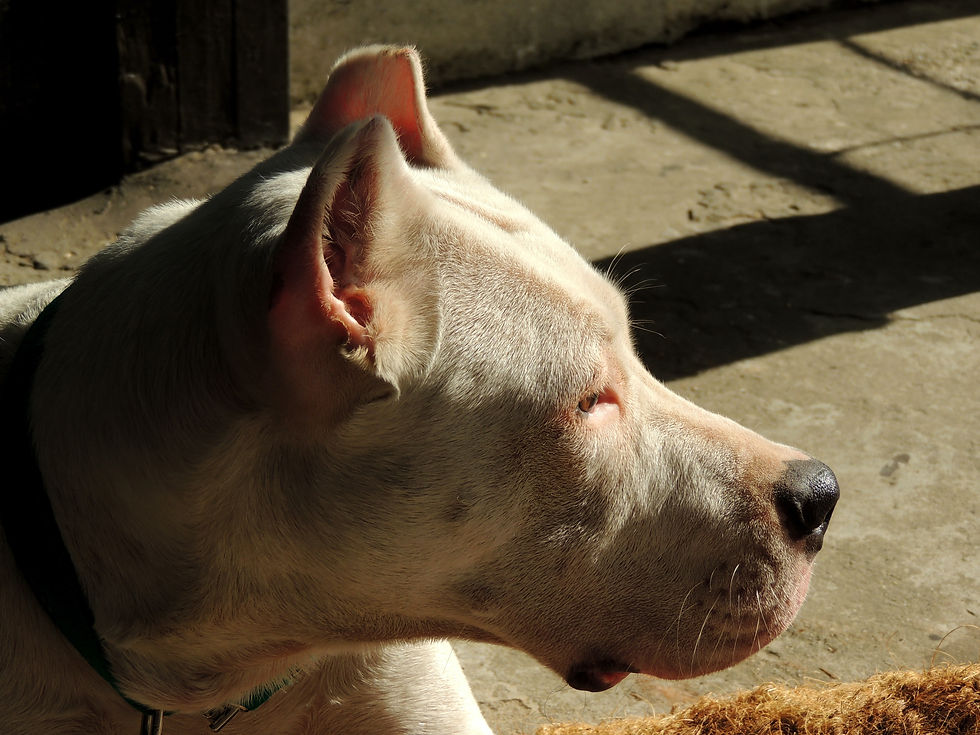
The Dogo Argentino's most distinctive physical feature is its completely white, short, and dense coat . This coat doesn't shed heavily and is easy to care for. However, due to its white color, it can be susceptible to sunburn. Its muzzle is mostly black, and its facial expression is strong, focused, and intelligent.
The musculature is very prominent. The shoulders are strong, the back is solid and straight, and the chest is broad. This physical structure allows for success in tasks requiring both agility and strength. The legs are muscular and long, allowing them to run at high speeds and cover long distances without tiring.
The ears are usually naturally drooping, although in some countries, cropping is still a traditional practice. The eyes are almond-shaped, and the expression is usually serious and attentive.
Average physical data:
Male height: 60–68 cm
Female length: 60–65 cm
Male weight: 40–45+ kg
Female weight: 35–40+ kg
Despite its powerful physical structure, the Dogo Argentino is an agile breed. It excels at tasks requiring leaping, changes of direction, and quick reactions. Because of its high muscular strength, this breed inevitably requires regular exercise, supervision, and discipline.

Dogo Argentino Dog Breed Adoption and Care Cost (EU & US)
Because the Dogo Argentino is a large and powerful breed, ownership and care costs are higher than average. Feeding, veterinary expenses, and exercise equipment are significant factors that contribute to the cost of this breed.
1. Ownership / Purchase Cost
The price of the breed can vary greatly from country to country and depending on the quality of the breeder.
EU (Germany, Netherlands, France, Austria) average prices:
1,200 – 2,500 €
Champion bloodline / show quality puppies: €3,000+
US prices:
$1,000 – $2,800
Puppies from top-tier breeding lines: $3,000–$4,000+
Factors that determine price include health screenings, the background of the breeding parents and the expertise of the breeder.

2. Monthly and Annual Maintenance Costs
Maintenance Item | EU Average | US Average | Explanation |
Formula | 60–120 € | $70–$140 | Quality food is essential due to high energy requirements. |
Veterinary expenses | 20–50 € | $25–60 | Vaccines, antiparasitic treatments, routine checkups |
Exercise equipment | 10–20 € | $10–20 | Strong toys, sturdy leashes |
Additional monthly expenses | 20–40 € | $25–40 | Rewards for training, care products |
Total monthly average:
EU: 120–230 €
US: $140–$260
Annual total:
1,500 – 2,800 €
It can range from $1,600 to $3,000.
The main reason for the high cost of this breed is the food consumption, the need for power equipment and the meticulousness of health monitoring.
Character and Behavior Characteristics of the Dogo Argentino Dog Breed
Despite its powerful build, the Dogo Argentino is a well-balanced, emotionally attached, and highly disciplined breed. These qualities make it well-suited for both guard duties and the role of a loyal family dog.
The cornerstones of the race's character are:
1. Protective but controlled instinct
The Dogo Argentino excels at protecting its flock and family. It's wary of strangers, but with proper socialization, it exhibits controlled protectiveness rather than aggression. Its ability to sense danger is highly developed.
2. Owner-oriented and loyal personality
This breed is very attached to its owner. It is courageous enough to risk its life when necessary and is prone to forming emotional bonds. It is not recommended to leave it alone for long periods.
3. High energy and work discipline
Due to its muscular build and genetic heritage, it has a high activity level. Its hunting instinct is strong; lack of regular exercise can lead to stress and behavioral problems.
4. Intelligence and problem-solving skills
The Dogo Argentino responds quickly to commands, enjoys task-oriented work, and excels in activities requiring high intelligence.
5. Getting along with children
With proper socialization, it can form a calm and secure bond with children. However, because it is a large breed, supervision may be necessary during play.
6. Relationship with other animals
It generally has a dominant personality. Relationships with other dogs are shaped by early socialization and training. If not properly managed, it can exhibit dominant behavior.
7. Emotional sensitivity
Despite its powerful physical appearance, it is an emotionally sensitive breed. Harsh training methods can negatively impact its behavior; it thrives much better with positive reinforcement.
In general, the Dogo Argentino is a strong, balanced, loyal and highly disciplined breed; however, it is best suited to experienced and conscious owners.
Common Diseases of the Dogo Argentino Dog Breed
While the Dogo Argentino is generally a strong, resilient, and athletic breed, it is more prone to certain health problems due to its genetic heritage and physical characteristics. The breed's large, muscular build, white fur pigmentation, and high activity level increase the risk of certain diseases. Therefore, regular veterinary checkups and early detection are the most important factors in determining the Dogo Argentino's quality of life.
A common problem in this breed is hereditary deafness . Due to the white pigmentation gene, complete hearing loss can occur, particularly in one or both ears. Therefore, responsible breeders screen their puppies with the BAER hearing test. If deafness isn't detected early, training can be challenging.
Another significant risk is hip dysplasia and elbow dysplasia . These joint problems, common in large and heavy breeds, can lead to lameness, pain, and limited mobility in later life. Regular exercise, optimal weight control, and appropriate food selection are important in reducing this risk.
The Dogo Argentino's powerful ribcage and high muscle mass may predispose it to heart problems . Conditions such as mitral valve disease or cardiomyopathy can progress without symptoms in the early stages.
Due to their white coat, they are at higher risk of sunburn and skin cancer compared to other breeds. Prolonged exposure to the sun can cause skin irritation and pigmentation disorders.
The following table summarizes the breed's common health problems:
Dogo Argentino Common Diseases Table
Illness | Explanation | Level of Predisposition |
Hereditary Deafness | Hearing loss linked to the white pigmentation gene | High |
Looseness of the hip joint and causing pain and lameness | Medium – High | |
Elbow Dysplasia | Structural disorder and movement limitation in the elbow joint | Middle |
Conditions such as mitral valve disease and cardiomyopathy | Middle | |
Skin Problems | Sunburn, irritation, pigment loss | High |
Hypothyroidism | Low thyroid hormone, skin and energy problems | Middle |
Allergic Reactions | Food or environmental allergies | Middle |
Musculoskeletal Injuries | Sports injuries due to high energy | Middle |
While this table shows the breed's health risks in a general framework, most of these risks can be managed with regular checkups and conscious care.
Intelligence and Trainability Level of the Dogo Argentino Dog Breed
The Dogo Argentino is a highly trainable dog among large breeds, thanks to its high problem-solving skills, strong perceptive abilities, and willingness to work with a focused focus. While not as intelligent as a Poodle , it is quick to grasp commands and can accurately read its owner's energy levels.
One of the main reasons for this breed's high trainability is its sense of duty . The Dogo Argentino loves to work and feels more balanced when given tasks it can handle, whether physically or mentally. However, because this breed has natural leadership tendencies , firm authority, consistency, and positive discipline are crucial in the training process.
The Dogo Argentino's intelligence allows for optimal performance in short training sessions. Coercive or pressured methods are counterproductive. Positive reinforcement, rewards, play-based commands, and clear directions yield excellent results with this breed.
Lack of mental stimulation is the primary cause of behavioral problems common in this breed. Therefore:
Intelligence toys
Scent tracking games
Problem-solving activities
Variety among commands should be part of the daily routine for the Dogo Argentino.
Its intuitive intelligence is highly developed, allowing it to respond quickly to changes in its environment. Due to its protective instinct, it has a high ability to analyze its environment. This can be an advantage if managed correctly; if mismanaged, it can lead to undesirable behavior.
In conclusion, the Dogo Argentino is a breed that is both enjoyable and productive to train for experienced owners. It learns easily, enjoys exercise, and develops a strong working spirit.
Exercise and Activity Needs of the Dogo Argentino Dog Breed
The Dogo Argentino is a high-energy, resilient, and athletic breed. Their daily exercise needs may be even greater than those of the average large breed. Regular physical activity and mental stimulation are essential for keeping this breed happy, balanced, and healthy.
The need for daily exercise can generally be summarized as follows:
At least 60–90 minutes of brisk walking ,
Plus 20–30 minutes of active play or training ,
Running/non-strenuous strength activities several times a week .
The Dogo Argentino excels at long, brisk walks, trail rides, runs, and outdoor activities. However, excessive exertion should be avoided; heavy physical exertion should be avoided, especially in young dogs, before joint development is complete.
Mental exercise is as important as physical exercise. Because of its hunting instinct, scent games, object-finding, target tracking, and obedience exercises meet this breed's mental needs. If its energy isn't channeled, the Dogo Argentino may exhibit behavioral problems (barking, digging, uncontrolled movements).
Another point to consider during exercise is sensitivity to heat . Due to its white coat and short hair, it is sensitive to the sun. In hot weather, walking should be done in the early morning or late evening.
Due to its energetic nature, the Dogo Argentino can be kept in an apartment, but it is much more successful with owners who have an active lifestyle .
Nutrition and Diet Recommendations for the Dogo Argentino Dog Breed
The Dogo Argentino is a large, athletic breed with high energy needs. Therefore, nutrition is not only about meeting daily energy needs; it is also crucial for muscle development, joint health, skin and coat structure, immune system, and long-term endurance.
The basic criteria for ideal nutrition are:
1. High-quality animal protein
The muscular structure of the Dogo Argentino must be supported by strong protein sources. Suitable protein types:
Turkey
Calf
Lamb
Salmon
Duck
Plant-based foods cannot provide adequate amino acid balance for this breed.
2. Supportive ingredients for joint health
As the breed is prone to hip and elbow dysplasia, food or supplements:
Glucosamine
Chondroitin
MSM
Omega-3 fatty acids (EPA–DHA) should be given as supplements.
3. Medium fat content, high energy value
The active nature of the Dogo Argentino requires high metabolic energy. However, excess fat can lead to weight gain, so balanced formulas should be preferred.
4. Grain-free or low-grain foods
This breed may be sensitive to certain grains or gluten. Grain-free or low-grain options are recommended for digestive health.
5. Daily meal plan
The ideal meal plan for an adult Dogo Argentino:
2 meals a day,
Avoid heavy meals before exercise,
Preventing excessive food consumption,
It is important to control your weight regularly.
6. Feeding the young
Because of rapid muscle and joint development during the growth period:
Large breed puppy food should be used
Calcium-phosphorus balance must be maintained
High-calorie foods that trigger excessively rapid growth should be avoided.
With a correct diet program, the muscle, bone and skin health of the Dogo Argentino is maintained at optimum levels.
Training Techniques of the Dogo Argentino Dog Breed
Because the Dogo Argentino is a strong, intelligent, and hard-working breed, training can be extremely effective. However, because this breed possesses natural leadership instincts, training must be conducted in a disciplined, clear, and consistent manner.
1. Early socialization is essential
The Dogo Argentino's protective instinct is strong. Therefore, from 2-4 months of age:
Different people
Different environments
Other dogs
Introducing the baby to sounds and stimuli is critical for developing balanced behavior in later ages.
2. Positive reinforcement is the most effective method
Force-based training methods can have adverse effects on this breed. Correct behaviors:
Reward food
Verbal praise
Reinforcing it with games gives much more productive results.
3. Clear and decisive command teaching
The Dogo Argentino is a highly focused breed. However, commands must be clear and consistent. Basic commands such as "No," "Wait," "Come," and "Leave it" should be taught early.
4. Turning high energy into an advantage in education
This breed has difficulty remaining still for long periods of time. Training sessions:
Short
Energetic
The repetition intensity should be low.
5. Proper management of the protective instinct
The Dogo Argentino can become overprotective if misled. Therefore:
Controlled socialization with people outside the family
Door, garden, street management
Avoiding games that trigger aggression are essential parts of education.
6. Games that focus on jaw strength should be chosen correctly.
To direct his strong jaw correctly:
Sturdy chew toys
Smell detection games
Controlled versions of tug-of-war games can be used.
Dogo Argentino has a high potential for training, but a patient, conscious and consistent approach is essential.
Skin, Fur, Eye and Ear Care of the Dogo Argentino Dog Breed
While the Dogo Argentino's white, short, single-layered coat makes it easy to care for, it can lead to skin problems if left untreated. Therefore, regular grooming is crucial, especially regarding sun sensitivity and ear cleaning.
The table below summarizes all the basic care requirements of the breed:
Dogo Argentino Care Chart
Area | Suggestion |
Fur | Combing with a soft brush 1-2 times a week; even if shedding is minimal, regular combing is important for skin health. |
Skin | Sun protection is important; sunscreen is recommended if spending extended periods outdoors. Excessive bathing should be avoided (every 3–4 weeks). |
Eyelash | The area around your eyes can be susceptible to irritation from white hairs. Cleansing several times a week will reduce the formation of spots. |
Ear | Due to the floppy ear structure, moisture can accumulate. Ear cleaning should be used once a week. |
Nail | Nails should be trimmed every 3–5 weeks. Larger breeds can be injured more easily with long nails. |
External | Brushing your teeth 3–4 times a week and annual professional cleanings are important for dental health. |
When the Dogo Argentino's grooming process is implemented regularly, both skin and coat health is preserved and risks such as sunburn and ear infections are minimized.
General Health Status and Lifespan of the Dogo Argentino Dog Breed
The Dogo Argentino is a physically robust, muscular, and athletic breed. Although selected from a strong genetic line, it is prone to health problems due to certain genetic and environmental factors. With regular veterinary checkups, proper nutrition, and proper care, this breed can live a long and healthy life.
The average lifespan ranges from 10 to 14 years . This is a relatively good average for large breeds. Lifespan is closely linked to quality of nutrition, regular exercise, weight management, and early detection of health problems.
The general health framework of the Dogo Argentino is as follows:
Genetic deafness risk: Hearing problems may occur due to white pigmentation. It is important to have a BAER test performed while the puppy is still young.
Joint problems: Hip and elbow dysplasia can occur with age. Proper nutrition and controlled exercise maintain joint health.
Heart disease: Annual checkups are important for cardiomyopathy and mitral valve problems, which are common in large breeds.
Skin sensitivity: White hair increases dermal sensitivity. Risk of sunburn, irritation, and dermatitis may occur.
The immune system is robust , but supportive supplements can be beneficial during periods of intense exercise.
In general, the Dogo Argentino is a healthy breed; however, a proactive approach (early control, regular care, nutritional management) significantly increases the length and quality of life.
Tartar and gum problems are moderately common among large breeds. Regular cleanings reduce these risks.
In general, the Dogo Argentino is strong, resilient, and can live a healthy life if well cared for. Regular checkups and proper care significantly increase its lifespan and comfort.
General Health Status and Lifespan of the Dogo Argentino Dog Breed
The Dogo Argentino is a physically robust, muscular, and athletic breed. Although selected from a strong genetic line, it is prone to health problems due to certain genetic and environmental factors. With regular veterinary checkups, proper nutrition, and proper care, this breed can live a long and healthy life.
The average lifespan ranges from 10 to 14 years . This is a relatively good average for large breeds. Lifespan is closely linked to quality of nutrition, regular exercise, weight management, and early detection of health problems.
The general health framework of the Dogo Argentino is as follows:
Genetic deafness risk: Hearing problems may occur due to white pigmentation. It is important to have a BAER test performed while the puppy is still young.
Joint problems: Hip and elbow dysplasia can occur with age. Proper nutrition and controlled exercise maintain joint health.
Heart disease: Annual checkups are important for cardiomyopathy and mitral valve problems, which are common in large breeds.
Skin sensitivity: White hair increases dermal sensitivity. Risk of sunburn, irritation, and dermatitis may occur.
The immune system is robust , but supportive supplements can be beneficial during periods of intense exercise.
In general, the Dogo Argentino is a healthy breed; however, a proactive approach (early control, regular care, nutritional management) significantly increases the length and quality of life.
Suitable Owner and Living Environment for the Dogo Argentino Dog Breed
Because the Dogo Argentino is a powerful, protective, and energetic breed, it's not suitable for every owner. Ideal living conditions and suitable owner characteristics for this breed directly impact both the dog's behavior and quality of life.
The most suitable owner profile for this breed should include:
Experienced dog owner: The Dogo Argentino has a strong character. Clear commands, consistent behavior, and firm leadership are required.
Active lifestyle: Perfectly suited to busy owners due to its need for 1–2 hours of daily exercise.
Positive training approach: Harsh training methods are counterproductive for this breed. A calm but authoritative approach based on positive reinforcement is required.
Willing to socialize early: This breed achieves the most balanced structure when introduced to different people and animals at an early age.
Owner with time: The Dogo Argentino does not like to be alone for long periods of time; it requires regular attention and family ties.
In terms of living environment:
It can be kept in an apartment, but daily long exercise is essential.
Although a house with a garden is ideal, a garden alone is not enough; active walks are absolutely necessary.
Since it is sensitive to hot weather, shade and water access must be provided.
It can get along very well with children in a controlled manner, but due to its large size, supervision is required during play.
In short, the Dogo Argentino is best suited to a conscious, disciplined and active owner.
Dogo Argentino Dog Breed Lifespan and Reproduction Information
The Dogo Argentino's lifespan generally ranges from 10 to 14 years . This is a fairly satisfactory average for large breeds. In healthy individuals, this lifespan can be extended even further with proper care, regular monitoring, and a balanced diet.
Main factors affecting life expectancy:
Hip and elbow joint health
Regular monitoring of heart functions
Weight management
Annual blood tests and screenings
Skin protection due to sun sensitivity
Reproductive information
The estrus cycle of the female Dogo Argentino: Repeats every 6–8 months.
Gestation period : 58–63 days.
Number of offspring: May vary between 6 and 10.
Genetic health screening: Before reproduction, BAER test (hearing test), hip and elbow x-rays and general health screenings must be performed.
Early mating is not recommended: It is recommended that females not mate before 2 years of age to ensure complete physical development.
Dogo Argentino breeding is a conscious process. Health screenings are crucial for both purifying the breed and reducing genetic diseases.
FAQ - Dogo Argentino Dog Breed
Is the Dogo Argentino dog breed aggressive?
The Dogo Argentino is not inherently aggressive, but it possesses a strong protective instinct. Therefore, its behavior depends largely on its upbringing, early socialization, and interaction with its owner. If properly managed, it exhibits a calm, controlled, and balanced nature. Inadequate socialization or improper training can lead to this protective instinct manifesting into undesirable behaviors.
Is the Dogo Argentino dog breed banned?
In some countries, the Dogo Argentino is subject to certain restrictions, and registration, special permits, or training documents may be required. This is not because the breed is "dangerous," but rather because of precautionary regulations imposed by some countries due to its strong physiological structure. In Türkiye, during periods when it was not on the national banned breed list, restrictions were only applicable in certain municipalities. Current local regulations should be checked before adopting.
Does the Dogo Argentino dog breed get along well with children?
Yes, when raised correctly, they get along quite well with children. They have a patient, protective, and calm disposition. However, due to their large and powerful build, supervision is always recommended, especially when playing with younger children. Accidents such as accidental knocks or rough contact should be prevented.
Can the Dogo Argentino dog breed be cared for at home?
Yes, it can be kept in apartments or homes. However, this breed requires long daily walks, running activities, and mental stimulation to burn off its high energy. A Dogo Argentino that lacks exercise can become restless and unhappy. Therefore, if kept at home, the owner must lead an active lifestyle.
Does the Dogo Argentino dog breed get along with other dogs?
If socialized early, they can get along with other dogs. However, some individuals may exhibit dominant behavioral tendencies. Competition or tension may arise, especially with larger breeds of the same sex. Socialization, controlled introductions, and training are key factors in this regard.
Can the Dogo Argentino dog breed be left alone?
They are not suited to being left alone for long periods. This breed is very attached to its owner and can develop separation anxiety. Behavioral problems (barking, chewing, restlessness) can occur when left alone for long periods. It's important for those with a busy schedule to consider their daily schedule before adopting this breed.
How much exercise does the Dogo Argentino dog breed need?
It requires at least 60–90 minutes of brisk walking and 20–30 minutes of mental stimulation daily. An ideal exercise routine includes long walks, controlled runs, obedience training, and scent tracking. If energy isn't released, behavioral problems may occur.
Does the Dogo Argentino dog breed shed a lot?
The shedding rate is low. Thanks to its short, single-layered coat, shedding is minimal. A weekly brushing is sufficient to control shedding. However, due to skin sensitivity, there is a risk of sunburn; periods of shedding may increase with sun irritation.
What food should the Dogo Argentino dog breed eat?
Because of their muscular and strong build, foods containing high-quality animal protein should be preferred. Fish, turkey, lamb, and beef proteins are suitable. Foods containing glucosamine, chondroitin, and omega-3s are recommended to support joint health. Grain-free or low-grain foods are more suitable for digestion.
Why is deafness common in the Dogo Argentino dog breed?
Due to the white pigmentation gene, the auditory nerves may be developmentally impaired. This can manifest as deafness in one ear (unilateral) or in both ears (bilateral). In puppies, the BAER test definitively determines hearing status.
Is hip dysplasia common in the Dogo Argentino dog breed?
Yes, this breed is prone to hip and elbow dysplasia. Uncontrolled feeding, rapid weight gain, and excessive strain increase these risk factors. Regular X-rays and optimal weight management help maintain joint health.
Is the Dogo Argentino dog breed suitable as a guard dog?
Yes, with proper training and supervision, they are quite successful in guarding duties. However, this breed's guarding instincts, unlike aggressive behaviors, are controlled and task-oriented. A trained Dogo Argentino reacts consciously in the face of danger.
Is the Dogo Argentino dog breed resistant to cold?
Due to its short, fine coat, it's not very cold-tolerant. Protective clothing, a warm bed, and limited outdoor time are recommended in cold climates. Extreme cold can also trigger joint pain.
Is the Dogo Argentino dog breed tolerant to heat?
Although their white coat reflects sunlight, they are at risk of heatstroke or sunburn due to their sensitive skin. During the summer months, shaded areas, frequent watering, and a regular morning and evening exercise schedule are important.
Does the Dogo Argentino dog breed bark a lot?
It's not a breed that generally barks unnecessarily. Due to its protective instinct, it may bark as a warning at strange noises. However, aggressive barking can be completely controlled with proper training and exercise.
Does the Dogo Argentino dog breed get along with other pets?
They can live together if properly socialized. However, due to their strong hunting instincts, their interaction with small animals should be controlled. Compatibility with cats or small breeds depends entirely on early introduction and quality training.
What is the suitable habitat for the Dogo Argentino dog breed?
An active living environment is essential for this breed. While a house with a garden is ideal, an apartment is also possible, as long as regular exercise and outdoor activities are provided. A sedentary lifestyle can lead to stress and behavioral problems in this breed.
How quickly does the Dogo Argentino dog breed respond to training?
Because of his high intelligence, he learns basic commands quickly. However, due to his need for leadership and his independent nature, training must be consistent and regular. Positive reinforcement is the most effective method.
How long does the Dogo Argentino dog breed live?
The average lifespan is 10–14 years. This lifespan can be extended even further with a healthy diet, regular checkups, and appropriate exercise.
Why is weight control important in the Dogo Argentino dog breed?
Excess weight can trigger joint problems and heart disease. Therefore, food should be given in moderation. Because this is a large breed, excess weight negatively impacts both quality of life and mobility.
Is the Dogo Argentino dog breed difficult to train?
Yes, it can be challenging for inexperienced owners. It has a strong and independent character. Training requires clarity, determination, and discipline. Therefore, it is not recommended for first-time dog owners.
Does the Dogo Argentino dog breed become aggressive?
Improper training, poor socialization, neglect, or abuse can lead to aggressive behavior. However, when raised correctly, they are not aggressive. They learn to control their protective instincts and develop the ability to analyze danger.
Does the Dogo Argentino dog breed make a lot of noise?
While its barking intensity is low, it can emit warning sounds due to its protective instinct. It is not a frequent barker, but behavioral barking can occur in individuals that are bored or not socialized.
Is the Dogo Argentino dog breed suitable for first-time dog owners?
Generally, no. Due to their robust physical structure, high energy level, need for disciplined training, and protective instincts, they are best suited to experienced owners. For first-time dog owners, more passive and easily controlled breeds are recommended.
Sources
Cat Fanciers' Association (CFA)
The International Cat Association (TICA)
American Veterinary Medical Association (AVMA)
Mersin Vetlife Veterinary Clinic – Open on Map: https://share.google/XPP6L1V6c1EnGP3Oc


Comments