
Everything About the Bernedoodle Dog Breed: Characteristics, Care, and Temperament.

Updated: Sep 23

Bernedoodle Dog Breed Origin and History
The Bernedoodle dog breed is not a purebred but rather a consciously created hybrid (designer breed) . This breed was developed through controlled mating of Bernese Mountain Dogs and Poodles . The aim was to combine the calm, family-friendly, and balanced character of the Bernese Mountain Dog with the high intelligence, trainability , and low shedding potential of the Poodle.
The Bernedoodle's origins lie in the late 1990s and early 2000s , primarily in North America . Particularly in the United States and Canada, the increasing number of families with allergy concerns, along with the demand for large, social dogs that are compatible with children, played a significant role in the popularity of this hybrid breed. The Bernedoodle is one of the breeds developed to meet these needs.
There were two main goals in the development of this breed: First, to provide genetic diversity to counteract the short lifespan and certain hereditary diseases of the Bernese Mountain Dog . Second, to combine the intelligence, eagerness to learn, and low allergen potential of the Poodle with a larger, family-friendly dog. Therefore, Bernedoodles are often described as highly balanced individuals, both mentally and socially.
Bernedoodles can come in different sizes depending on the type of Poodle they are made from:
Standard Bernedoodle (Standard Poodle × Bernese Mountain Dog)
Mini Bernedoodle (Miniature Poodle × Bernese Mountain Dog)
Less common are Toy Bernedoodle variations.
This situation has made it difficult to establish a uniform standard in the breed's historical development. Furthermore, the Bernedoodle is not officially recognized as a purebred by international canine federations (such as the FCI and AKC). Nevertheless, it has gained significant popularity in the last 20 years, particularly as a family dog, therapy dog, and emotional support dog.
Historically, the Bernedoodle is not a breed originating from a "working dog." Rather, it was developed to be a dog suited to living with humans, forming social bonds, and adapting to city life . This is a key point that distinguishes its history from classic hunting, herding, or guard dogs.
In summary, the Bernedoodle's origins can be described as a new generation of dog breed that emerged as a result of conscious selection , shaped by modern living conditions, family structures, and changing human-animal relationships.

Bernedoodle Dog Breed Positive Characteristics
The Bernedoodle dog breed is particularly known for its adaptability to family life and its people-oriented character. The table below details the most prominent positive aspects of this breed, along with the reasons why.
Positive attribute | Explanation |
Family-Friendly Design | Bernedoodles form strong bonds with people. In a home environment, they are calm, attentive, and very devoted to their owners. They are not suited to prolonged periods of solitude, which makes them very close to the definition of a "family dog". |
Harmony with Children | When properly socialized, they are patient, gentle, and tolerant towards children. They are less prone to impulsive reactions, thus presenting a safe profile for families with children. |
High Intelligence Level | Thanks to its Poodle origins, it has well-developed problem-solving abilities. It learns commands quickly, requires little repetition, and responds well to mental stimulation. |
Openness to Education | When used with positive reinforcement, basic and advanced training is successful. Toilet training, basic obedience, and house rules are usually learned quickly. |
Social and Adaptable Character | They can get along well with people, other dogs, and even pets. They are not an overly dominant or aggressive breed. |
Low Allergen Potential (Relative) | Thanks to Poodle genetics, some individuals shed less hair. This can be an advantage for people with allergy sensitivities (although it is not completely hypoallergenic). |
Ability to Form Emotional Connections | They are highly sensitive to their owners' moods. This trait makes them a popular choice for therapy and emotional support dogs. |
Balanced Energy Level | He is not excessively hyperactive. When his daily exercise needs are met, he exhibits calm and controlled behavior indoors. |
Strong Learning Motivation | The child can be motivated by play, reward treats, and social interaction. Stubbornness, which can complicate the training process, is generally at a low level. |
Protective, but not overly protective. | They may be cautious towards strangers at first, but they are not aggressive. This trait makes them suitable for apartment living. |
When examining the positive aspects of the Bernedoodle, it becomes clear why this breed is so popular, especially for city dwellers, families with children, and first-time dog owners . However, the sustainability of these advantages is directly related to proper socialization, sufficient attention, and regular exercise.
Bernedoodle Dog Breed Negative Characteristics
While Bernedoodles are generally a docile breed, like any dog, they have some challenging aspects and risks . The table below clearly summarizes the negative traits that you should be aware of before adopting this breed.
Negative trait | Explanation |
Sensitivity to Solitude | Bernedoodles are people-oriented and may develop separation anxiety if left alone for extended periods. This can lead to barking, chewing on objects, and other stressful behaviors. |
High Need for Attention | It expects regular attention from its owners. If neglected, it may become withdrawn or exhibit restless behavior. It is not a "self-sufficient" dog. |
Hair Care Can Be Difficult | Knotting and matting are common in individuals with curly or wavy coats. Regular brushing and professional grooming may be necessary. |
Genetic Ambiguity (Hybrid Structure) | Because they are not purebred, physical characteristics, coat type, and temperament can vary significantly from individual to individual. It is difficult to set standard expectations. |
Boredom Related to High Intelligence | If not sufficiently stimulated mentally, a child may become bored. This can lead to undesirable behaviors (chewing on objects, attention-seeking). |
Difficulty in Size Control | Especially during puppyhood, it may not be possible to accurately predict adult size. This can create problems for those planning to live in an apartment. |
Sensitive Digestive System | Some Bernedoodles may have food sensitivities and soft stool problems. Feeding plans should be carefully developed. |
Behavioral Problems in Irregular Exercise | If daily physical activity needs are not met, restlessness, hyperactivity, or difficulty concentrating may occur. |
It can be challenging for first-time dog owners. | Although they are trainable, they can become a difficult breed to manage for those who cannot dedicate the necessary attention and time. |
Professional Care Cost | Trimming, grooming products, and the occasional need for professional help can increase grooming costs. |
When examining the negative aspects of the Bernedoodle, it becomes clear that this breed is not an "easy but irresponsible" dog . In the right environment, with sufficient time and attention, it can be a wonderful companion; however, if neglected, behavioral and psychological problems may arise.

Bernedoodle Dog Breed Physical Characteristics
The Bernedoodle dog breed exhibits a wide range of physical variation due to its hybrid nature. Appearance can vary significantly depending on the size of the Poodle used, genetic dominance, and breeding line. Therefore, it's unrealistic to expect a "uniform" physical build when adopting a Bernedoodle.
Size and Weight
Bernedoodles are generally categorized into three main size groups:
Standard Bernedoodle:
Shoulder height: approximately 58–74 cm
Weight: 25–45 kg
Mini Bernedoodle:
Shoulder height: approximately 45–55 cm
Weight: 11–25 kg
Toy Bernedoodle (rare):
Shoulder height: 30–45 cm
Weight: 7–11 kg
It may not be possible to accurately predict adult size during the puppy stage. Even between puppies from the same litter, significant size differences can be observed.
Body Structure
Bernedoodles typically:
To a strong bone structure
To the broad rib cage
Medium to long legs
He has a balanced and athletic build.
Individuals with a dominant Bernese Mountain Dog ancestry tend to be larger and heavier, while those with a dominant Poodle genetics have a more slender and elongated physique.
Head and Facial Structure
The head shape is usually broad and round.
The nose is usually black and broad.
The eyes are medium-sized, almond-shaped or nearly round.
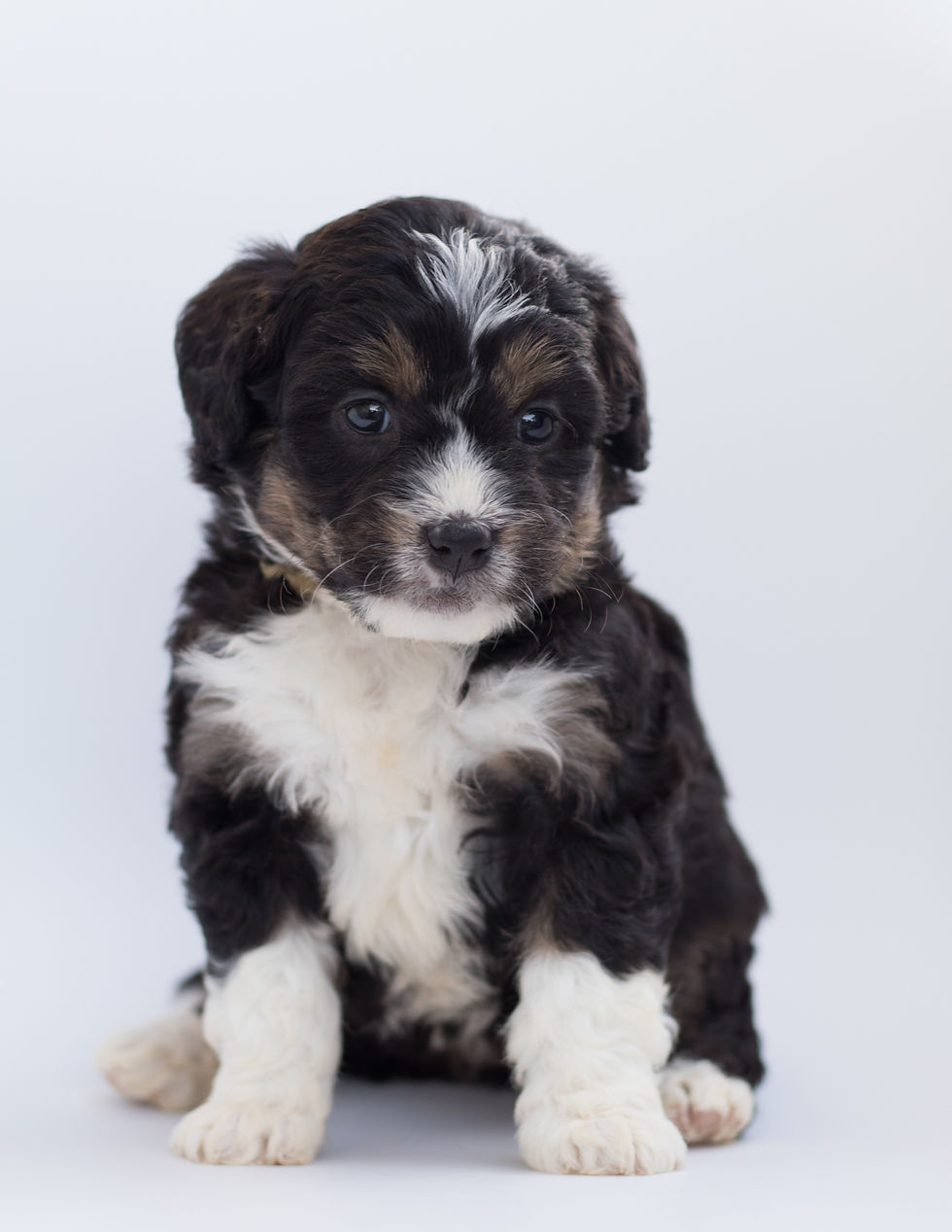
Their facial expression is soft, attentive, and "people-oriented."
This facial expression plays a significant role in the perception of Bernedoodles as a breed capable of forming emotional bonds.
Hair Structure and Length
Bernedoodles can have three basic coat types:
Wavy (the most common and most stable structure)
Curly (Poodle dominant, low shedding)
Straight or slightly wavy (Bernese predominance, more hair loss)
The fur is generally medium to long and prone to matting without regular grooming.
Colors and Patterns
Bernedoodles are quite colorful. The most common colors are:
Black
Black and white
Black-brown
Brown
Tricolor (Bernese-like pattern)
Color distribution is entirely dependent on genetic combination, and tonal changes can be observed as the child progresses from puppies to adulthood.
Tail and Ears
The tail is usually medium in length and bushy.
It is transported in its natural state, not cut.
Ears are floppy and require regular check-ups due to limited air circulation.
In general, the physical structure of the Bernedoodle is based on a balance between showy yet demanding , large yet elegant , durable yet delicate aspects .

Bernedoodle Dog Breed Character and Behavioral Traits
The Bernedoodle dog breed is characterized by its high social intelligence , people-oriented nature , and emotional sensitivity . While these traits make it an excellent family dog in the right environment, they can also make it prone to behavioral problems in the wrong conditions.
People-oriented and connection-oriented.
Bernedoodles form strong emotional bonds with their owners. Typical characteristics of this breed include wanting to stay in the same environment constantly, following their owners, and seeking social interaction.
It helps build strong relationships with family.
However, being left alone for extended periods increases the risk of separation anxiety.
Balance of Calm and Energy
Bernedoodle's character is usually:
calm inside the house
Outdoors, however, they are eager to play.
This breed is not excessively hyperactive; however, restlessness, attention-seeking behavior, and uncontrolled movement may occur if their daily physical and mental needs are not met .
Relationships with Children and Other Animals
Properly socialized Bernedoodles:
Patient with children
Compatible with other dogs
Can adapt to living with cats
However, teaching physical control is important for larger individuals, especially during play with young children. They may act roughly, not intentionally, but without realizing it.
Emotional Sensitivity
Bernedoodles are sensitive to environmental stressors:
Harsh sounds
Sudden environmental changes
Negative emotions coming from the owner
Therefore, harsh training methods backfire on this breed. Negative experiences can lead to withdrawal or anxious behaviors.
Barking and Protection
The tendency for unnecessary barking is low to moderate.
They might be cautious towards strangers at first.
It is not a real guard dog.
They usually bark as a warning; aggression or territorial behavior is not dominant.
Intelligence-Related Behaviors
High intelligence isn't always an advantage. Bernedoodle:
They can get bored with routine quickly.
They may develop problematic behaviors due to a lack of mental stimulation.
It quickly reinforces the behaviors it learns (good or bad).
Therefore, a balance between play, education, and social interaction is essential for healthy character development.
General Character Summary
Bernedoodle character:
Compassionate
Social
Intelligent
Emotional
Needs attention
They have a unique structure. A neglected Bernedoodle will cause problems, while a cared-for Bernedoodle will adapt perfectly. This breed is absolutely not suitable for the "let it live on its own in the backyard" mentality.

Common Diseases in the Bernedoodle Dog Breed
Bernedoodle dogs, being a hybrid breed, may have a relative advantage against some hereditary diseases; however, this does not mean they are completely risk-free. Some diseases originating from Bernese Mountain Dogs and Poodles can also be seen in Bernedoodles. The table below lists the more common health problems in this breed.
Disease Name | Explanation | Predisposition Level |
Hip dysplasia is a developmental disorder of the hip joint. It is particularly common in large and rapidly growing individuals. It can lead to limited mobility and pain. | Middle | |
Elbow Dysplasia | It is a developmental disorder affecting the joints of the front of the leg. It can manifest as lameness and reluctance to exercise. | Middle |
Eye Diseases (PRA, Cataract) | Due to its poodle origin, there is a risk of progressive retinal atrophy and cataracts. This can progress to vision loss. | Middle |
Skin Allergies and Dermatitis | Itching, redness, and ear infections can occur due to food or environmental allergens. | Middle |
Ear Infections ( Otitis Externa) | Drooping ears and dense hair growth can lead to moisture buildup inside the ear. | Middle |
Hypothyroidism | Insufficient thyroid hormone production can lead to weight gain, fatigue, and hair problems. | Low-Medium |
This is a rare but serious condition requiring immediate attention in large-breasted Bernedoodles. | Little | |
Digestive Sensitivities | Some individuals may develop diarrhea or soft stools in response to changes in their diet. | Middle |
Important Health Notes
In Bernedoodles, the risk of disease depends on individual genetic makeup.
The risk is significantly reduced in offspring whose parents have undergone health screenings.
Rapid weight gain and uncontrolled growth can trigger joint diseases.
Therefore, when adopting a Bernedoodle, not only the appearance but also the health history of the parents , the puppy's growth rate, and living conditions should be taken into consideration.

Bernedoodle Dog Breed Intelligence and Trainability Level
The Bernedoodle dog breed exhibits a high level of intelligence and a receptive nature to learning. This trait stems from a combination of cognitive capacity directly inherited from the Poodle and the balanced temperament of the Bernese Mountain Dog . However, this intelligence can cease to be an advantage if not properly guided.
Bernedoodles:
He learns commands quickly.
The number of repetitions is low.
They learn cause-and-effect relationships at an early age.
This makes things much easier, especially during basic obedience training , toilet training , and teaching household rules .
Things to Consider During the Training Process
Bernedoodle training:
It should be based on positive reinforcement.
Harsh tones of voice and punitive methods should be avoided.
Training should be conducted in short but regular sessions.
Because this breed is emotionally sensitive, repressive training methods are unacceptable.
It lowers motivation to learn.
It can lead to anxiety-provoking behaviors.
It may manifest as withdrawal or stubbornness.
Risks of Intelligence
High intelligence isn't always an advantage. Bernedoodle:
If it is not sufficiently stimulated mentally, it gets bored.
They may develop undesirable behaviors when bored.
They can also quickly reinforce the bad habits they learn.
Therefore, not only physical but also mental exercise is essential. Puzzle toys, command repetition, and problem-solving games are important for Bernedoodle.
Overall Assessment
Bernedoodle:
Very adept at learning.
Eager to learn
Focused on pleasing its owner.
It is a dog. However, if its training is neglected, its intelligence can turn from an advantage into a problem .
Bernedoodle Dog Breed Exercise and Activity Needs
Bernedoodle dogs are considered to have a medium-to-high energy level. They are not excessively hyperactive, but they are not suited to a sedentary lifestyle. Behavioral problems can arise if their daily exercise needs are not met.
Daily Activity Requirements
For a healthy Bernedoodle, on average:
At least 60–90 minutes of physical activity per day.
In addition, short mental stimulation sessions
recommended.
These exercises:
Long-paced walks
Controlled play in free running areas.
Ball fetching, tracking, and interactive games.
It could be in this form.
Problems That Can Occur Due to Lack of Exercise
In Bernedoodles, in case of insufficient activity:
Unrest
Excessive demand for attention
Chewing on household items
Uncontrolled barking
Such behaviors may be observed. Although these problems are often mistaken for "character problems," they are often due to a lack of exercise .
Activity Balance According to Age
For puppies: Short but frequent playtime; avoid overly strenuous exercise.
Adults: Regular and planned physical activity is essential.
Elderly individuals: Shorter but controlled walks should be preferred.
Especially during the growth period , uncontrolled jumping and excessive running should be avoided for the sake of joint health.
Overall Assessment
Bernedoodle:
It is not a sports dog.
But it doesn't tolerate a sedentary lifestyle.
Regular exercise makes him/her extremely calm at home.
When this balance is achieved, Bernedoodle easily adapts to both city life and an active family routine.
Bernedoodle Dog Breed Nutrition and Diet Recommendations
Proper nutrition for Bernedoodle dogs is crucial not only for weight control but also for joint health, digestive system, coat quality, and overall lifespan . This breed is particularly susceptible to improper nutrition during its growth period.
Basics of Daily Nutrition
Feeding plan for Bernedoodles:
Law
Size (mini / standard)
activity level
Current health status
It must be adjusted accordingly.
Generally:
High-quality, animal-protein-based pet foods should be preferred.
The protein content should be moderate to high, and the fat content should be balanced.
Foods high in carbohydrates should be avoided.
Nutrition During Growth
In Bernedoodle puppies:
Rapid weight gain can increase the risk of hip and elbow dysplasia.
Calcium-phosphorus imbalance can negatively affect bone development.
Therefore , puppy food formulated for large breeds should be preferred. Raising them on homemade food is not recommended for this breed.
Nutrition in Adulthood
Target audience for adult Bernedoodles:
Maintaining ideal body condition
To support muscle mass.
It is important not to strain the digestive system.
Feeding two meals a day is generally ideal. Feeding only one meal a day is risky for stomach problems, especially in individuals with large breasts.
Sensitivities and Points to Consider
Common nutritional problems seen in Bernedoodles:
Food intolerances
Soft stools
Skin itching and ear problems
In these situations:
Single-protein formulas
Grain-free or low-grain formulas
Avoid sudden changes in feeding.
It is important. The change in feeding should be done gradually over at least 7-10 days .
Water Consumption
Due to their dense coat and high activity level, Bernedoodles need constant access to clean, fresh water . Insufficient water intake can trigger urinary tract and digestive problems.
Bernedoodle Dog Breed Training and Education Techniques
Bernedoodle dogs, when trained using the right methods, make the training process enjoyable and effective. However, training this breed isn't just about teaching commands; building emotional trust is also part of the process.
Basic Approach in Education
Bernedoodle training:
Patient
Consistent
Based on positive reinforcement
It should be. Treats, play, and verbal praise are quite effective with this breed.
Introductory Training
To the educational process:
Toilet training
Reaction to the name
Basic commands (sit, wait, come)
This is the starting point. Once this foundation is established, moving on to advanced studies becomes much easier.
Planning the Training Period
In Bernedoodles:
Short but frequent training sessions (10–15 minutes)
Repetitions spread throughout the day
It yields the most efficient results. Long and tiring sessions can lead to distraction.
Socialization Training
In the early stages:
Contact with different people
Controlled introduction to other dogs.
Exposure to different environmental stimuli
This is critical for Bernedoodle to develop a balanced and confident character in the future.
Methods to Avoid
Approaches unsuitable for Bernedoodle:
Physical punishment
Shouting loudly
Inconsistent rules
These methods, instead of accelerating learning, create anxiety and insecurity .
Bernedoodle Dog Breed Coat, Skin, Eye and Ear Care
Grooming for Bernedoodle dogs should not be taken lightly. Their coat is aesthetically pleasing but requires intensive care . Without regular grooming, skin problems, ear infections, and severe matting can occur.
Area | Maintenance Recommendations |
Hair Care | Brushing should be done at least 3-4 times a week. In individuals with curly or wavy coats, knots develop very quickly. Professional trimming may be necessary every 6-8 weeks. |
Skin Care | Skin sensitivity is common. Itching, redness, and flaking should be noticed early. Frequent bathing is not recommended; choosing the right shampoo is important. |
Eye Care | Discharge may accumulate around the eyes. Gentle cleaning with a damp cloth should be done a few times a week. Persistent discharge may be a sign of infection. |
Ear Care | Due to the drooping ear structure, moisture and air circulation are insufficient. Ear checks and cleaning should be performed at least once a week. |
Paw and Nail Care | Nails should be checked approximately once a month, and trimmed if they are overgrown. Long nails can lead to postural problems. |
Oral and Dental Care | Brushing your teeth a few times a week is ideal. Without regular brushing, tartar buildup and bad breath are common. |
Consistency is crucial in Bernedoodle care. In individuals whose care is neglected:
Skin infections
Ear infections
Painful coat matting
It becomes inevitable. Therefore, this breed is not a dog that can "live without care" .
Bernedoodle Dog Breed: General Health Status and Lifespan
Bernedoodle dogs generally have a robust and durable build when given the right conditions. The genetic variation resulting from being a mixed breed may reduce the risk of some diseases; however, this does not mean that regular health checkups are unnecessary.
Average Life Expectancy
The average lifespan of Bernedoodles:
It is between 10-15 years.
Mini Bernedoodles generally live longer, while standard-sized individuals may have a slightly shorter lifespan. This is consistent with the general biological tendency of larger breeds.
Factors Affecting Health
The main factors that determine Bernedoodle's quality of life are:
Balanced and proper nutrition
Regular exercise
Avoiding excessive weight gain.
Proper socialization at an early age
Regular health checkups
Rapid weight gain and a sedentary lifestyle, in particular, accelerate joint problems and metabolic issues.
Things to Consider During Old Age
In older generations, Bernedoodles:
Joint stiffness
reluctance to move
Vision and hearing loss
Digestive sensitivities
This can be observed. During this period, exercise duration should be shortened but not completely stopped. Nutrition should be revised to be age-appropriate.
Suitable Owner Profile and Living Environment for the Berned-Doodle Dog Breed
The Bernedoodle dog breed isn't suitable for everyone. While this breed can make an excellent companion when paired with the right person, it can exhibit serious behavioral and adjustment problems if the owner is unsuitable.
Suitable Owner Profile
Ideal owners for a Bernedoodle are usually:
He/She loves spending time with his/her dog
It will not disrupt daily exercise.
Able to assume responsibility for education and care
those who see their dog not just as a "pet" but as a member of the family
They are people.
This breed is particularly:
Families with children
Workers from home
Individuals with high social interaction with dogs
suitable for.
Inappropriate Owner Profile
Situations where Bernedoodle is not suitable :
Houses where no one is home for most of the day.
People who cannot provide attention and care
Those who expect "to be left to their own devices"
Those who view grooming and exercise as a burden
Under these conditions, Bernedoodle:
Separation anxiety
Destructive behaviors
Constant restlessness
It can improve.
Habitat Adaptation
Bernedoodle:
They can adapt conditionally to apartment living.
They feel more comfortable in houses with gardens, but a garden alone is not enough.
In apartment living:
Daily walks are essential.
Mental stimulation should not be lacking.
Even in houses with gardens , Bernedoodles need to live indoors with the family . They are not a breed suitable for being left alone outdoors.
Climate and Environmental Conditions
It has moderate to good resistance to cold weather.
They may have difficulty coping easily in hot weather due to their dense fur.
During the summer months:
Midday exercise should be avoided.
Cool areas and access to water should be provided.
Bernedoodle Dog Breed Lifespan and Reproduction Information
The lifespan and reproductive characteristics of Bernedoodle dogs can vary depending on their size and genetic makeup. Because it is a mixed breed, there are no definitive standards in some areas.
Average Life Span
Average lifespan of Bernedoodles:
It is between 10-15 years old.
Mini Bernedoodles typically:
Longer lifespan
Standard Bernedoodles are:
Due to their large body size, they may have a slightly shorter lifespan.
Life expectancy is largely due to:
Nutrition
Exercise
Weight control
General maintenance
It is directly related to.
Reproductive Characteristics
Bernedoodles typically:
It has healthy reproductive capacity.
The estrus cycle in females can vary individually.
However, the following points are important regarding reproduction:
Uncontrolled production can lead to an increase in genetic problems.
Parental health screenings are critically important in hybrid breeding.
General Information Regarding Sterilization/Neutering
It can help reduce behavioral problems.
It prevents unwanted reproduction.
It can reduce some health risks.
Timing should be considered on an individual basis; very early interventions, especially in large breeds, must be carefully planned for joint development.
Frequently Asked Questions (FAQ)
Is the Bernedoodle dog breed purebred?
No. The Bernedoodle is not a purebred dog breed. It is a hybrid (designer breed) created by controlled crossbreeding of Bernese Mountain Dogs and Poodles. Therefore, its physical characteristics and temperament can vary from individual to individual.
Do Bernedoodle dogs shed hair?
The amount of shedding in Bernese-Dogs depends on their genetic makeup. Individuals with dominant Poodle genetics may shed very little, while those with dominant Bernese genetics may shed more noticeably. However, they should not be considered completely non-shedding dogs.
Does Bernedoodle cause allergies?
While Bernedoodles are generally described as having a low allergen potential, this varies from person to person. Individuals with allergy concerns are advised to have face-to-face contact with the dog before adopting it.
Is Bernedoodle suitable for apartment living?
Yes, but conditionally. Bernedoodles can adapt to apartment living as long as their daily exercise needs are met regularly. Prolonged periods of being left alone and a sedentary lifestyle are not suitable for this breed.
Does Bernedoodle get along well with children?
Generally, yes. Bernedoodles are patient and gentle-natured. With proper socialization, they can form strong bonds with children. However, control is important during playtime with larger individuals.
Do Bernedoodle dogs bark?
This breed doesn't bark excessively. They usually bark for warning purposes. Barking may increase in cases of insufficient exercise, loneliness, or stress.
How much exercise does Bernedoodle need?
For an adult Bernedoodle, an average of 60–90 minutes of physical activity per day is ideal. In addition, mental games are also important.
Is Bernedoodle training difficult?
No. They have a high intelligence level and are open to learning. However, due to their emotional sensitivity, harsh teaching methods are not suitable. They respond very well to positive reinforcement.
Can Bernedoodle dogs be left alone?
It is not suitable for being left alone for long periods. As it is a people-oriented breed, it may develop separation anxiety. It is not ideal for homes where no one is home all day.
How long does Bernedoodle live?
Their average lifespan is between 10 and 15 years. Mini Bernedoodles generally live a little longer than standard-sized ones.
Is Bernedoodle difficult to care for?
In terms of coat care, yes, it requires effort. Regular brushing, ear cleaning, and periodic trimming are necessary. If left unkempt, serious coat and skin problems can develop.
Does Bernedoodle have very picky eaters?
Some individuals may experience digestive sensitivities and food intolerances. Therefore, formula selection should be done carefully, and sudden changes in formula should be avoided.
Is a Bernedoodle suitable for first-time dog owners?
It is suitable for people who can dedicate time and attention. However, it may be challenging for those who expect an "easy dog" and underestimate the responsibility of care and exercise.
Is Bernedoodle resistant to hot weather?
Due to its dense fur, it can easily struggle in hot weather. During the summer months, a cool environment, shade, and access to water must be provided.
Is a Bernedoodle a guard dog?
No. It may be wary of strangers, but it is not an aggressive or protective guard dog.
References
American Kennel Club (AKC) – Dog Breed Information & Canine Health Resources
Orthopedic Foundation for Animals (OFA) – Canine Hip and Elbow Dysplasia Data
Canine Inherited Disorders Database (CIDD) – Genetic Disorders in Dogs
VCA Animal Hospitals – Dog Breed Health and Care Guides
PetMD – Dog Nutrition, Behavior and Breed Information
Mersin Vetlife Veterinary Clinic – Open on Map: https://share.google/jgNW7TpQVLQ3NeUf2


Comments