
Cefpodoxime for Dogs: Dosage Chart, Uses, Side Effects & Safety Guide (2026 Update)

What Is Cefpodoxime for Dogs and How Does It Work?
Cefpodoxime for dogs is a third-generation cephalosporin antibiotic used to treat certain bacterial infections. It belongs to the beta-lactam class of antibiotics, which work by disrupting bacterial cell wall synthesis.
In simple terms, cefpodoxime kills bacteria by preventing them from building a protective cell wall. Without a stable cell wall, bacteria rupture and die.
Drug Class and Mechanism
Cefpodoxime is:
A cephalosporin antibiotic
A beta-lactam antimicrobial
Bactericidal (kills bacteria rather than merely inhibiting growth)
It works by binding to penicillin-binding proteins (PBPs) in bacterial cells. This interferes with peptidoglycan cross-linking, which is essential for cell wall stability.
Because of this mechanism, cefpodoxime is effective primarily against susceptible Gram-positive and certain Gram-negative bacteria.
Why Cefpodoxime Is Popular in Veterinary Medicine
Cefpodoxime has become widely used in dogs because:
It is administered once daily, improving compliance
It has good tissue penetration
It is generally well tolerated
It covers common skin infection pathogens
Compared to older antibiotics that require dosing every 8–12 hours, once-daily dosing increases owner compliance and reduces missed doses.
Pharmacokinetics Overview
After oral administration:
Absorbed through the gastrointestinal tract
Converted to active cefpodoxime in the body
Eliminated primarily via the kidneys
Typical half-life in dogs is approximately 5–6 hours, but clinical activity lasts longer due to concentration-dependent bacterial killing.
Because it is eliminated through the kidneys, dogs with significant renal impairment may require dose evaluation.

What Infections Does Cefpodoxime Treat in Dogs?
Cefpodoxime for dogs is most commonly prescribed for bacterial skin infections, but it may be used for other infections depending on culture results and veterinary discretion.
1. Skin Infections (Primary Indication)
The most common reason for prescribing cefpodoxime is:
Superficial pyoderma
Deep pyoderma
Infected wounds
Abscesses
Common target bacteria include:
Staphylococcus pseudintermedius
Streptococcus species
Certain Gram-negative organisms
Because skin infections are extremely common in dogs, cefpodoxime has become a frequent first-line choice.
2. Wound Infections
Traumatic injuries or surgical wounds that become infected may respond well to cefpodoxime when bacterial culture supports susceptibility.
3. Urinary Tract Infections (Selected Cases)
Cefpodoxime may be used in some urinary tract infections if culture and sensitivity testing confirm effectiveness.
However, it is not always the first choice for UTIs, and susceptibility testing is strongly recommended.
4. Soft Tissue Infections
Certain soft tissue infections, including cellulitis or deeper tissue involvement, may be treated with cefpodoxime depending on severity and culture results.
When Cefpodoxime May NOT Be Effective
Cefpodoxime will not treat:
It is critical to distinguish between allergic dermatitis and true bacterial infection before starting antibiotics.
Importance of Culture and Sensitivity Testing
Empirical antibiotic use without testing contributes to antimicrobial resistance.
Ideally, especially in recurrent infections:
Bacterial culture
Sensitivity testing
should guide antibiotic selection.

Cefpodoxime for Dogs Dosage Chart by Weight (mg/kg Guide)
Correct dosing is essential when using cefpodoxime for dogs. Underdosing may lead to treatment failure and bacterial resistance, while overdosing increases the risk of side effects.
Standard Veterinary Dose
The commonly recommended dosage for cefpodoxime in dogs is:
5–10 mg per kilogram (mg/kg)administered once daily (every 24 hours).
Most clinicians prescribe toward the 5–6 mg/kg range for routine skin infections unless severity requires adjustment.
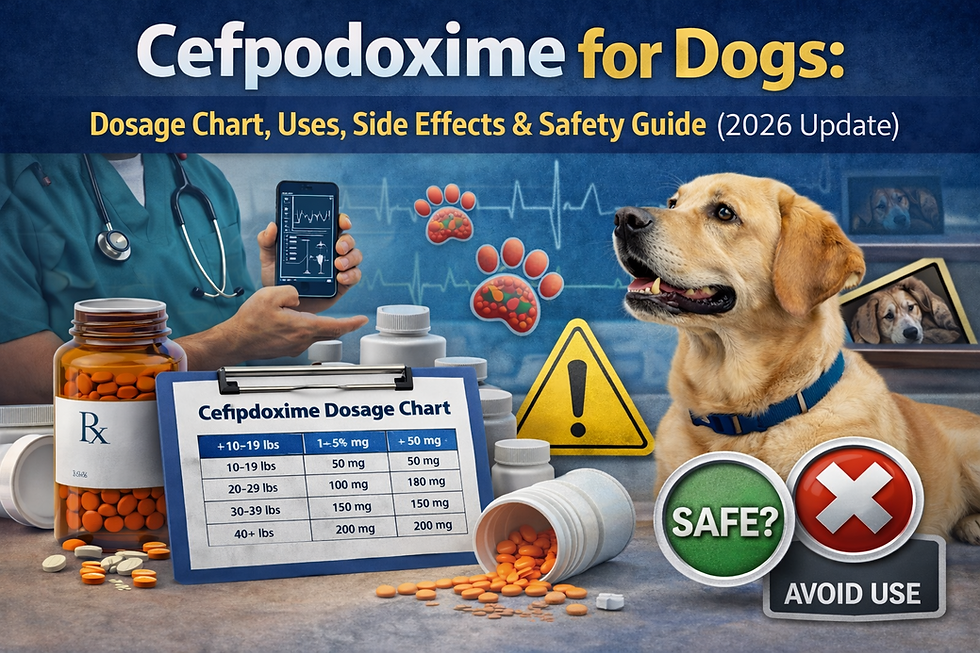
Cefpodoxime Dosage Chart by Weight
Dog’s Weight | Dose Range (mg/kg) | Total Daily Dose (mg) | Typical Tablet Strength Used |
5–10 lbs (2–4.5 kg) | 5–10 mg/kg | 10–45 mg | 50 mg tablet (split if needed) |
11–20 lbs (5–9 kg) | 5–10 mg/kg | 25–90 mg | 50 mg tablet |
21–40 lbs (10–18 kg) | 5–10 mg/kg | 50–180 mg | 100 mg tablet |
41–60 lbs (19–27 kg) | 5–10 mg/kg | 95–270 mg | 100–200 mg tablet |
61–90 lbs (28–40 kg) | 5–10 mg/kg | 140–400 mg | 200 mg tablet |
91+ lbs (41+ kg) | 5–10 mg/kg | 200–500 mg | 200–400 mg |
Tablets are often available in 50 mg, 100 mg, and 200 mg strengths depending on region.
Once Daily Advantage
One major benefit of cefpodoxime for dogs is once-daily dosing, which:
Improves owner compliance
Reduces missed doses
Simplifies long treatment courses
Compared to cephalexin (often twice daily), cefpodoxime can be easier for owners to manage.
Special Dosing Considerations
Dose adjustments may be considered in:
Dogs with kidney impairment
Very small breeds requiring tablet splitting
Severe or deep infections
Recurrent resistant infections
Never double a dose if one is missed. Instead, resume the regular schedule unless instructed otherwise.
How Long Should Dogs Take Cefpodoxime? (Treatment Duration Guide)
Treatment duration is just as important as dosing. Stopping antibiotics too early is one of the main drivers of bacterial resistance.
Typical Treatment Duration
For most skin infections:
7–14 days minimum
For deep or complicated infections:
14–28 days or longer
Some deep pyoderma cases may require extended therapy beyond one month, guided by clinical improvement.
The “Continue Beyond Resolution” Rule
In dermatology cases, a common guideline is:
Continue antibiotics at least 3–7 days beyond visible clinical resolution of lesions.
This reduces relapse risk.
Why You Should NOT Stop Early
Owners sometimes stop cefpodoxime for dogs when:
Redness improves
Lesions look smaller
Itching decreases
However, bacteria may still be present at subclinical levels. Early discontinuation increases:
Relapse risk
Antibiotic resistance
Need for stronger future medications
When Treatment May Need to Be Extended
Treatment duration may be longer if:
Infection is deep (furunculosis)
Underlying allergies persist
Immune compromise exists
Culture results show resistant organisms
Signs Treatment Is Working
You may notice:
Reduced redness
Less discharge
Decreased swelling
Improved hair regrowth
Reduced licking or scratching
Improvement is often visible within 3–5 days, but full resolution takes longer.
Cost of Cefpodoxime for Dogs in the US and Europe (2026 Price Guide)
Cefpodoxime for dogs is generally considered moderately priced compared to some newer veterinary antibiotics. However, cost varies depending on tablet strength, dog size, treatment duration, and whether the medication is dispensed as a brand-name product or generic.
One commonly known brand name in some regions is Simplicef, though many prescriptions are filled using generic cefpodoxime proxetil.
Typical Monthly Cost in the United States (USD)
Dog Size | Typical Daily Dose | Estimated Monthly Cost (USD) |
Small (under 20 lbs) | 50 mg daily | $25–$60 |
Medium (20–60 lbs) | 100–200 mg daily | $40–$120 |
Large (60+ lbs) | 200–400 mg daily | $70–$180 |
Cost depends heavily on:
Pharmacy pricing
Tablet strength
Generic vs brand selection
Number of treatment days
Short 7–10 day courses are naturally less expensive than extended 4-week therapies for deep infections.
Typical Cost in Europe (EUR)
Dog Size | Estimated Treatment Cost (EUR) |
Small | €20–€50 |
Medium | €35–€100 |
Large | €60–€160 |
In some EU countries, dispensing is primarily done through veterinary clinics rather than retail pharmacies, which may influence pricing.
Generic vs Brand Cost Difference
Generic cefpodoxime is often significantly cheaper than branded versions.
Price differences may reach:
20–50% depending on supplier
Higher variation in large-breed dosing
However, active ingredient quality is regulated in both cases.
Hidden Cost Factors
Cost may increase due to:
Culture and sensitivity testing
Follow-up examinations
Extended treatment duration
Management of underlying allergies
In recurrent infections, the antibiotic itself is often not the main long-term cost driver.
Side Effects of Cefpodoxime in Dogs (Common vs Serious)
Cefpodoxime for dogs is generally well tolerated. However, like all antibiotics, it may cause side effects, particularly related to the gastrointestinal tract.
Common Side Effects
Side Effect | Frequency | Severity | What Owners May Notice |
Diarrhea | Common | Mild | Loose stool |
Vomiting | Occasional | Mild | Upset stomach |
Decreased appetite | Occasional | Mild | Eating less |
Lethargy | Rare | Mild | Slight decrease in activity |
Most mild reactions resolve without discontinuation.
Gastrointestinal Disturbance
Because cefpodoxime affects bacterial populations, it may alter normal gut flora. This can result in:
Temporary diarrhea
Soft stool
Mild abdominal discomfort
Probiotics may sometimes be recommended alongside antibiotics, depending on clinical judgment.
Allergic Reactions
Dogs with a known penicillin or cephalosporin allergy may react to cefpodoxime.
Signs of allergic reaction include:
Facial swelling
Hives
Itching
Vomiting
Collapse (rare but serious)
Any suspected allergic reaction requires immediate medical attention.
Rare but Serious Reactions
Reaction | Why It’s Concerning |
Severe diarrhea with blood | Possible colitis |
Persistent vomiting | Dehydration risk |
Medical emergency |
Severe reactions are uncommon but possible.
When to Contact a Clinic
Seek evaluation if:
Diarrhea lasts more than 48 hours
Vomiting is repeated
Appetite stops completely
Weakness or collapse occurs
Most dogs tolerate cefpodoxime without major issues when dosed correctly.
When NOT to Use Cefpodoxime for Dogs (Contraindications)
Although cefpodoxime for dogs is generally considered safe, there are situations where it should not be used or should only be used with caution.
1. Known Allergy to Cephalosporins or Penicillins
Cefpodoxime belongs to the cephalosporin class of antibiotics. Dogs with a known allergy to:
Cephalexin
Amoxicillin
Other beta-lactam antibiotics
may have cross-reactivity.
Signs of antibiotic allergy can include:
Facial swelling
Hives
Sudden itching
Vomiting
Collapse (rare but severe)
If a dog has previously reacted to a beta-lactam antibiotic, cefpodoxime should be avoided unless carefully evaluated.
2. Non-Bacterial Conditions
Cefpodoxime for dogs should not be used for:
Viral infections
Fungal infections
Allergic dermatitis without bacterial involvement
Parasitic skin conditions
Using antibiotics when bacteria are not present contributes to antimicrobial resistance and may delay correct diagnosis.
3. Severe Kidney Impairment
Cefpodoxime is primarily eliminated through the kidneys. Dogs with significant renal dysfunction may experience:
Prolonged drug levels
Increased side effect risk
Dose adjustments or alternative antibiotics may be considered in advanced kidney disease.
4. History of Severe Antibiotic-Associated Colitis
Dogs that previously developed severe antibiotic-associated diarrhea or colitis may require extra caution when starting any broad-spectrum antibiotic.
5. Culture-Proven Resistance
If bacterial culture and sensitivity testing show resistance to cefpodoxime, it should not be used even if it previously worked in another infection.
Drug Interactions With Cefpodoxime in Dogs
Cefpodoxime has relatively few serious drug interactions compared to many other antibiotics, but certain considerations are important.
1. Antacids or Acid-Reducing Medications
Some gastrointestinal medications may interfere with absorption. While this interaction is not always clinically significant in dogs, timing separation may be recommended in certain cases.
2. Other Nephrotoxic Drugs
Because cefpodoxime is excreted via the kidneys, combining it with medications that may stress renal function requires monitoring.
Examples may include:
Certain NSAIDs
Specific injectable antibiotics
Dehydration-inducing conditions
This does not automatically prohibit use, but renal monitoring may be appropriate.
3. Concurrent Broad-Spectrum Antibiotics
Using multiple broad-spectrum antibiotics simultaneously can:
Increase gastrointestinal upset
Alter gut flora significantly
Increase resistance pressure
Combination antibiotic therapy should only occur when clinically justified.
4. Immunosuppressive Therapy
Dogs receiving:
Corticosteroids
Chemotherapy
Other immune-modulating drugs
may respond differently to infections. Cefpodoxime may still be used, but monitoring is important because infection severity may be greater.
5. Probiotics
Probiotics are not contraindicated. In fact, some clinicians recommend them during antibiotic therapy to support gut flora balance.
General Safety Summary
Compared to many antibiotics, cefpodoxime for dogs has:
Low drug interaction burden
Favorable safety profile
Good tolerability in healthy patients
However, proper diagnosis and dosing remain essential.
Cefpodoxime vs Cephalexin for Dogs: Which Is Better?
Owners frequently compare cefpodoxime for dogs with cephalexin because both are commonly prescribed antibiotics for skin infections.
They belong to the same broader family (beta-lactam antibiotics), but they differ in dosing frequency, spectrum nuances, and compliance advantages.
Key Comparison Table
Feature | Cefpodoxime | Cephalexin |
Drug Class | 3rd generation cephalosporin | 1st generation cephalosporin |
Dosing Frequency | Once daily | Usually twice daily |
Typical Use | Skin infections, wounds | Skin infections, soft tissue infections |
Owner Compliance | Higher (once daily) | Moderate (twice daily) |
Cost | Often higher | Usually lower |
Resistance Pressure | Similar if used properly | Similar if used properly |
Compliance Advantage
The biggest practical difference is dosing frequency.
Cefpodoxime = once daily
Cephalexin = every 12 hours
For long treatment courses (2–4 weeks), once-daily dosing often improves adherence and reduces missed doses.
Spectrum Differences
Both target many common skin pathogens such as:
Staphylococcus pseudintermedius
Streptococcus species
However, cefpodoxime may offer slightly broader Gram-negative coverage in some situations.
Final antibiotic choice should ideally be guided by culture and sensitivity testing.
Cost Consideration
Cephalexin is typically less expensive, especially for large dogs requiring high total milligram dosing.
Cefpodoxime may be preferred when:
Owner compliance is a concern
Once-daily administration improves reliability
Previous cephalexin response was inadequate
Which Is “Stronger”?
Neither is universally stronger. Effectiveness depends on:
Bacterial susceptibility
Infection depth
Proper dosing
Treatment duration
The correct antibiotic is the one confirmed effective for the specific infection.
What Happens If a Dog Misses a Dose of Cefpodoxime?
Missed antibiotic doses are common, especially in longer treatment plans.
General Rule
If a dose is missed:
Give it as soon as remembered
If close to the next scheduled dose, skip the missed dose
Do not double the next dose
Doubling doses increases side effect risk without improving effectiveness.
Why Consistency Matters
Antibiotics work best when blood concentrations remain consistent.
Missed doses may:
Reduce bacterial killing efficiency
Increase relapse risk
Contribute to antimicrobial resistance
Occasional Missed Dose
One missed dose rarely causes major failure if treatment continues consistently afterward.
However, repeated missed doses significantly increase the chance of:
Treatment failure
Recurrence
Resistant bacterial populations
What If Multiple Doses Were Missed?
If more than 24–48 hours of therapy were skipped:
Treatment duration may need to be extended
Re-evaluation may be required
Especially in deep or complicated infections.
Signs Cefpodoxime Is Not Working in Dogs
One of the most important concerns when using cefpodoxime for dogs is recognizing early signs that the antibiotic may not be effective.
Antibiotics should produce noticeable improvement within several days. Lack of improvement does not automatically mean failure, but it requires attention.
Expected Timeline of Improvement
In most uncomplicated skin infections:
Visible improvement should begin within 3–5 days
Redness and discharge should decrease
Swelling should gradually reduce
Licking or scratching should lessen
If none of these changes occur within 5–7 days, reassessment is recommended.
Warning Signs That Cefpodoxime May Not Be Working
Clinical Sign | What It May Indicate |
Persistent redness | Resistant bacteria |
New lesions forming | Inadequate coverage |
Increasing swelling | Deepening infection |
Continued discharge | Poor response |
Fever or lethargy | Systemic involvement |
If infection worsens despite treatment, culture and sensitivity testing becomes strongly recommended.
Common Reasons for Treatment Failure
Cefpodoxime for dogs may fail due to:
Incorrect diagnosis (allergy mistaken for infection)
Bacterial resistance
Inadequate dose
Premature discontinuation
Underlying untreated condition (e.g., allergies, endocrine disease)
Recurrent skin infections often have a deeper root cause that antibiotics alone cannot resolve.
Deep vs Superficial Infection
Superficial pyoderma usually responds more quickly.
Deep infections (furunculosis, cellulitis) may require:
Longer treatment
Higher dosing within safe range
Combination therapy
Adjunct topical treatment
Failure in deep infections does not always mean the antibiotic is wrong — sometimes the duration was insufficient.
When to Seek Immediate Reassessment
Urgent reassessment is necessary if:
Fever develops
Lesions rapidly expand
Severe pain occurs
Dog becomes lethargic
Systemic spread requires prompt evaluation.
Antibiotic Resistance and Cefpodoxime in Dogs
Antimicrobial resistance is one of the most serious global veterinary and human health concerns. Proper use of cefpodoxime for dogs is critical to preserving its effectiveness.
How Resistance Develops
Bacteria become resistant when:
Antibiotics are used unnecessarily
Treatment is stopped early
Doses are skipped repeatedly
Infections are treated empirically without culture
When bacteria survive suboptimal antibiotic exposure, resistant strains may emerge.
Why Cefpodoxime Is a Stewardship Consideration
Cefpodoxime is a third-generation cephalosporin. In antimicrobial stewardship guidelines, higher-generation cephalosporins are often considered important drugs.
Overuse may:
Reduce future treatment options
Increase multidrug-resistant infections
Limit effectiveness for severe infections
Responsible Use Guidelines
Cefpodoxime for dogs should ideally be used when:
Bacterial infection is confirmed or strongly suspected
Culture supports susceptibility (especially in recurrent cases)
First-line antibiotics are not appropriate
Compliance challenges justify once-daily dosing
How Owners Can Help Prevent Resistance
Owners play a major role by:
Completing the full prescribed course
Not sharing antibiotics between pets
Avoiding leftover medication use
Following dosing instructions precisely
Even well-intentioned early discontinuation can promote resistant bacteria.
The Bigger Picture
Antibiotic resistance is not just a hospital issue. Skin infections in dogs are one of the most common antibiotic use scenarios in small animal practice.
Thoughtful, targeted use of cefpodoxime protects:
The individual dog
Other pets
Future treatment options
Cefpodoxime for Puppies and Senior Dogs
Age significantly influences how medications behave in the body. When using cefpodoxime for dogs, special considerations apply to both puppies and senior patients.
Cefpodoxime in Puppies
Cefpodoxime is generally considered safe in puppies when prescribed appropriately. However, young dogs may differ from adults in several ways:
Immature immune systems
Developing gut flora
Rapid metabolic rates
Different dosing precision requirements due to small body size
Because puppies often weigh very little, accurate dose calculation is essential. Tablet splitting may introduce dosing variability, so liquid or carefully divided tablet options may sometimes be preferred.
Common Puppy Indications
Cefpodoxime may be prescribed in puppies for:
Skin infections
Bite wounds
Infected scratches
Certain bacterial soft tissue infections
However, diarrhea risk may be slightly higher in younger dogs due to gut sensitivity.
Gastrointestinal Sensitivity in Puppies
Young dogs may experience:
Loose stool
Mild vomiting
Appetite fluctuations
These are typically mild and temporary. Persistent or severe symptoms should prompt reassessment.
Cefpodoxime in Senior Dogs
Senior dogs can generally tolerate cefpodoxime well, but aging physiology affects drug handling.
Important age-related factors include:
Reduced kidney filtration rate
Possible liver metabolism changes
Increased susceptibility to dehydration
Because cefpodoxime is primarily eliminated through the kidneys, renal function becomes particularly relevant in older dogs.
Monitoring in Seniors
For senior dogs, clinicians may consider:
Baseline kidney function evaluation
Close observation for prolonged side effects
Ensuring adequate hydration
Age alone is not a contraindication. Most healthy senior dogs tolerate cefpodoxime without complications.
Dose Adjustments
Routine dose adjustment is not always required in older dogs. However, in confirmed renal impairment, dosing interval or antibiotic choice may be reassessed.
How to Give Cefpodoxime to Dogs Safely (Step-by-Step)
Proper administration improves treatment success and reduces complications.
Step 1: Confirm the Exact Dose
Before giving cefpodoxime for dogs:
Confirm weight-based dose
Verify tablet strength
Double-check once-daily schedule
Never estimate dose visually or assume based on past prescriptions.
Step 2: Give With or Without Food?
Cefpodoxime is often better tolerated when given with food.
Giving it with a small meal may:
Reduce stomach upset
Improve absorption stability
Reduce vomiting risk
If vomiting occurs on an empty stomach, future doses should be given with food.
Step 3: Maintain a Consistent Schedule
Because cefpodoxime is dosed once daily:
Give it at approximately the same time each day
Avoid large timing fluctuations
Consistency improves therapeutic blood levels.
Step 4: Complete the Full Course
Even if skin lesions appear healed:
Do not stop early
Complete the full prescribed duration
Stopping early is a major cause of recurrence and antibiotic resistance.
Step 5: Monitor for Improvement
During therapy, monitor for:
Reduced redness
Less discharge
Improved comfort
Decreased swelling
If no improvement is seen within 5–7 days, reassessment may be necessary.
Step 6: Watch for Adverse Reactions
Immediately seek evaluation if you notice:
Severe diarrhea
Persistent vomiting
Facial swelling
Collapse
Lethargy that worsens rapidly
These are uncommon but require prompt action.
Step 7: Store Properly
Keep in original labeled container
Store at room temperature
Prevent accidental ingestion
Accidental ingestion of large quantities may require emergency care.
FAQ – Cefpodoxime for Dogs
Is cefpodoxime for dogs safe?
Cefpodoxime for dogs is generally considered safe when prescribed at the correct dose for confirmed bacterial infections. It is widely used for skin and soft tissue infections and is typically well tolerated. However, dogs with known beta-lactam allergies or significant kidney disease require careful evaluation before use. Most healthy dogs experience only mild, temporary side effects if any.
What is the correct cefpodoxime for dogs dosage?
The standard cefpodoxime for dogs dosage is typically 5–10 mg per kilogram given once daily. The exact dose depends on body weight, infection severity, and clinical judgment. Once-daily dosing improves compliance compared to antibiotics that require twice-daily administration.
How long does cefpodoxime for dogs take to work?
Cefpodoxime for dogs usually begins showing visible improvement within 3 to 5 days for uncomplicated skin infections. Redness, discharge, and swelling should gradually decrease. Full resolution may take 1 to 4 weeks depending on infection depth.
How long should cefpodoxime for dogs be given?
Cefpodoxime for dogs is commonly prescribed for 7 to 14 days in superficial infections. Deep or complicated infections may require 14 to 28 days or longer. Treatment should continue for several days beyond visible resolution to reduce relapse risk.
Can cefpodoxime for dogs treat urinary tract infections?
Cefpodoxime for dogs may be used for urinary tract infections if culture and sensitivity testing confirm susceptibility. It is not always the first choice for UTIs, and testing is strongly recommended to ensure effectiveness.
What are the common side effects of cefpodoxime for dogs?
Common side effects of cefpodoxime for dogs include mild diarrhea, vomiting, decreased appetite, or soft stool. These are typically temporary. Severe reactions such as allergic swelling or collapse are rare but require immediate evaluation.
Can cefpodoxime for dogs cause diarrhea?
Yes, cefpodoxime for dogs can cause diarrhea because antibiotics may disrupt normal gut bacteria. Most cases are mild and resolve after treatment. Persistent or bloody diarrhea requires reassessment.
Is cefpodoxime for dogs better than cephalexin?
Cefpodoxime for dogs is not necessarily better than cephalexin, but it offers once-daily dosing, which improves compliance. Effectiveness depends on bacterial susceptibility rather than drug “strength.” Culture testing provides the most reliable guidance.
Can cefpodoxime for dogs be given with food?
Cefpodoxime for dogs can be given with food to reduce gastrointestinal upset. Giving it with a small meal often improves tolerance and does not significantly reduce effectiveness.
What happens if I miss a dose of cefpodoxime for dogs?
If a dose of cefpodoxime for dogs is missed, give it as soon as remembered unless it is close to the next scheduled dose. Do not double doses. Repeated missed doses may reduce effectiveness and increase resistance risk.
Can cefpodoxime for dogs be used in puppies?
Cefpodoxime for dogs can be prescribed in puppies when appropriate for bacterial infections. Accurate weight-based dosing is especially important in small puppies to avoid under- or overdosing.
Is cefpodoxime for dogs safe for senior dogs?
Cefpodoxime for dogs is generally safe in senior dogs, but kidney function should be considered because the drug is eliminated primarily through the kidneys. Monitoring may be recommended in older patients.
Can cefpodoxime for dogs treat ear infections?
Cefpodoxime for dogs may be used in some bacterial ear infections if systemic therapy is indicated and culture confirms susceptibility. However, many ear infections also require topical treatment.
Can cefpodoxime for dogs treat deep skin infections?
Cefpodoxime for dogs can treat deep skin infections, but longer treatment durations are often required. Deep pyoderma may need several weeks of therapy combined with management of underlying causes.
What are signs cefpodoxime for dogs is not working?
Signs cefpodoxime for dogs may not be working include persistent redness, new lesions, worsening swelling, continued discharge, or fever. Lack of improvement within 5–7 days warrants reassessment.
Can cefpodoxime for dogs cause allergic reactions?
Yes, cefpodoxime for dogs can cause allergic reactions in rare cases, especially in dogs with a history of penicillin or cephalosporin allergy. Signs may include facial swelling, hives, itching, vomiting, or collapse. Any suspected allergic reaction requires immediate medical evaluation.
Can cefpodoxime for dogs be used for hot spots?
Cefpodoxime for dogs may be used for hot spots (acute moist dermatitis) if a bacterial infection is present or suspected. However, many hot spots require both topical therapy and management of the underlying trigger such as allergies or parasites.
Is cefpodoxime for dogs a strong antibiotic?
Cefpodoxime for dogs is considered a broad-spectrum, third-generation cephalosporin antibiotic. It is effective against many common skin pathogens but should be used responsibly to prevent resistance. “Strong” does not always mean better — correct antibiotic selection depends on bacterial susceptibility.
Can cefpodoxime for dogs be crushed?
Cefpodoxime for dogs tablets may sometimes be crushed and mixed with food if necessary, but this should only be done if the specific tablet formulation allows it. Crushing may alter taste and reduce acceptance. Always confirm before altering tablet form.
Can cefpodoxime for dogs cause lethargy?
Cefpodoxime for dogs may cause mild lethargy in some cases, although this is less common than gastrointestinal side effects. If lethargy is severe, persistent, or accompanied by other symptoms, reassessment is recommended.
How quickly should cefpodoxime for dogs improve skin infections?
Cefpodoxime for dogs typically begins improving skin infections within 3–5 days. Redness and discharge should decrease first, followed by gradual healing. Full resolution may require several weeks in deep infections.
Can cefpodoxime for dogs be used long term?
Cefpodoxime for dogs is usually prescribed for short to moderate durations. Long-term use is uncommon and generally reserved for complex or recurrent infections. Prolonged use increases resistance risk and should be carefully monitored.
Can cefpodoxime for dogs treat bite wounds?
Cefpodoxime for dogs may be used for infected bite wounds when bacterial involvement is confirmed or strongly suspected. Bite wounds often require thorough cleaning and sometimes drainage in addition to antibiotic therapy.
Is cefpodoxime for dogs safe for pregnant dogs?
Cefpodoxime for dogs may be used during pregnancy only when clearly indicated. Safety data in pregnant dogs is limited, so risk-benefit evaluation is important before prescribing.
Can cefpodoxime for dogs be used with probiotics?
Yes, cefpodoxime for dogs can be used alongside probiotics. Probiotics may help support gut flora balance during antibiotic therapy and reduce the risk of diarrhea.
What should I do if my dog vomits after taking cefpodoxime?
If vomiting occurs shortly after giving cefpodoxime for dogs, consult before repeating the dose. If vomiting happens repeatedly, the medication may need adjustment or reassessment.
Can cefpodoxime for dogs treat respiratory infections?
Cefpodoxime for dogs may be used for certain bacterial respiratory infections if culture confirms susceptibility. However, not all respiratory infections are bacterial, and diagnosis is important before treatment.
Why is cefpodoxime for dogs given once daily?
Cefpodoxime for dogs is formulated to allow once-daily dosing due to its pharmacokinetic properties and sustained antibacterial activity. This improves compliance compared to antibiotics requiring multiple daily doses.
Can cefpodoxime for dogs cause antibiotic resistance?
Yes, improper use of cefpodoxime for dogs — such as stopping early or using it without confirmed bacterial infection — can contribute to antibiotic resistance. Completing the full prescribed course is critical.
Is cefpodoxime for dogs safe for large breeds?
Cefpodoxime for dogs is safe for large breeds when properly dosed according to body weight. Larger dogs require higher total milligram amounts, but safety profile remains similar when dosing is accurate.
Sources
American Veterinary Medical Association (AVMA)
Merck Veterinary Manual
Plumb’s Veterinary Drug Handbook
U.S. Food & Drug Administration (FDA) – Veterinary Drug Information
Mersin VetLife Veterinary Clinic – https://share.google/XPP6L1V6c1EnGP3Oc


Comments