
Dog Weight Loss Made Simple: How to Help Your Dog Reach a Healthy Weight Safely


When Does a Dog Need to Lose Weight?
A dog may need to lose weight when excess body fat begins to affect its body condition, mobility, comfort, or health. The number shown on a scale alone is not always enough because healthy weight varies with breed, sex, age, skeletal structure, and muscle mass.
Veterinarians commonly use a nine-point body condition score to assess body fat. On this scale:
Scores of 1–3 generally indicate an underweight dog.
Scores of 4–5 represent an ideal body condition.
Scores of 6–7 indicate that the dog is overweight.
Scores of 8–9 indicate obesity or severe obesity.
A dog may require a weight-loss plan when its ribs are difficult to feel, the waist is disappearing, abdominal fat is accumulating, or fat deposits are becoming visible around the chest, spine, hips, and tail base.
Weight reduction may also be recommended as part of managing another medical condition. Even modest excess weight can increase the physical demands placed on joints, the respiratory system, and the cardiovascular system. It may also complicate anesthesia, surgery, rehabilitation, temperature regulation, and management of chronic disease.
A veterinarian should determine whether weight loss is appropriate for puppies, pregnant or nursing dogs, working dogs, senior dogs, and animals with chronic medical conditions. Their nutritional requirements may differ substantially from those of a healthy adult pet.

How Can You Tell If Your Dog Is Overweight?
Owners see their dogs every day, so gradual weight gain can be difficult to notice. Long or dense coats can also conceal changes in body shape. Looking at photographs taken several months apart and performing a hands-on body condition assessment can be more useful than relying on appearance alone.
Check the following areas:
Ribs: You should be able to feel the ribs beneath a thin layer of fat without pressing firmly. If they are difficult to locate, the dog may be carrying excess fat.
Waist: When viewed from above, the body should narrow behind the rib cage. An absent or outward-curving waist suggests excess weight.
Abdominal tuck: From the side, the abdomen should rise toward the hind legs. A flat or sagging abdominal line may indicate fat accumulation.
Spine and hips: These structures should be detectable without appearing sharply prominent.
Tail base: Thick padding around the base of the tail can be a sign of obesity.
Behavioral and functional changes may also appear:
Reduced interest in walking or playing
Slower movement
Reluctance to climb stairs or jump
Excessive panting during mild activity
Difficulty rising or lying down
Reduced endurance
Heat intolerance
Difficulty grooming or reaching certain body areas
These signs are not specific to obesity. Joint disease, heart disease, respiratory disorders, endocrine disease, pain, and neurological conditions can cause similar changes. A dog should therefore receive a veterinary examination rather than having all reduced activity attributed to body weight.
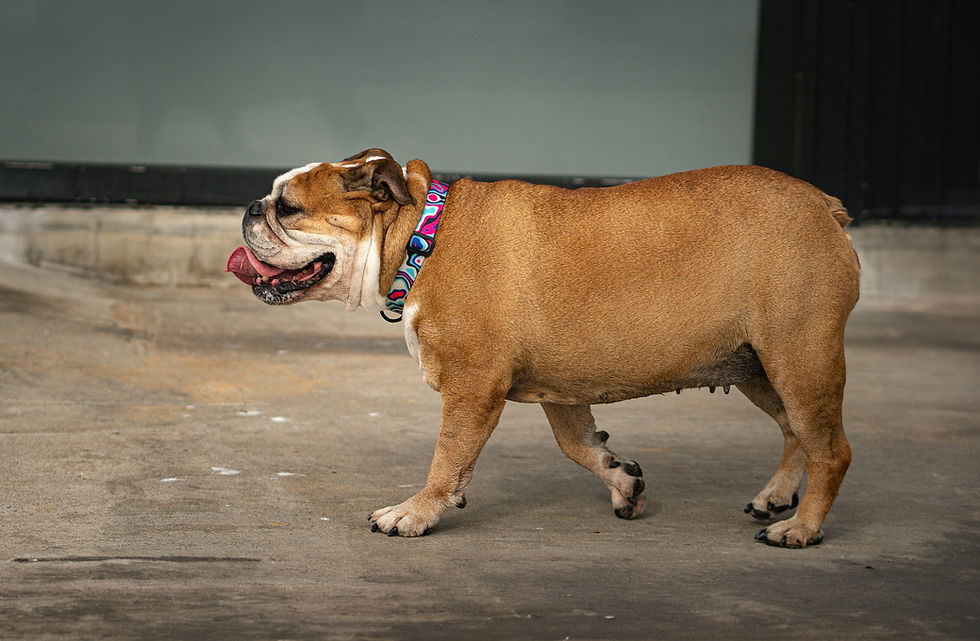
Why Excess Weight Is a Medical Problem, Not Just a Cosmetic Issue
Body fat is biologically active tissue. It does more than change a dog’s appearance or increase the number on the scale. Excess adipose tissue can influence inflammatory pathways, metabolism, hormone activity, mobility, and organ function.
Overweight dogs may experience:
Increased mechanical stress on joints and the spine
Greater difficulty breathing and exercising
Reduced heat tolerance
Lower stamina and mobility
Increased anesthetic and surgical challenges
Difficulty managing certain chronic diseases
Reduced ability to perform normal daily activities
Lower quality of life
Obesity can also create a self-perpetuating cycle. A dog carrying excess weight may find movement uncomfortable, particularly when joint disease is already present. Reduced activity lowers energy expenditure, encourages further weight gain, and contributes to muscle loss. The dog then becomes even less capable of exercising comfortably.
Calling obesity a medical condition is not intended to blame owners. Weight gain is often influenced by multiple factors, including calorie-dense foods, inaccurate portions, frequent treats, reduced activity, neutering, age, breed predisposition, medications, pain, and underlying disease.
The encouraging point is that weight can be modified. An appropriate reduction in body fat may improve movement, comfort, respiratory function, exercise tolerance, and overall quality of life—even before the dog reaches its final target weight.

Health Problems Associated With Obesity in Dogs
Obesity does not guarantee that a dog will develop a particular disease, and it should not be described as the sole cause of every condition seen in an overweight animal. However, excess body fat is associated with several important health problems and can worsen diseases that are already present.
Potential consequences include:
Osteoarthritis and reduced mobility
Cruciate ligament injuries and other orthopedic problems
Reduced respiratory function
Exercise and heat intolerance
Insulin resistance and metabolic changes
Urinary incontinence in some dogs
Increased risk of urinary tract problems
Skin-fold inflammation and difficulty maintaining hygiene
Greater anesthetic and surgical complexity
Reduced quality of life
A potentially shorter lifespan
Excess weight places additional mechanical stress on joints, ligaments, and the spine. Dogs with hip dysplasia, osteoarthritis, patellar problems, or previous orthopedic injuries may become more painful and less active as their weight increases.
Fat accumulation around the chest and abdomen may also restrict normal respiratory movement. Brachycephalic dogs and animals with existing airway or heart disease may be particularly affected. They may pant excessively, tire quickly, and struggle in hot weather.
The relationship between obesity and cancer is complex. Research has identified associations between excess body condition and certain tumor types, but this does not mean obesity directly causes every tumor. The evidence varies according to cancer type, breed, age, and other risk factors. It is more accurate to describe obesity as a possible contributing factor rather than a universal cause of cancer.
Urinary disease also requires careful interpretation. Obesity may be associated with urinary incontinence, reduced mobility, skin contamination around the genital area, and other factors that can complicate urinary health. However, bacterial infection, bladder stones, anatomical abnormalities, endocrine disease, and neurological disorders must still be investigated separately.
Can Weight Loss Improve Your Dog’s Existing Health Problems?
Weight loss cannot reverse every disease, but reducing excess fat may substantially improve comfort, mobility, stamina, and management of several chronic conditions.
Potential benefits include:
Less mechanical strain on painful joints
Improved willingness to walk and play
Better exercise tolerance
Easier breathing in some dogs
Improved heat tolerance
Better hygiene and skin-fold care
Easier physical examination and diagnostic imaging
Reduced anesthetic complexity
Improved metabolic health
Better overall quality of life
Dogs with osteoarthritis may benefit even before reaching their final target weight. As movement becomes more comfortable, the dog may become more active, helping preserve muscle and support continued fat loss.
Weight reduction may also make medication, rehabilitation, and management of respiratory or metabolic disease more effective. However, it should be considered part of treatment rather than a replacement for appropriate medical care.
Owners should not stop pain medication, heart treatment, respiratory medication, insulin, or other prescribed therapies because the dog has started losing weight. As body weight and health change, the veterinarian may need to reassess medication doses and the overall treatment plan.
Progress should be judged by more than appearance. A dog that rises more easily, walks farther, pants less, sleeps comfortably, or shows renewed interest in play may already be experiencing meaningful benefits.
Why Dog Weight Loss May Be Easier Than Owners Expect
People often assume that helping a dog lose weight will require constant hunger, complicated recipes, or hours of daily exercise. In many cases, the process becomes much simpler once every source of calories is identified and feeding is standardized.
A practical plan usually consists of:
Establishing the dog’s current body condition and target weight
Selecting an appropriate complete and balanced diet
Calculating a starting daily calorie allowance
Weighing the food instead of estimating portions
Including treats and extras in the calorie total
Dividing the allowance into consistent meals
Providing safe activity suited to the dog’s health
Weighing the dog regularly and adjusting the plan when necessary
Dogs do not purchase snacks, secretly increase their portions, or decide to abandon the diet. When everyone in the household follows the same feeding plan, calorie intake can usually be controlled more consistently than it can in human dieting.
The greatest difficulties often come from unnoticed extras: table scraps, dental chews, training rewards, food used to give medication, and different family members feeding the dog. These small amounts can provide enough calories to slow or stop weight loss.
A therapeutic weight-management food can make calorie restriction easier by providing appropriate levels of protein, vitamins, minerals, and other nutrients in a reduced-calorie portion. Some formulas also use higher fiber, protein, or carefully designed kibble characteristics to support satiety and preserve lean tissue.
The plan is simple, but it still requires monitoring. Feeding guides provide a starting estimate rather than a guarantee. If the dog loses too quickly, too slowly, or not at all, the veterinarian can adjust the daily amount based on actual progress.
Start With a Veterinary Examination and a Target Weight
A weight-loss program should begin with a veterinary examination, particularly when the dog is markedly obese, elderly, taking medication, or showing changes in appetite, thirst, breathing, mobility, or energy.
The veterinarian can:
Confirm that the dog is genuinely overweight
Assign a body condition score and muscle condition score
Estimate an appropriate target weight
Identify painful or medical conditions that limit exercise
Review medications that may encourage weight gain
Select an appropriate diet
Establish a safe rate of weight loss
Create a schedule for weigh-ins and reassessment
Weight gain is most commonly caused by consuming more calories than the body uses, but medical factors should still be considered. Hypothyroidism, hyperadrenocorticism, reduced mobility, chronic pain, and certain medications can contribute to weight gain or make weight loss more difficult.
The target should not be based only on a breed chart. Two dogs of the same breed can have different skeletal frames and muscle mass. Previous healthy adult weight, body condition score, muscle condition, age, and current health all help determine a realistic goal.
The process may be divided into smaller milestones. For example, an obese dog does not need to reach its final target before experiencing health benefits. Losing the first 5–10% of body weight may already improve mobility and comfort in some dogs.
Baseline measurements are useful for comparison. Record the dog’s weight, body condition score, waist circumference, food intake, treats, activity tolerance, and photographs from above and from the side. These records can reveal progress that may not be obvious from daily observation.
How Many Calories Does Your Dog Need to Lose Weight?
The amount printed on a food package is a general feeding estimate, not an individualized medical prescription. Dogs of the same weight can have substantially different calorie requirements depending on age, neuter status, breed, muscle mass, activity, environment, and health.
Veterinarians commonly begin by estimating resting energy requirements:
RER = 70 × body weight in kilograms⁰·⁷⁵
Another simplified equation sometimes used for dogs weighing approximately 2–45 kg is:
RER = 30 × body weight in kilograms + 70
However, the calorie allowance for weight loss should not automatically be calculated from the dog’s current overweight body weight. The veterinarian may calculate energy needs using the estimated ideal weight and then modify the result according to the dog’s response.
The calculation provides a starting point. Actual progress determines whether the allowance is appropriate. Two dogs receiving the same calories per kilogram may lose weight at different rates.
Every calorie source must be included:
Main meals
Training treats
Dental chews
Table scraps
Supplements containing calories
Food used to administer medication
Food stolen from another animal
Chews and edible toys
Owners should record everything the dog consumes for several days before starting the plan. This often reveals that treats and extras contribute more calories than expected.
If the dog is not losing weight despite accurately measured portions, the answer is not always to make a dramatic reduction. The veterinarian should first confirm adherence, recalculate the intake, assess muscle condition, and consider underlying disease before adjusting the diet.
Choosing the Right Weight-Loss Food for Your Dog
Some mildly overweight dogs may lose weight through carefully controlled portions of their current food. However, simply giving much less of a standard maintenance diet can reduce the intake of protein, vitamins, minerals, and other essential nutrients.
A therapeutic weight-management diet may be preferable when:
The dog is obese rather than mildly overweight
Substantial calorie restriction is necessary
The dog appears persistently hungry
Muscle preservation is a priority
Joint disease limits activity
Previous weight-loss attempts have failed
The dog has another condition affecting diet selection
An appropriate weight-loss food should be complete and balanced for the dog’s life stage. Depending on the formulation, it may contain:
Reduced calorie density
Higher protein to help preserve lean tissue
Increased dietary fiber to support fullness
An appropriate balance of vitamins and minerals
Nutrients intended to support joints or metabolism
A kibble volume that allows a satisfying portion
No single brand or formula is ideal for every dog. Satiety-type veterinary diets can be useful, but diet selection should consider the dog’s age, medical conditions, food tolerance, preferences, and calorie target.
The new food should usually be introduced gradually over several days unless the veterinarian recommends otherwise. A sudden change can cause vomiting, diarrhea, food refusal, or gastrointestinal discomfort.
The best food is not simply the product with the fewest calories. It is the diet that provides appropriate nutrition, can be measured accurately, keeps the dog reasonably satisfied, and can be followed consistently by the entire household.
How Do Satiety and Therapeutic Weight-Loss Diets Work?
Therapeutic weight-loss diets are formulated to allow calorie restriction while continuing to provide adequate essential nutrients. This is an important difference from simply giving a very small portion of ordinary maintenance food.
These diets may support weight loss through a combination of:
Reduced calorie density
Increased protein to help preserve muscle
Higher or specially selected dietary fiber
Increased food volume for the calories provided
Controlled fat content
Balanced vitamins and minerals
Kibble structure designed to encourage slower eating
Nutrients that support joints, metabolism, or digestive health
“Satiety” refers to the feeling of fullness that remains after eating. A food designed to support satiety may help some dogs remain satisfied for longer, reducing begging and making the plan easier for the household to follow.
However, a satiety diet does not cause weight loss independently. A dog can still gain weight if the food is provided in excessive quantities or combined with too many treats and table scraps. Weight loss occurs when total energy intake remains below energy expenditure while nutritional requirements continue to be met.
Therapeutic diets also differ from one another. Some prioritize higher fiber, while others use higher protein, specific fiber blends, or reduced energy density. A dog with gastrointestinal disease, food allergy, urinary disease, pancreatitis, kidney disease, or another medical condition may require a more individualized choice.
These foods should therefore be viewed as tools within a structured program—not as products that automatically produce the same results in every dog.
How Much Food Should You Give Your Dog?
The correct portion depends on the dog’s target calorie allowance and the energy density of the selected food. Feeding solely according to the dog’s current weight may maintain the excess weight rather than reduce it.
The process generally involves:
Estimating the dog’s ideal or target weight
Calculating an initial daily calorie allowance
Checking how many calories the food provides per gram or kilogram
Converting the calorie allowance into grams of food
Subtracting calories reserved for treats or medication
Monitoring the dog’s weight and adjusting the portion when necessary
For example, if a veterinary plan allows 600 kcal per day and the selected food supplies 3 kcal per gram, the total daily portion would be approximately 200 grams. If treats provide 50 kcal, the meal allowance must be reduced unless those treats are replaced with part of the measured daily food.
The total daily portion may be divided into two or more meals. Additional meals do not inherently increase fat loss, but they may help manage hunger, establish a routine, and reduce begging in some dogs.
The feeding amount printed on the package can provide a starting reference, but it may not match an individual dog’s needs. The table may also list portions for weight maintenance and weight reduction separately. Owners must confirm that they are using the correct column and measuring for the intended target weight.
If the dog loses weight outside the planned rate, the portion should be reassessed. Owners should not repeatedly reduce food without veterinary guidance, particularly when the dog has a chronic illness or is already receiving a highly restricted amount.
Why Measuring Food in Grams Is Better Than Using Cups
Cups, scoops, handfuls, and partially filled bowls can produce inconsistent portions. Small differences may seem unimportant, but they accumulate across multiple meals and can prevent weight loss.
Dry kibble pieces vary in size, shape, and density. One level cup of one food may contain a different weight and calorie amount than the same cup filled with another product. Even repeated measurements of the same food can vary according to how tightly the cup is filled or whether it is level.
A digital kitchen scale provides a more consistent measurement. To use one:
Place the empty bowl or container on the scale.
Reset the display to zero using the tare function.
Add food until the prescribed number of grams is reached.
Measure the entire daily allowance in advance when practical.
Take any training rewards from that measured portion.
Pre-portioning the daily food into a container can help families avoid accidental double feeding. Everyone in the household should remove food from the same container rather than estimating separate meals.
The scale must be used consistently. A carefully calculated diet can fail if one person measures in grams while another adds an extra scoop, biscuit, or leftover food.
Accurate measurement is one of the simplest and most effective parts of a canine weight-loss program. It converts an uncertain instruction such as “feed less” into a clear daily amount that can be monitored and adjusted.
Treats, Table Scraps, and Hidden Calories
A carefully measured main meal can be undermined by calories that are not included in the plan. Treats, dental chews, table scraps, and food used to administer medication may appear small, but they can represent a substantial percentage of a small dog’s daily calorie allowance.
Common hidden calorie sources include:
Commercial dog treats
Dental chews
Pieces of cheese or processed meat
Bread and leftovers
Peanut butter
Milk and flavored drinks
Food dropped by children
Edible chews
Supplements containing fats or sugars
Repeated rewards during training
Access to another pet’s food
Treats should generally provide no more than approximately 10% of daily calories. During a medical weight-loss program, the veterinarian may recommend an even lower allowance depending on the diet and required calorie restriction.
Treats do not have to be eliminated completely. Practical alternatives include:
Reserving part of the daily kibble allowance for rewards
Breaking treats into very small pieces
Using low-calorie treats approved by the veterinarian
Rewarding the dog with attention, play, brushing, or a short walk
Placing measured food inside puzzle feeders
Using suitable vegetables only when approved for that dog
Owners should check calories per treat rather than relying on words such as “light,” “natural,” or “healthy.” A single large chew may contain as many calories as a significant portion of the dog’s meal.
Every household member must follow the same plan. A feeding chart on the refrigerator or a container holding the entire daily allowance can prevent accidental double feeding. Visitors should also be asked not to offer unplanned food.
How Much Exercise Does an Overweight Dog Need?
Exercise supports calorie expenditure, cardiovascular fitness, mobility, muscle preservation, and mental well-being. However, food intake usually has the greatest influence on weight loss. Attempting to compensate for excessive calories with exercise alone is often ineffective and may be unsafe.
The activity plan should consider:
Current body condition
Age and breed
Joint and spinal health
Heart and respiratory function
Fitness level
Weather and temperature
Paw condition
Previous injuries
Brachycephalic anatomy
For an inactive overweight dog, exercise should begin gradually. Several short walks may be safer and more comfortable than one long or intense session. Duration and pace can then be increased according to the dog’s tolerance and veterinary advice.
Low-impact activities may include:
Controlled leash walks
Gentle scent-based exploration
Food-search games using the measured ration
Slow hill walking when appropriate
Swimming or underwater treadmill therapy under professional guidance
Short indoor movement sessions
Veterinary rehabilitation exercises
Signs that exercise may be too intense include excessive panting, falling behind, repeated stopping, limping, weakness, distress, or prolonged fatigue after returning home. Activity should be stopped if the dog shows breathing difficulty, collapse, pale or bluish gums, or obvious pain.
Brachycephalic dogs, senior dogs, and those with heart, airway, or orthopedic disease may require particularly conservative plans. Exercise should be scheduled during cooler periods in hot weather, with continuous access to water and protection from hot pavement.
What Is a Safe Rate of Weight Loss for Dogs?
A commonly used target for dogs is approximately 1–2% of their initial body weight per week. Some dogs, particularly those with severe obesity, medical conditions, or limited mobility, may need a slower target.
For example:
Starting weight | Approximate weekly loss at 1% | Approximate weekly loss at 2% |
5 kg | 50 g | 100 g |
10 kg | 100 g | 200 g |
20 kg | 200 g | 400 g |
30 kg | 300 g | 600 g |
40 kg | 400 g | 800 g |
This range is a general guide rather than a requirement for every dog. Progress may fluctuate because of hydration, bowel contents, weighing conditions, and differences between scales.
Weight loss that is too rapid may increase hunger, encourage nutritional deficiencies when an unsuitable diet is used, and contribute to loss of lean muscle. Weight loss that is consistently too slow may indicate inaccurate measurement, unrecorded treats, access to additional food, an overestimated calorie allowance, or a medical issue.
Dogs should ideally be weighed under similar conditions each time—using the same scale and at a similar time relative to meals. The veterinarian can then adjust the food allowance according to the actual rate of change rather than relying on estimates alone.
When Will You Start Seeing Results?
Some dogs show a measurable change on the scale within the first one or two weeks when the calorie target is appropriate and the feeding plan is followed accurately. Visible changes in body shape usually take longer.
Early improvements may include:
A small reduction in body weight
A more noticeable waist
Easier movement
Greater willingness to walk or play
Less panting during mild activity
Improved ability to rise or climb stairs
Better heat tolerance
Increased energy
The timing depends on the dog’s starting weight, calorie deficit, health, activity, age, and individual metabolism. Long-haired dogs may lose a meaningful amount of fat before the difference becomes visually obvious.
Owners should not become discouraged if dramatic changes are not visible after one week. For a 20 kg dog losing 1% per week, the expected change is approximately 200 grams. That is useful progress, but it may be difficult to detect by looking at the dog.
Photographs taken from above and from the side every two to four weeks can reveal changes more clearly than daily observation. Waist circumference, harness fit, mobility, and body condition score can provide additional evidence of progress.
Rapid visible shrinkage is not the goal. Sustainable fat loss while preserving muscle, comfort, and nutritional health is more important than reaching the target weight as quickly as possible.
How to Weigh and Track Your Dog’s Progress
Regular monitoring shows whether the calorie allowance is producing the intended result. Without weigh-ins, owners may continue an ineffective plan for months or unnecessarily restrict food when the dog is already losing at an appropriate rate.
Many veterinary weight-loss programs begin with reassessment approximately every two weeks. The interval may later be extended when progress becomes predictable.
Record the following:
Current body weight
Percentage of weight lost
Body condition score
Muscle condition score
Daily food amount in grams
Treats and additional calories
Exercise duration and tolerance
Appetite and begging behavior
Mobility and pain-related changes
Vomiting, diarrhea, or other adverse effects
Weekly percentage loss can be estimated with:
Weight lost ÷ starting weight × 100
For example, if a dog decreases from 20 kg to 19.7 kg, it has lost 0.3 kg:
0.3 ÷ 20 × 100 = 1.5%
This would fall within the commonly targeted weekly range for many dogs.
Home scales may work for small dogs if the measurement is consistent. Larger dogs may need to be weighed at a veterinary clinic. Whichever method is used, try to use the same scale and similar conditions each time.
Daily weighing is usually unnecessary because normal fluctuations can cause confusion. Trends over several weeks are more useful than a single measurement.
What to Do When Your Dog Stops Losing Weight
Weight-loss plateaus are common. As a dog becomes lighter, its energy requirements may decrease, meaning the calorie allowance that produced weight loss initially may eventually become a maintenance amount.
Before reducing food, review the entire plan:
Is every meal being weighed accurately?
Are treats included in the calorie total?
Is someone providing additional food?
Can the dog access another pet’s bowl?
Have dental chews or supplements been overlooked?
Has exercise decreased?
Has the food product or formulation changed?
Is the dog taking a medication that affects appetite or weight?
Has a medical condition altered mobility or metabolism?
The dog should then be reweighed and its body and muscle condition reassessed. If progress has genuinely stopped, the veterinarian may adjust the daily calorie allowance, change the diet, modify treat use, or revise the activity plan.
Food should not be reduced repeatedly without professional guidance. Severe restriction of a standard maintenance diet may provide inadequate protein, vitamins, minerals, and other nutrients.
A temporary plateau does not mean the program has failed. Accurate review and small adjustments are usually more effective than abandoning the diet or making a sudden, extreme change.
Common Dog Weight-Loss Mistakes
Most unsuccessful weight-loss attempts do not fail because a dog is incapable of losing weight. They fail because calorie intake is underestimated, portions are inconsistent, or the plan is too difficult for the household to maintain.
Common mistakes include:
Estimating portions with a cup or handful
Feeding according to the dog’s current overweight body weight
Using the maintenance column instead of the weight-loss column
Ignoring calories from treats and dental chews
Allowing different family members to feed separately
Leaving food available throughout the day
Letting the dog eat another pet’s food
Reducing ordinary maintenance food excessively
Changing foods frequently before assessing results
Relying on exercise without controlling calories
Increasing exercise too quickly
Expecting dramatic visual changes within one week
Abandoning the plan during a temporary plateau
Failing to schedule regular weigh-ins
Another common problem is responding to begging with food. Begging does not always indicate genuine nutritional hunger; it may be a learned behavior reinforced by attention and treats. Play, affection, a short walk, or part of the dog’s measured daily food can sometimes replace an additional snack.
Owners may also judge progress only by the scale. Fat loss accompanied by preserved or improved muscle condition is preferable to rapid weight loss involving muscle depletion. This is why body and muscle condition should be assessed alongside total weight.
The most successful plan is one that is simple enough to follow every day. A precisely calculated diet will not work if it is unrealistic for the family.
When Should You Contact Your Veterinarian?
Routine veterinary rechecks are part of a safe weight-loss program. They allow the feeding amount to be adjusted before progress becomes too fast, too slow, or completely stalled.
Contact your veterinarian if:
The dog refuses the new diet
Appetite decreases suddenly
Vomiting or diarrhea develops
The dog appears weak or unusually tired
Weight loss is faster than planned
No weight is lost despite accurate measurement
Drinking or urination increases
The abdomen becomes enlarged
Mobility or pain worsens
Muscle loss becomes noticeable
The dog develops coughing or breathing difficulty
A chronic medical condition becomes unstable
A dog that refuses food should not simply be forced to continue the same plan. Food refusal may indicate that the transition was too rapid, the diet is unpalatable, or the dog is experiencing nausea, dental pain, gastrointestinal disease, or another medical problem.
Failure to lose weight does not automatically prove an endocrine disorder. Unrecorded calories and inaccurate portions are more common explanations, but hypothyroidism, hyperadrenocorticism, medication effects, and mobility-limiting disease may need to be investigated.
Any adjustment should be based on the dog’s actual progress, body condition, muscle condition, and clinical health—not on frustration with the speed of the diet.
How to Maintain Your Dog’s Ideal Weight After the Diet
Reaching the target weight is not the end of weight management. A dog’s calorie needs increase when active weight loss stops, but immediately returning to previous feeding habits can cause rapid weight regain.
The transition to maintenance should be gradual. The veterinarian may slightly increase the daily calorie allowance while continuing regular weigh-ins. The goal is to identify the amount that keeps the dog’s weight stable.
Long-term maintenance strategies include:
Continuing to weigh food in grams
Reassessing body condition every month
Weighing the dog regularly
Keeping treats within the daily calorie allowance
Maintaining consistent activity
Adjusting portions after neutering, aging, illness, or activity changes
Preventing access to other animals’ food
Using puzzle feeders or measured food for training
Scheduling veterinary nutritional assessments
Some dogs can transition from a therapeutic weight-loss food to an appropriate maintenance diet. Others benefit from continuing a lower-calorie or weight-management formulation, especially if they have a strong appetite or regain weight easily.
Portions may need seasonal adjustment. A dog that walks less during extremely hot or cold weather may require fewer calories, while a dog becoming more active may need a modest increase.
The most reliable indicator is not the number printed on the bag. It is whether the dog maintains an ideal body condition, stable muscle mass, comfortable movement, and consistent weight over time.
Weight maintenance should become a normal part of preventive healthcare. Once owners have established accurate portions and feeding routines, keeping a dog lean is usually easier than repeating another major weight-loss program.
Frequently Asked Questions
How quickly can a dog safely lose weight?
Many dogs can safely lose approximately 1–2% of their initial body weight per week. The appropriate rate depends on body condition, age, muscle mass, activity, and medical problems. Dogs with severe obesity or chronic disease may require a slower target determined by their veterinarian.
Can I notice a difference after only one week?
A measurable change may appear on the scale within the first one or two weeks when portions are accurately controlled. However, visible changes usually take longer, especially in large or long-haired dogs. Weekly weight, waist measurements, photographs, mobility, and body condition are more reliable than appearance alone.
Is feeding less of my dog’s regular food enough?
It may be sufficient for a mildly overweight dog, but dramatically reducing a standard maintenance food can also reduce essential protein, vitamins, and minerals. Dogs requiring substantial calorie restriction may benefit from a complete therapeutic weight-management diet.
Will a satiety dog food automatically cause weight loss?
No. A satiety diet may help control hunger and provide adequate nutrition during calorie restriction, but the dog must still receive the correct daily amount. Excessive portions, treats, dental chews, and table scraps can prevent weight loss even when a therapeutic food is used.
Should I follow the feeding amount printed on the package?
The package guide is only a starting estimate. It may not account for the individual dog’s target weight, body condition, activity, neuter status, health, or metabolism. A veterinarian should establish the initial calorie target and adjust it according to actual progress.
Should dog food be measured with a cup or a scale?
A digital kitchen scale is more accurate. Cups and scoops can produce different portions each time, and small measuring errors can significantly affect the calorie intake of small dogs. The full daily allowance should be measured in grams whenever possible.
Can my dog have treats while losing weight?
Yes, but the calories must be included in the daily allowance. Treats should generally remain below 10% of total daily calories and may need to be restricted further during a veterinary weight-loss program. Part of the measured kibble ration can be reserved for rewards.
Can exercise alone help an overweight dog lose weight?
Exercise supports fat loss, fitness, mobility, and muscle preservation, but it usually cannot compensate for excessive calorie intake. Portion control remains the foundation of most canine weight-loss plans. Activity should be introduced gradually, especially in dogs with joint, heart, or respiratory disease.
Why is my dog not losing weight despite eating less?
Possible reasons include inaccurate portions, hidden treats, access to another pet’s food, reduced activity, an overestimated calorie allowance, medications, or underlying disease. The entire feeding history and weight trend should be reviewed before food is restricted further.
What if my dog seems hungry all the time?
The veterinarian may recommend dividing the allowance into more meals, using a therapeutic satiety diet, puzzle feeding, adding veterinarian-approved low-calorie options, or reserving kibble for treats. Begging may also be a learned behavior and does not always indicate inadequate nutrition.
Does my dog need special blood tests before starting a diet?
Not every dog requires extensive testing. Blood tests may be recommended for senior dogs, markedly obese dogs, dogs with clinical signs, or animals suspected of having endocrine or metabolic disease. A physical examination should precede a substantial weight-loss program.
How often should an overweight dog be weighed?
Early rechecks are commonly performed every two to four weeks, although the veterinarian may recommend a different schedule. The same scale and similar weighing conditions should be used whenever possible.
What happens after my dog reaches its target weight?
The calorie allowance is gradually adjusted to maintenance level while weight and body condition continue to be monitored. Returning immediately to previous portions and treat habits can lead to rapid weight regain.
Official Sources
Official source | Open URL |
Cornell University College of Veterinary Medicine – Obesity and Weight Loss in Dogs | |
American Animal Hospital Association – 2021 Nutrition and Weight Management Guidelines | |
American Animal Hospital Association – 2014 Weight Management Guidelines for Dogs and Cats | |
National Library of Medicine – 2021 AAHA Nutrition and Weight Management Guidelines | |
National Library of Medicine – 2014 AAHA Weight Management Guidelines | |
World Small Animal Veterinary Association – Global Nutrition Guidelines | |
World Small Animal Veterinary Association – Body Condition Score for Dogs |


Comments