
Interceptor Plus for Dogs: Uses, Dosage, Side Effects, and Safety

What Is Interceptor Plus for Dogs?
Interceptor Plus is a prescription oral parasite medication for dogs, given once monthly. It comes as a flavored chewable tablet and combines two active ingredients: milbemycin oxime and praziquantel.
Under its U.S. labeling, Interceptor Plus is used to prevent heartworm disease and treat and control specified adult intestinal worms, including roundworms, hookworms, whipworms, and tapeworms. It is labeled for dogs and puppies at least six weeks old and weighing at least two pounds.
These uses involve an important distinction: heartworm prevention is not treatment for an established adult heartworm infection. Interceptor Plus is not effective against adult Dirofilaria immitis. The label requires testing for existing heartworm infection before administration, with further treatment decisions made by a veterinarian.
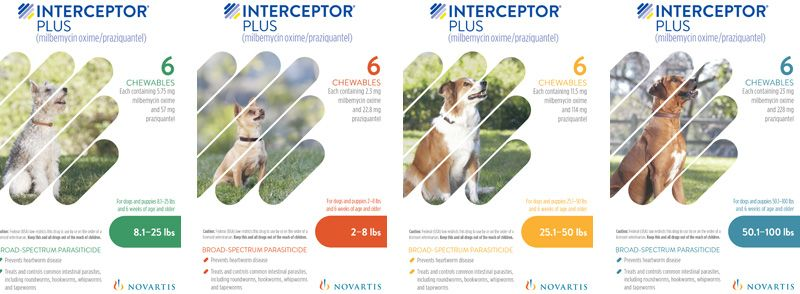
The product is available in four strengths selected according to body weight. Your veterinarian should confirm the appropriate strength and prevention schedule, particularly when starting treatment or switching from another product.
This article follows the U.S. product label. Instructions for similarly named products sold elsewhere should be checked separately.

What Are the Active Ingredients in Interceptor Plus?
Interceptor Plus contains milbemycin oxime and praziquantel. Both are anthelmintics—medicines that act against parasitic worms—but they contribute different coverage.
Active ingredient | Main role in the combination |
Milbemycin oxime | Provides heartworm prevention and activity against the intestinal roundworms, hookworms, and whipworms covered by the label |
Provides activity against the tapeworm species covered by the label |
Together, these ingredients allow one product to address several important internal parasites. However, the combination does not mean that every parasite affecting dogs is covered.
The amounts of both ingredients increase with the chewable strength. The correct product is selected by the dog’s current weight, rather than by age or breed alone. The dosage table later in this article explains the labeled weight bands and corresponding ingredient amounts.

How Does Interceptor Plus Work?
Interceptor Plus combines two medicines that act against different groups of parasitic worms. Milbemycin oxime provides heartworm prevention and activity against specified intestinal nematodes, while praziquantel adds tapeworm coverage.
For heartworm prevention, treatment targets susceptible immature stages before they develop into adult worms. It does not eliminate an established adult heartworm infection. A dog with a positive heartworm test needs a veterinarian-directed treatment plan rather than Interceptor Plus alone.
Repeated monthly administration is essential. The current U.S. label specifies continuing monthly treatment for at least six months after the last mosquito exposure and allows uninterrupted year-round administration. A single dose should not be interpreted as complete protection following exposure.
For intestinal parasites, treatment removes the susceptible adult worms covered by the label. However, dogs can become infected again through subsequent exposure. Medication therefore needs to be combined with measures that reduce reinfection, rather than treated as a permanent barrier against worms.

Which Parasites Does Interceptor Plus Treat and Prevent?
Interceptor Plus prevents heartworm disease and treats and controls specific adult intestinal worm infections. The U.S. label lists the following coverage:
Parasite group | Species listed on the U.S. label | Labeled purpose |
Heartworm | Dirofilaria immitis | Prevention of heartworm disease |
Roundworms | Toxocara canis, Toxascaris leonina | Treatment and control of adult infections |
Hookworm | Ancylostoma caninum | Treatment and control of adult infections |
Whipworm | Trichuris vulpis | Treatment and control of adult infections |
Tapeworms | Taenia pisiformis, Echinococcus multilocularis, Echinococcus granulosus, Dipylidium caninum | Treatment and control of adult infections |
This coverage is species-specific. The product should not be described as treating every worm or every intestinal parasite found in dogs.
Treatment does not guarantee that a dog cannot become reinfected between doses. The label specifically notes that Echinococcus multilocularis can develop quickly enough for an infected dog to shed eggs between monthly treatments. Owners in affected areas should discuss exposure reduction and monitoring with their veterinarian.
Does Interceptor Plus Protect Against Fleas and Ticks?
No. Interceptor Plus does not kill fleas or ticks. Its labeled uses are heartworm disease prevention and treatment and control of specified adult intestinal worms. Dogs that need flea and tick protection require an additional veterinary-approved plan.
Tapeworm coverage should not be confused with flea control. Although Interceptor Plus treats the tapeworm Dipylidium caninum, that indication does not mean the product eliminates fleas.
Ask your veterinarian to select compatible products based on your dog’s health, parasite exposure, and existing medications. Check the full ingredients of any proposed combination to avoid unnecessary duplication.
Interceptor Plus Dosage Chart by Dog Weight
Interceptor Plus is administered orally once monthly, using the chewable strength appropriate for the dog’s current body weight. The U.S. label specifies minimum doses of 0.5 mg/kg milbemycin oxime and 5 mg/kg praziquantel.
Dog’s weight on the U.S. label | Approximate weight in kg* | Milbemycin oxime per chewable | Praziquantel per chewable | Monthly dose |
2–8 lb | 0.91–3.63 kg | 2.3 mg | 22.8 mg | One chewable |
8.1–25 lb | 3.67–11.34 kg | 5.75 mg | 57 mg | One chewable |
25.1–50 lb | 11.39–22.68 kg | 11.5 mg | 114 mg | One chewable |
50.1–100 lb | 22.72–45.36 kg | 23 mg | 228 mg | One chewable |
Over 100 lb | Over 45.36 kg | Depends on combination | Depends on combination | Appropriate combination prescribed by the veterinarian |
Kilogram values are rounded conversions for reference. Use the original label’s weight bands and veterinary guidance when selecting a pack, especially near a boundary.
The product is labeled for dogs and puppies at least six weeks old and weighing at least two pounds. Weigh growing puppies regularly so that their prescribed strength remains appropriate.
Chewables may be broken into pieces to help a dog eat its prescribed dose, but the complete dose must be consumed. This administration instruction should not be interpreted as permission to divide a larger-strength chewable into estimated doses for smaller dogs.
How to Give Interceptor Plus to Your Dog
Give the complete prescribed chewable dose by mouth and confirm that your dog consumes all of it. Interceptor Plus may be offered by hand or placed in a small amount of dog food.
The U.S. label recommends encouraging chewing rather than swallowing the tablet whole. For dogs that normally gulp treats, the chewable may be broken into pieces, provided every piece is consumed.
Observe your dog for several minutes afterward to check that no medication is dropped, spat out, or rejected. If any part of the dose appears to be missing, contact your veterinarian for redosing instructions; the label recommends redosing when dose loss is suspected.
Record the administration date immediately. A shared household checklist can help prevent both missed treatment and accidental dosing by a second person.
How Often Should Dogs Take Interceptor Plus?
Interceptor Plus is given once every month. The current U.S. label directs owners to begin within one month of the dog’s first seasonal mosquito exposure and continue monthly until at least six months after the last seasonal exposure. It also permits uninterrupted year-round use.
When switching from another heartworm preventive, the label specifies giving the first Interceptor Plus dose within one month of the previous product’s last dose. Your veterinarian should coordinate the change.
The American Heartworm Society recommends year-round heartworm prevention and annual testing. Keeping a continuous schedule avoids relying on owners to identify exactly when mosquito exposure begins and ends. Testing remains important even when preventive medication is administered consistently.
Choose a recurring monthly date and set a reminder. Do not stop treatment simply because the weather becomes cooler or your dog spends most of its time indoors. Discuss any interruption, travel plans, or proposed schedule change with your veterinarian.
Why Is Heartworm Testing Important Before Starting Interceptor Plus?
A dog can have heartworm infection without obvious symptoms. Testing helps identify an existing infection before a prevention program begins. The Interceptor Plus label directs that dogs be tested before administration and states that the medication does not eliminate adult heartworms.
Testing also matters for safety. The label describes hypersensitivity reactions in some dogs carrying large numbers of circulating microfilariae—the offspring of adult heartworms. Reported signs include labored breathing, vomiting, excessive salivation, and lethargy, thought to result from proteins released by dying microfilariae. An infected dog therefore needs a veterinarian-directed plan.
Test timing depends on age and prevention history. General American Heartworm Society guidance allows puppies younger than seven months to begin age-appropriate prevention without an initial test, because a recent infection may not yet be detectable. Follow-up testing is still needed. Your veterinarian should reconcile this age-based guidance with the specific product label.
Annual testing remains recommended even for dogs receiving consistent prevention.
What Should You Do If You Miss a Dose?
Contact your veterinarian promptly and arrange to resume prevention without unnecessary delay. Explain when the last complete dose was given and whether any other parasite medication has been administered.
The American Heartworm Society advises restarting monthly prevention after a lapse and arranging testing, including a repeat test six months later. An immediate negative result cannot exclude infection acquired recently.
When discussing a missed dose:
Provide the exact or best-estimated date of the last administration.
Mention any vomiting, rejected chewables, or uncertainty about previous doses.
Confirm the correct strength if your dog’s weight has changed.
Record the restart date and the next scheduled dose.
Do not give multiple doses together to compensate for missed months. A larger dose does not replace the protection provided by a consistent schedule. Interceptor Plus is labeled for monthly administration at the appropriate weight-based dose.
Keep the follow-up testing appointment even if your dog appears healthy after restarting.
What If Your Dog Vomits or Does Not Eat the Entire Chew?
A partially eaten, spat-out, or vomited dose may leave uncertainty about how much medication your dog received. Watch your dog for several minutes after administration and check for dropped or rejected pieces.
The U.S. label recommends redosing if any of the dose is suspected to have been lost. However, it does not provide a universal time cutoff for redosing after vomiting. Contact your veterinarian for instructions rather than estimating how much medication was absorbed.
Have these details ready:
Your dog’s weight and the chewable strength.
When the medication was given.
How soon vomiting occurred.
Whether the chewable or fragments were visible.
Whether vomiting happened once or repeatedly.
Any other symptoms or medications.
If your dog refuses the chewable, the label allows offering it in a small amount of food. It may also be broken into pieces to encourage chewing, provided the complete prescribed dose is consumed.
Repeated vomiting or additional signs of illness require veterinary assessment before further dosing. Record any replacement dose to avoid accidental duplication.
What Are the Possible Side Effects of Interceptor Plus?
The U.S. label lists the following adverse reactions reported after administration of milbemycin oxime or praziquantel:
Category | Reported signs |
Digestive | Vomiting, diarrhea, reduced appetite, and excessive salivation |
General | Lethargy, reduced activity, and weakness |
Neurological | Loss of coordination and convulsions |
The label does not provide a frequency for each of these reported reactions. Their inclusion does not mean every dog will experience them or that every symptom following treatment was caused by the medication.
Seek urgent veterinary care for seizures, marked loss of coordination, collapse, or breathing difficulty. Contact your veterinarian promptly for persistent vomiting, diarrhea, pronounced lethargy, or refusal to eat.
Keep the packaging and note when the dose was administered and when symptoms began. Mention all other medicines and parasite products your dog has received. Do not give another dose while a suspected reaction is being assessed unless your veterinarian directs you to do so.
Which Dogs Need Special Precautions Before Taking Interceptor Plus?
Your veterinarian should review your dog’s health, heartworm status, medication history, and previous reactions before prescribing Interceptor Plus. Although the U.S. label lists no known contraindications, it also includes specific precautions and minimum eligibility requirements.
Dogs needing particular attention include:
Situation | Why it matters |
Known or suspected heartworm infection | Interceptor Plus does not eliminate adult heartworms; infected dogs need a separate treatment plan |
High numbers of circulating microfilariae | Reactions associated with dying microfilariae have been reported with milbemycin oxime |
Age below six weeks or weight below two pounds | The label states not to use the product in these animals |
Breeding or nursing dogs | Safety of the combination has not been evaluated in these groups |
These precautions come from the U.S. prescribing information.
Also tell your veterinarian about previous seizures, coordination problems, reactions to parasite medicines, or current illness. These details help guide individual prescribing decisions; they should not automatically be interpreted as labeled contraindications.
Bring a list of all medications, supplements, and parasite products, including their most recent administration dates. Do not assume that two differently named products have different active ingredients.
Can Puppies, Pregnant Dogs, or Nursing Dogs Take Interceptor Plus?
Eligible puppies can receive Interceptor Plus, but pregnancy and nursing require a separate veterinary assessment.
The U.S. label permits use in puppies at least six weeks old and weighing at least two pounds. Both requirements must be met. Select the strength using current weight, and reassess it as the puppy grows.
For dogs used for breeding and lactating females, the label states that Interceptor Plus safety has not been evaluated. It describes studies involving milbemycin oxime alone, but those findings do not establish the safety of the complete combination during pregnancy or nursing.
Tell your veterinarian if your dog is pregnant, may be pregnant, is intended for breeding, or is feeding puppies. They can select an appropriate parasite-control plan without leaving an unnecessary gap in protection.
Do not reduce the dose yourself to make treatment “safer.” An estimated lower dose may provide inadequate parasite control.
Can Interceptor Plus Be Given With Other Medications or Parasite Treatments?
Interceptor Plus may form part of a broader parasite-control plan, but your veterinarian should approve the specific combination. Because it does not cover fleas or ticks, a dog may need separate protection against those parasites.
Before adding another product, provide its full name, active ingredients, dose, and last administration date. Some combination products already contain a heartworm preventive or intestinal dewormer. Adding Interceptor Plus could duplicate treatment.
Product being considered | What your veterinarian should check |
Flea and tick treatment | Whether it also contains heartworm or intestinal worm medication |
Another dewormer | Overlapping ingredients and whether additional treatment is necessary |
Another heartworm preventive | Whether a switch is intended and how to time it |
Other medicines or supplements | Your dog’s health, treatment history, and potential compatibility concerns |
Do not use Interceptor and Interceptor Plus together simply to increase protection. Both contain milbemycin oxime, so this would duplicate that ingredient.
When changing heartworm preventives, follow a coordinated schedule. The Interceptor Plus label directs that its first dose be given within one month of the previous preventive’s last dose. This is a switching instruction, not a recommendation to administer both products together.
Interceptor vs. Interceptor Plus: What Is the Difference?
The main difference is that Interceptor Plus adds praziquantel for tapeworm coverage. The products also have different minimum ages and labeled species, so their instructions are not interchangeable.
Feature | Interceptor Flavor Tabs | Interceptor Plus |
Active ingredients | Milbemycin oxime | Milbemycin oxime + praziquantel |
Heartworm disease prevention in dogs | Yes | Yes |
Coverage against specified adult roundworms, hookworms, and whipworms in dogs | Yes; see product-specific indications | Yes; see product-specific indications |
Labeled tapeworm treatment in dogs | No | Yes, for specified species |
Minimum age for dogs | Four weeks | Six weeks |
Minimum weight for dogs | Two pounds | Two pounds |
Labeled species | Dogs and cats, with species-specific instructions | Dogs |
Administration frequency | Monthly | Monthly |
This comparison follows the U.S. manufacturer information and Interceptor Plus prescribing label.
The original Interceptor’s cat indication does not extend to Interceptor Plus. Likewise, a puppy old enough for Interceptor may still be too young for Interceptor Plus.
When changing products, confirm the complete name and prescribed strength. Similar branding does not mean that the same weight bands, eligibility requirements, or parasite coverage apply.
Frequently Asked Questions About Interceptor Plus for Dogs
Does Interceptor Plus Require a Prescription?
Yes. In the United States, Interceptor Plus is a prescription animal medication. A veterinarian should assess your dog’s eligibility, heartworm testing needs, and appropriate dose.
Does Interceptor Plus Treat Existing Heartworm Disease?
Interceptor Plus does not eliminate adult heartworms. It is used for prevention, and a dog with an established infection needs a veterinarian-directed treatment plan. Do not substitute monthly prevention for adult heartworm treatment.
Does Interceptor Plus Kill Fleas or Ticks?
No. Its labeled coverage includes heartworm disease prevention and specified intestinal worms. Ask your veterinarian about compatible flea and tick protection if needed.
Does Interceptor Plus Treat Tapeworms?
Yes. The U.S. label includes treatment and control of adult Dipylidium caninum, Taenia pisiformis, Echinococcus multilocularis, and Echinococcus granulosus infections. Reinfection remains possible after treatment.
Can Interceptor Plus Be Given With Food?
Yes. It can be offered by hand or added to a small amount of dog food. Make sure your dog consumes the entire prescribed dose and does not leave pieces behind.
Can I Break the Chewable Into Pieces?
Yes, the label allows breaking it into pieces for dogs that tend to swallow treats whole. All pieces of the prescribed dose must be consumed. This does not authorize dividing a larger-strength chewable into estimated doses for smaller dogs.
Does My Dog Still Need Annual Heartworm Testing?
Yes. The American Heartworm Society recommends annual testing even when prevention is administered year-round. Missed doses, vomiting, or rejected medication can create gaps that owners may not immediately recognize.
Can I Stop Interceptor Plus During Winter?
Do not stop based solely on colder weather. The American Heartworm Society recommends year-round prevention. The current U.S. Interceptor Plus label also specifies continuing monthly administration for at least six months after the last seasonal mosquito exposure. Discuss schedule changes with your veterinarian.
Can Cats Take Interceptor Plus?
Interceptor Plus is labeled for dogs. The separate product, Interceptor Flavor Tabs, has cat-specific indications and dosing instructions. Do not transfer those instructions to Interceptor Plus.
References
The following sources are official U.S. prescribing information, manufacturer resources, and specialist veterinary guidance. Product instructions may differ between countries.
Organization | Source and relevance | Full URL |
U.S. National Library of Medicine — DailyMed | Interceptor Plus prescribing information — U.S. label updated July 27, 2026; indications, dosing, administration, precautions, adverse reactions, and effectiveness | |
Elanco | Interceptor Plus — Official professional product information and parasite coverage | |
Elanco | Interceptor Flavor Tabs for Dogs and Cats — Ingredients, species-specific eligibility, and comparison with Interceptor Plus | |
American Heartworm Society | Heartworm in Dogs — Transmission, testing, puppy prevention, missed doses, and follow-up | |
American Heartworm Society | Think 12 Resource Center — Year-round prevention and annual testing recommendations | |
Mersin Vetlife Veterinary Clinic | Veterinary Clinic Experience |


Comments