
How Long Can Cats Be Left Alone? Safety Tips Before You Leave Home

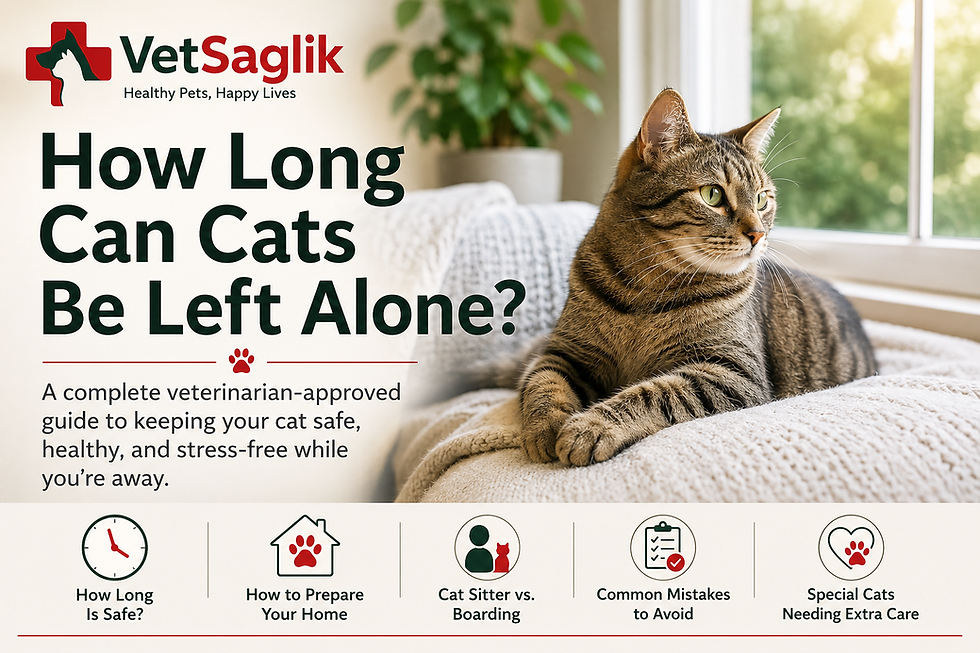
Can Cats Stay Home Alone?
Cats are generally more independent than dogs, but that does not mean they should be left alone for long periods without supervision. Whether a cat can stay home alone depends on its age, health, personality, and daily care needs.
Most healthy adult cats can tolerate being alone for several hours when they have fresh water, enough food, and a clean litter box. However, kittens, senior cats, and cats with medical conditions require much more frequent monitoring and should not be left alone for extended periods.
Even well-prepared homes cannot eliminate every risk. A cat may become ill, knock over its water bowl, experience an emergency, or have an automatic feeder malfunction. For this reason, responsible planning is just as important as providing food and water.
How Long Can Cats Be Left Alone?
There is no universal time limit, but veterinarians generally recommend keeping periods of complete solitude as short as possible. While a healthy adult cat may manage a short absence, longer trips require someone to check on the cat regularly.
Time Alone | Recommendation |
Up to 8–12 hours | Generally safe for healthy adult cats with fresh water, food, and a clean litter box. |
Up to 24 hours | May be acceptable occasionally if the cat is healthy and the home is properly prepared. |
More than 24 hours | A trusted friend, family member, or professional pet sitter should check on the cat at least once a day. |
Several days or longer | Cats should never be left completely alone for multiple days without daily human supervision. |
Although some owners consider leaving enough food and water for several days, this is not the safest approach. Equipment can fail, water can spill, and health problems can develop unexpectedly. Daily human interaction also helps ensure your cat remains healthy, comfortable, and stress-free while you are away.

What Factors Determine How Long a Cat Can Stay Alone?
Although many articles provide a specific number of hours or days, there is no universal limit that applies to every cat. The safest amount of time depends on several individual factors, and understanding these differences can help owners make responsible decisions before leaving home.
Age is one of the biggest considerations. Kittens require frequent meals, supervision, and social interaction, making them poor candidates for long periods alone. Older cats may appear independent but are more likely to have hidden medical conditions that require closer observation.
Health status is equally important. Cats with diabetes, chronic kidney disease, heart disease, hyperthyroidism, or other ongoing medical problems often need medication, special diets, or regular monitoring. Even a short delay in treatment can affect their health.
Personality can also influence how well a cat tolerates solitude. Some cats are naturally independent and spend much of the day sleeping, while others form strong bonds with their owners and become stressed when left alone. Anxious cats may vocalize excessively, stop eating, hide, or develop unwanted behaviors after prolonged isolation.
Your cat's daily routine should also be considered. Cats thrive on consistency, and sudden changes to feeding schedules, playtime, or human interaction can increase stress during your absence.
The home environment matters as well. Indoor cats living in a secure, climate-controlled home usually face fewer risks than cats with outdoor access. Likewise, automatic feeders, water fountains, and pet cameras can provide additional support, but they should never replace regular human supervision.

How to Prepare Your Home Before Leaving
If you plan to leave your cat home alone, proper preparation can significantly reduce potential risks and help keep your pet comfortable while you are away.
Provide multiple sources of fresh water rather than relying on a single bowl. If possible, use a water fountain and place additional water bowls in different areas of the home as a backup.
Ensure there is enough food available for the entire period and consider using an automatic feeder for scheduled meals. Before your trip, test any automatic equipment to make sure it works reliably.
Clean all litter boxes thoroughly and consider adding an extra litter box if you will be away for more than a day. Many cats avoid using dirty litter boxes, which can lead to stress or inappropriate elimination.
Remove potential hazards such as toxic plants, loose strings, medications, cleaning products, or small objects that could be swallowed. Check windows, balconies, and doors to ensure they are secure.
Interactive toys, scratching posts, cat trees, and comfortable resting areas can help prevent boredom and provide mental stimulation. Some owners also use pet cameras to monitor their cat remotely and quickly identify potential problems.
A little preparation before leaving can make a significant difference in your cat's safety, comfort, and overall well-being while you are away.

How to Prepare Your Cat and Your Home Before Leaving
Proper preparation can make a significant difference in your cat's safety and comfort while you are away. Whether you are leaving for a single night or several days with daily visits arranged, preparing your home carefully helps reduce stress and minimizes the risk of unexpected problems.
Start by ensuring your cat has access to multiple sources of fresh water. Rather than relying on a single bowl, place several water bowls in different rooms. If you use a pet water fountain, keep additional bowls available in case the fountain stops working or loses power.
Food should be planned just as carefully. Automatic feeders are useful for maintaining your cat's regular feeding schedule, but they should never be used for the first time on the day you leave. Test the feeder for several days beforehand to confirm that it dispenses the correct amount of food and operates reliably. If your cat eats wet food, consider asking someone to visit and provide fresh meals instead of leaving food out for long periods.
The litter box is another priority. Scoop and clean every litter box before leaving, and if you will be away for more than a day, adding an extra litter box can help keep the environment clean until someone visits. Many cats dislike dirty litter boxes and may avoid using them if they become heavily soiled.
Walk through your home as if you were "cat-proofing" it again. Remove toxic plants, medications, household chemicals, small objects that could be swallowed, loose strings, plastic bags, and anything your cat could become entangled in. Make sure windows have secure screens, balconies are safe, and no doors can accidentally lock your cat in a single room.
Is It Better to Hire a Cat Sitter or Use a Boarding Facility?
If you plan to be away for more than a day or two, one of the most common questions is whether your cat should stay at home with a pet sitter or be cared for in a boarding facility. The answer depends on your cat's personality, medical needs, and previous experiences.
For most healthy indoor cats, staying at home with daily visits from a trusted pet sitter is often the less stressful option. Cats are highly territorial animals and generally feel most secure in familiar surroundings. Remaining in their own home allows them to keep their normal routine, use their usual litter box, and avoid the stress of transportation and unfamiliar environments.
A pet sitter can do much more than refill food and water. During each visit, they can monitor your cat's appetite, litter box habits, hydration, activity level, and overall behavior. They can also recognize early signs of illness, administer medication if necessary, and contact your veterinarian if something appears wrong.
A boarding facility may be a better choice for some cats, particularly those requiring frequent medical care or owners who cannot arrange reliable daily visits. Reputable boarding facilities provide regular monitoring and immediate access to trained staff. However, some cats find boarding stressful because of unfamiliar surroundings, different smells, and the presence of other animals.
There is no single solution that fits every cat. Confident, social cats may adapt well to boarding, while shy or anxious cats often feel safer remaining in their own home with consistent daily care.
Pet Sitter | Boarding Facility |
Cat stays in a familiar environment | Continuous supervision may be available |
Lower stress for most indoor cats | Useful for cats requiring frequent care |
Maintains normal daily routine | Staff can monitor health throughout the day |
Requires a reliable person to visit daily | Some cats may experience stress in an unfamiliar environment |
Whenever possible, choose the option that minimizes stress while ensuring your cat receives appropriate daily care. For most healthy indoor cats, a trusted pet sitter combined with careful home preparation is often the preferred solution.
Common Mistakes Owners Make Before Leaving Their Cat Alone
Even well-intentioned owners can make small mistakes that increase the risk of problems while they are away. Avoiding these common errors can help keep your cat safe and comfortable throughout your trip.
One of the most common mistakes is leaving only one source of water. A bowl can easily be tipped over, become contaminated, or empty sooner than expected. Providing several water bowls in different areas of the house, along with a water fountain if your cat is accustomed to one, offers a much safer backup.
Another frequent mistake is trusting automatic feeders without testing them first. Although modern feeders are generally reliable, batteries can fail, food may become jammed, or programming errors can occur. Running the feeder for several days before your trip allows you to identify potential problems while you are still home.
Many owners also forget the litter box. Even if enough food and water are available, a dirty litter box can become stressful and may cause some cats to eliminate elsewhere in the house. Cleaning all litter boxes before leaving and providing an additional box for longer absences helps maintain good hygiene.
Some people believe that leaving extra food is enough, but this can create other problems. Dry food may become stale, curious cats may overeat, and wet food should never be left out for extended periods because it spoils quickly.
Home safety is another area that is often overlooked. Before leaving, check for toxic houseplants, exposed electrical cords, loose strings, medications, cleaning products, and small objects that could be swallowed. Secure windows and balconies to prevent accidental falls or escapes.
Finally, many owners assume that a pet camera can replace human visits. Cameras are excellent for monitoring your cat, but they cannot refill water, clean the litter box, provide medication, or respond if your cat suddenly becomes ill. Technology should support your care plan—not replace it.
Taking a few extra minutes to prepare before your trip can prevent many of the emergencies veterinarians commonly see after owners return home.
When Should You Never Leave a Cat Alone?
Although many healthy adult cats can tolerate short periods of solitude, some cats require daily hands-on care and should never be left completely alone for extended periods.
Kittens are among the highest-risk groups. Their small size, rapid metabolism, and frequent feeding requirements mean they need regular supervision throughout the day. They are also naturally curious and more likely to injure themselves while exploring their environment.
Senior cats deserve additional attention as well. Older cats have a higher risk of developing age-related conditions such as arthritis, kidney disease, hyperthyroidism, or high blood pressure. Even subtle changes in appetite, water intake, or litter box habits may indicate an emerging medical problem that requires prompt attention.
Cats recovering from surgery or illness should also never be left without appropriate supervision. Surgical wounds need to be monitored for swelling, bleeding, or infection, while recovering cats may suddenly stop eating, remove their bandages, or experience unexpected complications.
Cats with chronic medical conditions require special consideration. Diabetes, chronic kidney disease, heart disease, epilepsy, and other long-term illnesses often require medication, prescription diets, or regular monitoring. Missing even one scheduled treatment may affect your cat's health.
Pregnant cats, nursing queens, and cats caring for newborn kittens should also receive frequent supervision. Both the mother and kittens can develop medical emergencies that require immediate veterinary attention.
If your cat needs medication, has recently shown signs of illness, or has any condition requiring close observation, speak with your veterinarian before making travel plans. In many cases, arranging daily visits or temporary boarding at a veterinary facility may be the safest option.
Signs Your Cat May Not Be Coping Well with Being Alone
While many cats adapt well to short periods of solitude, others may struggle when left alone for too long. Every cat has a unique personality, and some are more sensitive to changes in routine or the absence of their owner. Recognizing the early signs of stress can help prevent minor problems from developing into more serious behavioral or medical issues.
One of the earliest signs is a change in eating or drinking habits. Some cats may eat significantly less while their owners are away, while others may overeat out of boredom. Either change can indicate that the cat is having difficulty coping with the separation.
A cat that suddenly becomes more vocal than usual may also be experiencing stress. Excessive meowing, especially when the owner returns home, can be a sign that the cat has been anxious during the absence.
Changes in litter box habits should never be ignored. Urinating or defecating outside the litter box may be associated with stress, but it can also indicate a medical problem such as feline lower urinary tract disease. If this behavior continues after you return home, a veterinary examination is recommended.
Some cats respond by hiding more often or avoiding interaction, while others become unusually clingy and refuse to leave their owner's side. Both reactions can reflect emotional stress following prolonged periods alone.
Stress may also appear as excessive grooming, over-scratching, destructive behavior, or reduced interest in play. These behaviors are not always caused by loneliness, but they should be taken seriously if they develop after repeated or extended absences.
After returning home, spend a few minutes observing your cat's overall condition. Check that it is eating normally, drinking water, using the litter box, moving comfortably, and behaving as usual. If you notice vomiting, diarrhea, difficulty urinating, severe lethargy, or any other concerning signs, contact your veterinarian promptly rather than assuming the problem is simply related to being alone.
Understanding your cat's normal behavior is the best way to recognize when something is wrong. A cat that appears physically healthy but consistently shows signs of stress during your absences may benefit from shorter periods alone, increased environmental enrichment, or daily visits from a trusted caregiver whenever you travel.
Conclusion
Leaving a cat home alone is sometimes unavoidable, whether you are going to work, spending a night away, or taking a vacation. The key is not to ask how long a cat can survive alone, but how to keep it safe, healthy, and comfortable while you are away.
Most healthy adult cats can tolerate short periods of solitude when they have fresh water, adequate food, a clean litter box, and a safe environment. However, no preparation can fully replace daily human supervision during longer absences. Unexpected illnesses, equipment failures, or accidents can occur at any time, making regular check-ins essential.
Before making travel plans, consider your cat's age, health, personality, and daily care needs. A kitten, senior cat, or cat with a medical condition requires a different level of care than a healthy adult cat. When you expect to be away for more than a day, arranging for a trusted friend, family member, professional pet sitter, or reputable boarding facility is usually the safest decision.
With thoughtful planning and responsible care, you can enjoy your time away knowing that your cat remains safe, comfortable, and well cared for until you return home.
Frequently Asked Questions
Can I leave my cat alone overnight?
Yes. Most healthy adult cats can safely stay home alone overnight if they have fresh water, enough food, and a clean litter box. However, kittens, senior cats, and cats with medical conditions may require more frequent supervision.
Can I leave my cat alone for 2 days?
Not without someone checking on your cat. If you will be away for more than 24 hours, arrange for a trusted friend, family member, or professional pet sitter to visit your cat at least once a day.
Can I leave my cat alone for a week?
No. Cats should never be left completely alone for an entire week, even if automatic feeders and water fountains are available. Daily human supervision is essential to monitor your cat's health and respond to unexpected emergencies.
Do cats get lonely when left alone?
Some do. While many cats are independent, others develop stress or anxiety when separated from their owners. Personality, previous experiences, and daily routine all influence how well a cat tolerates being alone.
Is it better to have two cats if I travel often?
Two compatible cats may provide companionship for each other, but one cat should never be viewed as a substitute for human care. Even households with multiple cats still require daily monitoring when the owner is away.
Are automatic feeders and pet cameras enough?
No. They are valuable tools that help maintain routine and allow remote monitoring, but they cannot recognize illness, provide medical care, or respond to emergencies. Human visits remain the safest approach during longer absences.
References
Reference | Official Link |
American Society for the Prevention of Cruelty to Animals (ASPCA) – Cat Care | |
Cornell University College of Veterinary Medicine – Feline Health Topics | |
International Cat Care (iCatCare) | |
Cats Protection – Leaving Your Cat Alone | |
Blue Cross UK – Caring for Cats While You're Away | |
American Association of Feline Practitioners (AAFP) | |
American Veterinary Medical Association (AVMA) – Cat Owners | |
WSAVA (World Small Animal Veterinary Association) | |
Mersin Vetlife Veterinary Clinic |