
Brachycephalic Dog Breeds: Health Problems, Airway Syndrome, and What Every Owner Should Know

Atualizado: 23 de set.
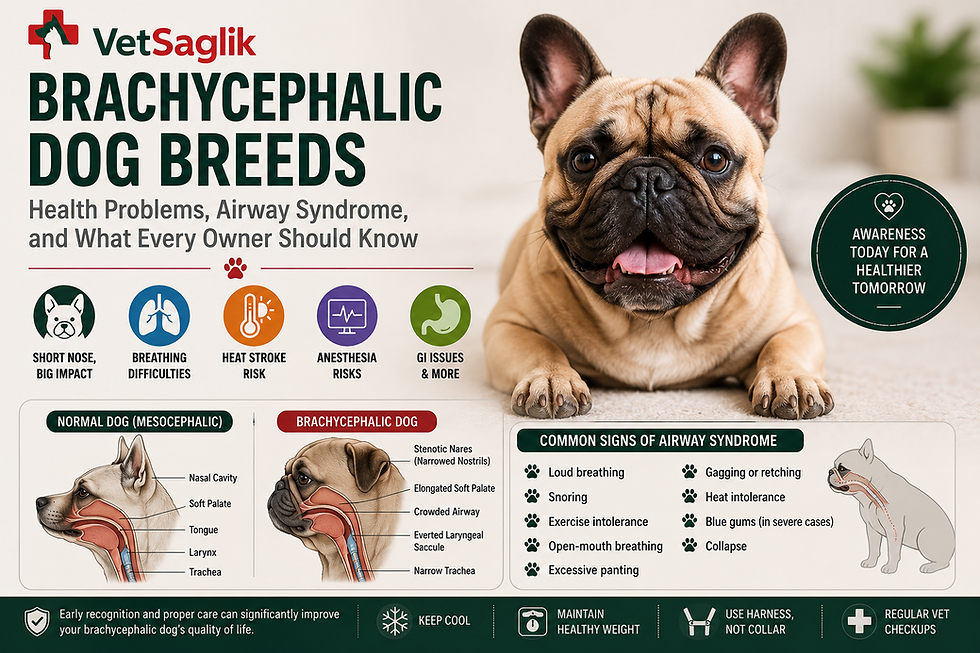
Which Dog Breeds Are Considered Brachycephalic?
Several popular dog breeds are classified as brachycephalic because of their shortened skulls and flat facial structure. Although these breeds share similar anatomical features, the severity of breathing difficulties and other health problems can vary considerably between individuals. Dogs with extremely short muzzles generally face a higher risk of developing Brachycephalic Obstructive Airway Syndrome (BOAS) and related conditions.
Below are some of the most common brachycephalic dog breeds and the health issues they are most frequently associated with.
Dog Breed | Degree of Brachycephaly | Common Health Concerns |
Very High | BOAS, heat stroke, spinal disorders, anesthesia risks | |
English Bulldog | Very High | Severe airway disease, skin fold dermatitis, obesity, orthopedic disease |
Very High | BOAS, eye ulcers, obesity, heat intolerance | |
Boston Terrier | High | Airway obstruction, eye injuries, dental crowding |
Moderate to High | Breathing difficulties, eye disease, dental disease | |
Very High | Severe airway obstruction, eye trauma, heat intolerance | |
Mild to Moderate | Airway narrowing, exercise intolerance, heart disease | |
Mild to Moderate | Mild airway disease, heart disease, syringomyelia | |
Lhasa Apso | Moderate | Upper airway narrowing, eye disease |
Brussels Griffon | High | BOAS, dental crowding, eye disorders |
Japanese Chin | High | Respiratory disease, eye injuries, heart disease |
Dogue de Bordeaux | Moderate to High | Airway disease, heat intolerance, orthopedic problems |
Bullmastiff | Moderate | Airway obstruction, obesity, joint disease |
It is important to remember that not every dog within these breeds will develop serious respiratory disease. Factors such as genetics, body condition, age, and overall airway anatomy all influence the severity of clinical signs. Maintaining a healthy body weight, avoiding overheating, and scheduling regular veterinary examinations can significantly reduce the risk of complications.
Prospective owners should also understand that choosing a brachycephalic breed means accepting the responsibility of monitoring for breathing difficulties and other breed-related health concerns throughout the dog's life. Early recognition of subtle signs—such as loud snoring, exercise intolerance, or noisy breathing—can lead to earlier diagnosis and better long-term outcomes.

What Are Brachycephalic Dog Breeds?
Brachycephalic dog breeds are dogs with a shortened skull and flattened face resulting from selective breeding. The term brachycephalic comes from the Greek words "brachy," meaning short, and "cephalic," meaning head. While these breeds are widely recognized for their distinctive appearance, their unique skull shape also affects the structure of the nose, mouth, throat, and upper airways.
Over many generations, breeders selected dogs with increasingly shorter muzzles to create the facial features that many people find appealing. However, although the bones of the skull became shorter, the soft tissues inside the nose and throat did not shrink proportionally. This mismatch leaves many brachycephalic dogs with crowded airways, making it more difficult for air to move freely during breathing.
Not every flat-faced dog develops severe health problems, but brachycephalic breeds are significantly more likely to experience respiratory difficulties than dogs with normal skull shapes. Some dogs show only mild snoring or noisy breathing, while others may struggle during exercise, become overheated quickly, or develop chronic airway disease that worsens over time.
The shortened skull can also influence other parts of the body besides the respiratory system. Eye problems, dental crowding, skin fold infections, gastrointestinal disorders, and increased anesthetic risks are all more common in brachycephalic breeds because of their unique anatomy.
Understanding what makes a dog brachycephalic is the first step toward recognizing potential health concerns. With proper veterinary care, weight management, appropriate exercise, and early intervention when necessary, many brachycephalic dogs can still enjoy long, happy, and comfortable lives.
Why Do Brachycephalic Dogs Have Breathing Problems?
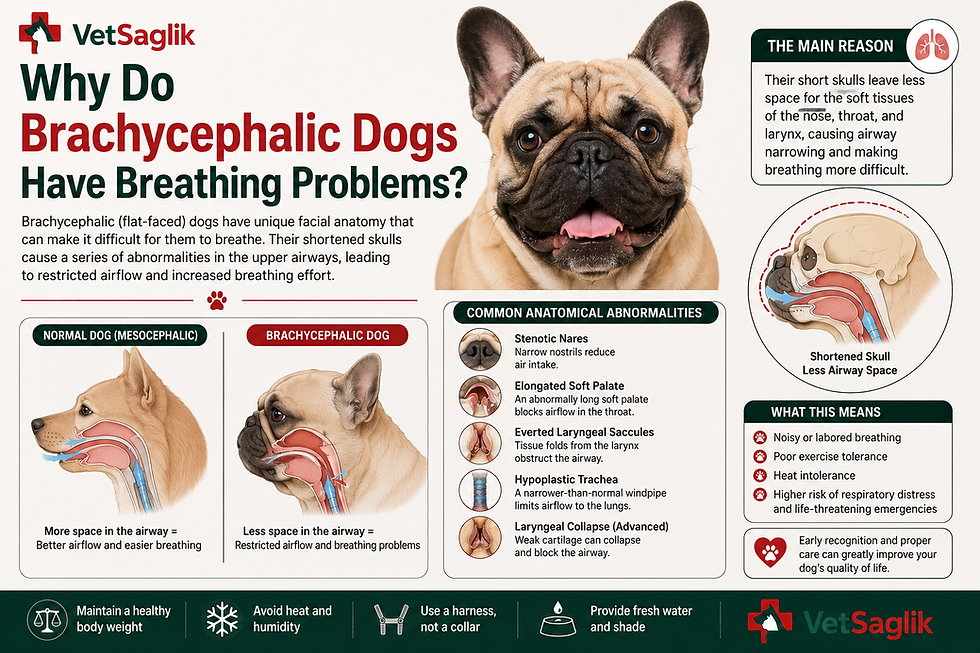
Brachycephalic dogs often have breathing problems because their airways are compressed into a much shorter skull. While the bones of the face are shortened, the soft tissues inside the nose and throat remain relatively large, leaving less space for air to pass through.
Several anatomical abnormalities can contribute to breathing difficulties, including:
Stenotic nares (narrow nostrils)
Elongated soft palate
Hypoplastic trachea (a narrower-than-normal windpipe)
Everted laryngeal saccules
Laryngeal collapse in advanced cases
These changes increase the effort required to breathe, especially during exercise, excitement, or hot weather. Over time, the constant strain on the airway may worsen the condition and lead to more severe respiratory problems.
What Is Brachycephalic Obstructive Airway Syndrome (BOAS)?
Brachycephalic Obstructive Airway Syndrome (BOAS) is a group of upper airway abnormalities that commonly affects flat-faced dog breeds. It is one of the most common and serious health conditions seen in brachycephalic dogs.
Dogs with BOAS may have one or more airway abnormalities that partially block airflow, making it difficult to breathe normally. The condition often becomes more noticeable as dogs age or gain weight.
Common signs of BOAS include:
Loud or noisy breathing
Frequent snoring
Exercise intolerance
Open-mouth breathing
Excessive panting
Gagging or retching
Blue gums (cyanosis) in severe cases
Collapse after exercise or overheating
Early diagnosis is important because untreated BOAS can progressively worsen. Depending on the severity, treatment may include weight management, lifestyle changes, or corrective airway surgery to improve breathing and quality of life.
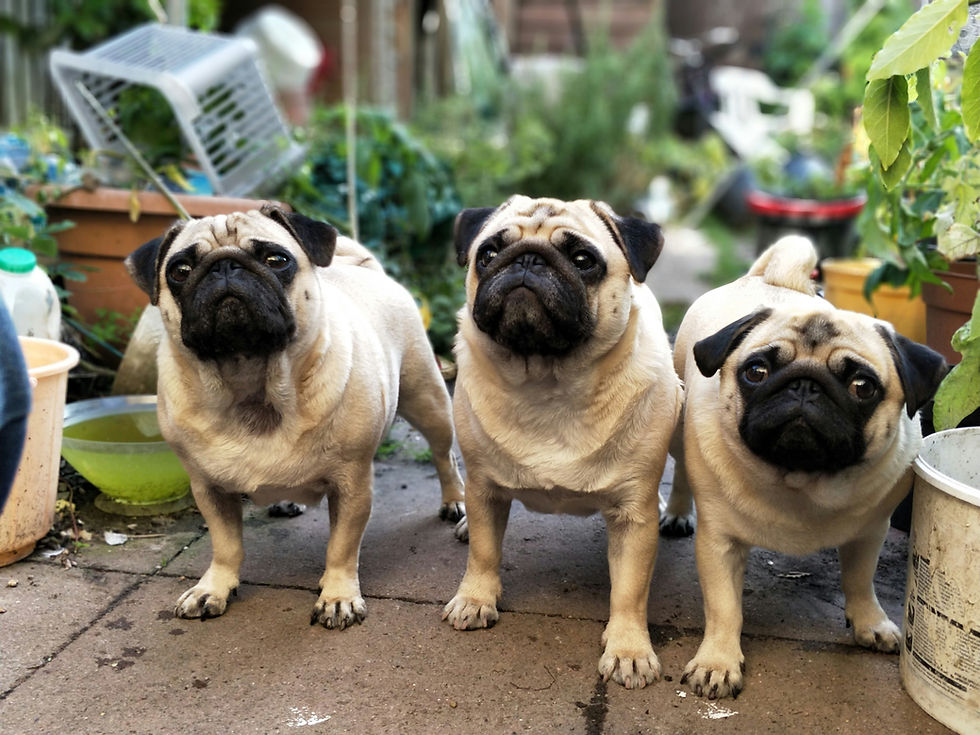
Why Do Brachycephalic Dogs Have Breathing Problems?
Brachycephalic dogs have breathing problems because their shortened skull leaves less room for the tissues that make up the upper airway. Although the bones of the face are much shorter, the soft tissues inside the nose and throat remain nearly the same size, causing the airway to become crowded and partially obstructed.
Several anatomical abnormalities can contribute to poor airflow, including:
Stenotic nares (narrow nostrils)
Elongated soft palate
Hypoplastic trachea (a narrow windpipe)
Everted laryngeal saccules
Laryngeal collapse in advanced cases
These abnormalities make breathing more difficult, especially during exercise, excitement, stress, or hot weather. Over time, the increased effort required to breathe can worsen airway damage and lead to chronic respiratory disease.
What Is Brachycephalic Obstructive Airway Syndrome (BOAS)?
Brachycephalic Obstructive Airway Syndrome (BOAS) is a progressive condition caused by one or more upper airway abnormalities in brachycephalic dogs. It is the most common respiratory disorder affecting flat-faced breeds.
Because airflow is partially blocked, dogs with BOAS must work much harder to breathe. As the condition progresses, the tissues within the airway may become increasingly damaged, making breathing even more difficult.
Common signs of BOAS include:
Noisy breathing
Loud snoring
Exercise intolerance
Excessive panting
Open-mouth breathing
Gagging or retching
Heat intolerance
Blue gums (cyanosis) in severe cases
Collapse after exercise or overheating
Early diagnosis and treatment can significantly improve a dog's comfort and quality of life. Mild cases may benefit from weight management and avoiding heat, while more severe cases often require corrective airway surgery.
What Are the Most Common Health Problems in Brachycephalic Dogs?
Breathing difficulties are only one part of the challenge. Because of their unique anatomy, brachycephalic dogs are more likely to develop several other health problems throughout their lives.
Some of the most common conditions include:
Health Problem | Why It Occurs |
BOAS | Narrowed upper airways restrict airflow. |
Reduced ability to cool the body by panting. | |
Exercise Intolerance | Limited oxygen intake during physical activity. |
Eye Ulcers | Prominent eyes are more prone to injury and drying. |
Dry Eye (KCS) | Reduced tear production in some breeds. |
Weak connective tissue allows the third eyelid gland to prolapse. | |
Dental Crowding | Teeth are crowded into a shortened jaw. |
Periodontal Disease | Crowded teeth trap plaque and bacteria. |
Skin Fold Dermatitis | Moisture becomes trapped in facial skin folds. |
Increased breathing effort may contribute to reflux, regurgitation, and vomiting. | |
Anesthetic Complications | Narrow airways increase the risk during anesthesia and recovery. |
Regular veterinary examinations can help detect these conditions early, allowing treatment before they become more serious.

Why Are Brachycephalic Dogs More Prone to Heat Stroke?
Dogs regulate their body temperature mainly by panting. Because brachycephalic dogs have narrowed airways, they cannot move air as efficiently, making it much harder to cool themselves. As a result, they can overheat much more quickly than dogs with normal muzzle lengths.
To reduce the risk of heat stroke:
Avoid exercise during hot or humid weather.
Always provide access to fresh water and shade.
Never leave your dog in a parked car.
Walk your dog during the early morning or evening.
Stop activity immediately if your dog shows signs of overheating.
Heat stroke is a medical emergency. Seek veterinary care immediately if your dog develops excessive panting, weakness, collapse, vomiting, or bright red or blue gums.
Why Is Anesthesia Riskier for Brachycephalic Dogs?
Brachycephalic dogs have a higher risk of anesthesia-related complications because their airways are naturally narrower. Intubation may be more challenging, and swelling of the airway during recovery can make breathing difficult after the procedure.
To reduce these risks, veterinarians often:
Perform a thorough pre-anesthetic examination.
Use carefully selected anesthetic protocols.
Closely monitor oxygen levels and breathing.
Extubate only when the dog is fully awake.
Continue monitoring during recovery for signs of airway obstruction.
With proper planning and experienced veterinary care, most brachycephalic dogs undergo anesthesia safely.
How Is Brachycephalic Airway Syndrome Diagnosed?
Diagnosis begins with a physical examination and a review of your dog's breathing history. Your veterinarian will evaluate the nose, mouth, throat, and breathing pattern to determine whether airway obstruction is present.
Additional diagnostic tests may include:
Physical examination
Airway evaluation under light anesthesia
Chest and neck X-rays
Advanced imaging (CT scan) when needed
Blood tests before anesthesia or surgery
Early diagnosis allows treatment before permanent airway damage develops and can greatly improve your dog's quality of life.
How Is Brachycephalic Airway Syndrome Treated?
Treatment depends on the severity of your dog's symptoms. Mild cases can often be managed with lifestyle changes, while moderate to severe cases may require surgery to improve airflow.
Common treatment options include:
Maintaining a healthy body weight
Limiting strenuous exercise, especially in hot weather
Using a harness instead of a neck collar
Keeping your dog in a cool environment
Treating secondary conditions, such as gastrointestinal disease or skin infections
Corrective airway surgery when necessary
Your veterinarian will recommend the most appropriate treatment plan based on your dog's clinical signs and airway anatomy.
What Surgical Procedures Are Used to Improve Breathing?
Surgery is often recommended for dogs with moderate to severe BOAS. The goal is to reduce airway obstruction and make breathing easier.
Common surgical procedures include:
Stenotic nares correction to widen the nostrils
Soft palate resection to shorten an elongated soft palate
Removal of everted laryngeal saccules
Treatment of laryngeal collapse in advanced cases
Many dogs experience significant improvements in breathing, exercise tolerance, and overall quality of life after surgery, particularly when treated before permanent airway damage occurs.
How Can Owners Care for Brachycephalic Dogs at Home?
Daily care plays an important role in keeping brachycephalic dogs healthy and comfortable.
Follow these tips:
Keep your dog at a healthy weight.
Avoid exercise during hot or humid weather.
Provide plenty of fresh water and shade.
Use a harness instead of a collar.
Clean facial skin folds regularly.
Schedule routine veterinary checkups.
Watch for changes in breathing, especially during sleep or exercise.
Prompt veterinary attention for worsening breathing problems can help prevent serious complications.
When Should You See a Veterinarian?
Contact your veterinarian if your brachycephalic dog develops any of the following signs:
Constant or worsening noisy breathing
Frequent gagging or choking
Exercise intolerance
Excessive panting without exercise
Blue or pale gums
Collapse or fainting
Signs of heat stroke
Early veterinary care can prevent complications and greatly improve your dog's long-term health and quality of life.
Frequently Asked Questions About Brachycephalic Dog Breeds
Can brachycephalic dogs live a normal life?
Yes. Many brachycephalic dogs live long and happy lives with proper care. Maintaining a healthy weight, avoiding overheating, and receiving regular veterinary checkups can significantly improve their quality of life.
Which dog breeds are considered brachycephalic?
Common brachycephalic breeds include the French Bulldog, English Bulldog, Pug, Boston Terrier, Shih Tzu, Pekingese, Boxer, Brussels Griffon, Japanese Chin, Lhasa Apso, Bullmastiff, Dogue de Bordeaux, and Cavalier King Charles Spaniel.
Do all brachycephalic dogs have breathing problems?
No. While these breeds are at a higher risk, not every dog develops severe breathing difficulties. The severity depends on the individual dog's airway anatomy, body condition, and overall health.
Can Brachycephalic Obstructive Airway Syndrome (BOAS) be cured?
BOAS cannot always be completely cured, but it can often be managed successfully. Lifestyle changes, weight control, and corrective surgery can greatly reduce symptoms and improve breathing.
Is surgery always necessary?
No. Mild cases may only require weight management and environmental modifications. Surgery is generally recommended for dogs with moderate to severe airway obstruction or those whose symptoms affect their daily life.
Why do brachycephalic dogs snore so much?
Snoring occurs because narrowed airways and excess soft tissue create turbulence as air moves through the nose and throat. Frequent or loud snoring can be a sign of BOAS.
Are brachycephalic dogs more sensitive to hot weather?
Yes. Because they cannot cool themselves efficiently through panting, brachycephalic dogs are much more likely to overheat and develop heat stroke, especially during exercise or hot weather.
Can brachycephalic dogs fly on airplanes?
Air travel can be risky for brachycephalic dogs because stress, heat, and reduced airflow may worsen breathing difficulties. Owners should consult their veterinarian before flying, and many airlines have restrictions for flat-faced breeds.
Reference
Reference | Official Link |
American College of Veterinary Surgeons (ACVS) – Brachycephalic Syndrome | |
Merck Veterinary Manual – Brachycephalic Airway Syndrome | |
MSD Veterinary Manual – Upper Airway Disorders in Dogs | |
BSAVA Manual of Canine and Feline Respiratory Medicine | |
WSAVA (World Small Animal Veterinary Association) Global Guidelines | |
American Kennel Club (AKC) – Brachycephalic Dog Breeds | |
Royal Veterinary College (RVC) – Brachycephalic Obstructive Airway Syndrome (BOAS) Research | |
Cornell University College of Veterinary Medicine | |
American Veterinary Medical Association (AVMA) – Brachycephalic Pet Health | |
European College of Veterinary Surgeons (ECVS) | |
University of Cambridge – Department of Veterinary Medicine |