
IVDD (Intervertebral Disc Disease) in Dogs

Atualizado: 21 de jun.
What Is IVDD (Intervertebral Disc Disease) in Dogs?
IVDD (Intervertebral Disc Disease) in dogs is a spinal condition that occurs when the discs between the vertebrae begin to degenerate, bulge, or rupture and place pressure on the spinal cord. These discs normally act as shock absorbers that protect the spine during movement. When damaged, they can cause pain, weakness, nerve dysfunction, and even paralysis.

The condition is especially common in breeds with long backs and short legs such as Dachshunds, French Bulldogs, Corgis, and Beagles. In these dogs, the discs often degenerate earlier than normal and may suddenly rupture during everyday activities like jumping, running, or climbing stairs.
There are two major forms of IVDD:
Type | Description |
Hansen Type I | Sudden disc rupture causing acute spinal cord compression |
Hansen Type II | Slow disc bulging causing chronic compression |
The location of the damaged disc affects the symptoms. Neck discs often cause severe neck pain and stiffness, while mid-back discs usually affect the hind legs and walking ability.
Veterinarians commonly grade IVDD based on severity:
Grade | Clinical Signs |
Grade 1 | Pain only |
Grade 2 | Weakness but walking |
Grade 3 | Unable to walk independently |
Grade 4 | Paralysis with deep pain sensation |
Grade 5 | Paralysis without deep pain sensation |
Dogs that lose deep pain sensation are considered critical emergencies because prolonged spinal cord compression may lead to permanent neurological damage.
Although IVDD can be frightening, many dogs recover successfully with early treatment. Depending on severity, treatment may include crate rest, medications, rehabilitation therapy, or spinal surgery.

Early Warning Signs of IVDD (Intervertebral Disc Disease) in Dogs
The early signs of IVDD are often subtle, but recognizing them quickly can significantly improve recovery chances. Many dogs show pain or mild neurological changes before severe spinal cord injury develops.
One of the first warning signs is reluctance to jump, run, or climb stairs. Dogs may suddenly cry out when picked up or appear uncomfortable during movement.
Common early symptoms include:
Symptom | Possible Meaning |
Back or neck pain | Disc inflammation |
Trembling | Severe discomfort |
Arched back | Muscle tension and spinal pain |
Reluctance to jump | Early spinal dysfunction |
Spinal cord compression | |
Wobbling | Neurological deficits |

As the disease progresses, neurological signs become more obvious. Some dogs begin dragging their paws or walking unsteadily because spinal cord compression interferes with coordination.
Important neurological signs include:
Neurological Sign | What It Indicates |
Knuckling | Loss of proprioception |
Dragging nails | Weakness and coordination loss |
Crossing rear legs | Spinal cord dysfunction |
Falling while walking | Progressive neurological damage |
Dogs with cervical IVDD affecting the neck may:
Hold their head low
Refuse neck movement
Cry during head turning
Show front limb weakness
Thoracolumbar IVDD more commonly causes:
Hind limb weakness
Difficulty standing
Loss of balance
Urinary problems
Certain symptoms should always be treated as emergencies:
Emergency Symptom | Why It Is Serious |
Sudden paralysis | Severe spinal compression |
Loss of bladder control | Advanced neurological damage |
Inability to walk | Significant spinal cord injury |
Loss of deep pain sensation | Poorer prognosis |
Some dogs deteriorate very quickly. A dog with mild pain in the morning may become unable to walk later the same day after sudden disc rupture.
Because IVDD symptoms can worsen rapidly, immediate veterinary evaluation is recommended whenever spinal pain, weakness, or coordination problems appear.
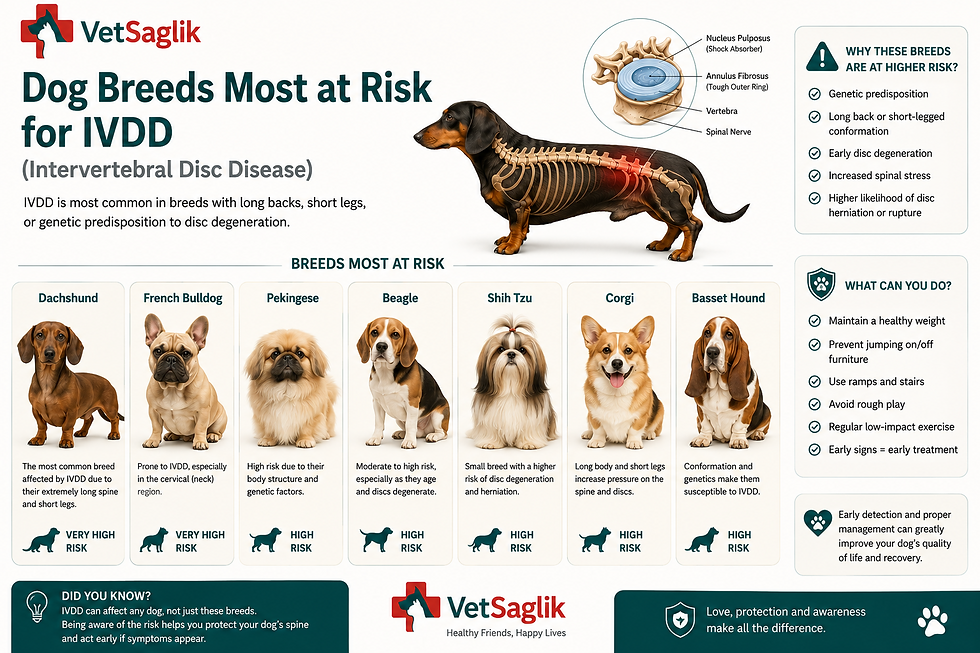
Dog Breeds Most at Risk for IVDD (Intervertebral Disc Disease)
Certain dog breeds are genetically predisposed to IVDD because their intervertebral discs degenerate earlier than normal. These breeds are known as chondrodystrophic breeds and are far more likely to develop spinal disc disease during their lifetime.
The Dachshund is considered the highest-risk breed worldwide. Their long spine and short legs create increased stress on the vertebral column, especially during jumping or twisting movements.
Breeds commonly affected by IVDD include:
Dog Breed | Risk Level |
Very High | |
Very High | |
High | |
High | |
High | |
Moderate to High | |
Moderate to High | |
Moderate |

French Bulldogs are especially vulnerable because many also have congenital spinal abnormalities such as hemivertebrae, which increase spinal instability.
Large-breed dogs can also develop IVDD, although they more commonly experience chronic disc protrusion rather than sudden rupture.
Large breeds sometimes affected include:
Several additional factors may increase IVDD risk even further:
Risk Factor | Effect |
Increased spinal stress | |
Frequent jumping | Sudden disc pressure |
Slippery floors | Increased injury risk |
Poor muscle condition | Reduced spinal support |
Previous IVDD episode | Higher recurrence risk |
Although genetics cannot be completely prevented, maintaining a healthy weight and reducing spinal strain may help lower the risk of severe disc injury.

What Causes IVDD (Intervertebral Disc Disease) in Dogs?
IVDD develops when the intervertebral discs between the vertebrae begin to degenerate and lose their normal flexibility. Over time, the discs become weaker, drier, and more prone to rupture or bulging into the spinal canal.
Healthy discs contain a soft center surrounded by a strong outer ring:
Disc Structure | Function |
Nucleus Pulposus | Absorbs shock and pressure |
Annulus Fibrosus | Provides stability and support |
As degeneration progresses, the inner disc material may suddenly rupture through the outer layer and compress the spinal cord.
Genetics are considered the most important underlying cause, especially in chondrodystrophic breeds. These dogs inherit abnormal cartilage development that accelerates disc degeneration at a young age.
Common causes and contributing factors include:
In many dogs, IVDD episodes occur during completely normal activities such as running, climbing stairs, or jumping off a couch.
Obesity significantly increases spinal pressure and may worsen both the severity of IVDD and recovery time after treatment.
Trauma can also trigger acute disc rupture, especially in dogs whose discs are already weakened by degeneration.
Once the disc ruptures, inflammation develops around the spinal cord and nerve roots. This inflammation can worsen neurological damage beyond the direct mechanical compression itself.
The severity of spinal injury depends on:
The amount of disc material involved
The speed of extrusion
The duration of compression
The location of the affected disc
Dogs with repeated IVDD episodes often have multiple degenerating discs throughout the spine, which is why recurrence remains common in predisposed breeds.
How Much Does IVDD (Intervertebral Disc Disease) Treatment Cost?
The cost of IVDD treatment in dogs varies widely depending on the severity of spinal cord compression, the need for surgery, hospitalization time, imaging procedures, and rehabilitation therapy. Mild cases treated conservatively are usually far less expensive than dogs requiring emergency spinal surgery.
Treatment costs often include:
Neurological examinations
Imaging tests
Pain medications
Hospitalization
Surgery
Rehabilitation therapy
Follow-up care
Typical diagnostic costs include:
Diagnostic Procedure | Average US Cost | Average EU Cost |
X-rays | $200–$600 | €150–€450 |
CT Scan | $800–$2,000 | €600–€1,500 |
MRI Scan | $2,000–$4,500 | €1,200–€3,000 |
MRI is considered the gold standard for diagnosing IVDD because it shows spinal cord compression in detail and helps surgeons identify the exact affected disc.
Conservative treatment is usually less expensive and may include:
Crate rest
Pain management
Anti-inflammatory medications
Follow-up examinations
Average conservative treatment costs:
Conservative Treatment | Average Cost |
Medications | $100–$500 |
Follow-Up Visits | $100–$600 |
Rehabilitation Sessions | $75–$300/session |
Dogs with severe neurological deficits often require surgery. Common IVDD surgeries include:
Hemilaminectomy
Ventral slot surgery
Fenestration procedures
Average surgical costs:
Surgical Procedure | Average US Cost | Average EU Cost |
Hemilaminectomy | $5,000–$12,000 | €3,500–€8,500 |
Cervical Surgery | $4,000–$10,000 | €3,000–€7,000 |
Emergency Hospitalization | $1,000–$4,000 | €700–€2,500 |
Postoperative rehabilitation may add additional expenses, especially for dogs recovering from paralysis.
Many owners underestimate long-term costs such as:
Mobility harnesses
Orthopedic bedding
Wheelchairs
Bladder management supplies
Physical therapy
Although IVDD treatment can be expensive, early diagnosis often reduces both complications and total recovery costs.

Grades and Stages of IVDD (Intervertebral Disc Disease) in Dogs
Veterinarians classify IVDD into different grades based on the severity of neurological dysfunction. This grading system helps determine prognosis, treatment urgency, and recovery potential.
As spinal cord compression worsens, dogs typically progress through predictable neurological stages.
The most common IVDD grading system includes:
Grade | Clinical Signs | Severity |
Grade 1 | Pain only | Mild |
Grade 2 | Weakness but able to walk | Moderate |
Grade 3 | Unable to walk independently | Severe |
Grade 4 | Paralysis with deep pain sensation | Very Severe |
Grade 5 | Paralysis without deep pain sensation | Critical |
Grade 1 dogs usually show spinal pain without obvious neurological deficits. They may cry out, tremble, or refuse movement but can still walk normally.
Grade 2 dogs develop:
Hind limb weakness
Wobbling
Knuckling
Loss of coordination
At Grade 3, dogs can move their legs but cannot support their body weight or walk independently.
Grade 4 dogs are completely paralyzed but still retain deep pain sensation, which is an important positive prognostic sign.
Grade 5 is the most severe stage. These dogs lose deep pain sensation entirely, indicating severe spinal cord injury.
Loss of deep pain sensation significantly lowers recovery chances and is considered a neurological emergency.
Recovery potential generally decreases as IVDD severity increases:
IVDD Grade | General Prognosis |
Grade 1 | Excellent |
Grade 2 | Very Good |
Grade 3 | Good with treatment |
Grade 4 | Fair to Good |
Grade 5 | Guarded |
Some dogs deteriorate very quickly, especially during acute Hansen Type I disc rupture. Rapid progression from mild weakness to paralysis can occur within hours.
Severe IVDD cases may also develop progressive myelomalacia, a rare but often fatal condition involving progressive spinal cord tissue death.
Because prognosis depends heavily on neurological grade, early diagnosis and treatment are extremely important in dogs with IVDD.
Common Symptoms of IVDD (Intervertebral Disc Disease) in Dogs
The symptoms of IVDD can vary from mild spinal pain to complete paralysis depending on the severity and location of spinal cord compression. Some dogs develop symptoms slowly over time, while others suddenly collapse after acute disc rupture.
Pain is usually the first symptom owners notice. Dogs may cry out unexpectedly, avoid movement, or become reluctant to jump and climb stairs.
Common symptoms include:
Symptom | Possible Meaning |
Back or neck pain | Disc inflammation |
Trembling | Severe discomfort |
Weak hind legs | Spinal cord compression |
Wobbling while walking | Neurological dysfunction |
Coordination loss | |
Paralysis | Severe spinal injury |
Loss of bladder control | Advanced nerve damage |
Many affected dogs develop an arched-back posture because they are trying to reduce spinal movement and pain.
Neurological signs often worsen as spinal cord compression increases. Dogs may begin:
Crossing their rear legs
Falling while walking
Knuckling their paws
Scuffing their nails
Losing balance on slippery floors
Cervical IVDD affecting the neck commonly causes:
Neck stiffness
Lowered head posture
Muscle spasms
Front limb weakness
Thoracolumbar IVDD more commonly affects:
Hind limb strength
Walking ability
Urinary control
Tail movement
Emergency symptoms requiring immediate veterinary care include:
Emergency Symptom | Why It Is Dangerous |
Sudden paralysis | Severe spinal compression |
Inability to urinate | Advanced neurological injury |
Rapid worsening | Progressive spinal damage |
Loss of deep pain sensation | Poorer recovery prognosis |
Some dogs may deteriorate within only a few hours after sudden disc rupture, which is why rapid veterinary evaluation is critical whenever neurological symptoms appear.
How Veterinarians Diagnose IVDD (Intervertebral Disc Disease)
Diagnosing IVDD requires a combination of neurological examination, physical assessment, and advanced imaging. Because many spinal and neurological diseases can mimic IVDD, accurate diagnosis is extremely important before treatment decisions are made.
Veterinarians usually begin by reviewing:
Symptom progression
Pain severity
Walking ability
Bladder function
Previous spinal episodes
A neurological examination helps determine:
Whether spinal disease is present
Which spinal region is affected
The severity of spinal cord injury
Common parts of the neurological exam include:
Examination Step | Purpose |
Gait evaluation | Assess walking and coordination |
Reflex testing | Evaluate nerve function |
Paw placement tests | Check proprioception |
Pain assessment | Identify spinal discomfort |
Deep pain testing | Assess severe spinal injury |
Dogs with IVDD often show delayed paw correction, weakness, or abnormal reflexes due to spinal cord compression.
Imaging is usually required to confirm diagnosis.
X-rays may show:
Disc calcification
Narrowed disc spaces
Vertebral abnormalities
However, X-rays cannot directly visualize the spinal cord.
MRI is considered the gold standard because it clearly shows:
Disc extrusion
Spinal cord compression
Inflammation
Hemorrhage
Secondary spinal injury
CT scans are also useful, especially for detecting calcified disc material and vertebral abnormalities.
Imaging Method | Main Advantage |
X-ray | Basic spinal evaluation |
CT Scan | Excellent bone detail |
MRI | Best spinal cord visualization |
Veterinarians must also rule out other diseases that can resemble IVDD:
Similar Condition | Shared Symptoms |
Degenerative myelopathy | Hind limb weakness |
Neurological deficits | |
Fibrocartilaginous embolism | Sudden paralysis |
Meningitis | Neck pain |
Difficulty walking |
Early diagnosis is extremely important because prolonged spinal cord compression increases the risk of permanent neurological damage.
Dogs treated before severe paralysis develops generally recover far more successfully than dogs with advanced spinal injury.
MRI, CT Scan and X-Ray Findings in Dogs With IVDD (Intervertebral Disc Disease)
Imaging tests are extremely important for confirming IVDD and determining how severely the spinal cord is compressed. While neurological examinations help localize the problem, advanced imaging shows the exact disc involved and helps veterinarians decide whether surgery is necessary.
The three most commonly used imaging methods are:
X-rays
CT scans
MRI
Each method provides different information.
Imaging Method | Best For | Main Limitation |
X-ray | Bone structures and disc calcification | Cannot directly show spinal cord |
CT Scan | Calcified disc material and vertebrae | Less soft tissue detail |
MRI | Spinal cord and disc compression | Higher cost |
X-rays are usually the first imaging test performed. They may reveal:
Narrowed disc spaces
Calcified discs
Vertebral malformations
Spinal instability
However, many dogs with severe IVDD can still have relatively normal X-rays because the spinal cord itself is not visible on standard radiographs.
CT scans provide more detailed cross-sectional images and are especially useful for identifying mineralized disc material.
Common CT findings include:
CT Finding | Clinical Meaning |
Disc extrusion | Acute IVDD |
Spinal canal narrowing | Cord compression |
Calcified discs | Chronic degeneration |
Vertebral abnormalities | Spinal instability |
MRI is considered the gold standard for IVDD diagnosis because it directly visualizes:
The spinal cord
Disc herniation
Inflammation
Swelling
Hemorrhage
MRI findings often determine:
Surgical planning
Prognosis
Severity of injury
Long-term recovery potential
Dogs with severe spinal cord swelling or hemorrhage on MRI generally have more serious neurological injury.
Most advanced imaging procedures require sedation or general anesthesia because dogs must remain completely still during scanning.
Conservative Treatment for IVDD (Intervertebral Disc Disease) in Dogs
Conservative treatment is commonly used for dogs with mild to moderate IVDD, especially when they can still walk independently or have only limited neurological deficits.
The main goals of conservative management are:
Reduce spinal inflammation
Control pain
Prevent further disc damage
Allow the spine to stabilize naturally
The foundation of conservative treatment is strict crate rest.
Most veterinarians recommend:
6–8 weeks of strict confinement
Leash-only bathroom breaks
No running, jumping, or stairs
Strict crate rest is critical because excessive movement can worsen spinal cord compression and trigger paralysis.
Pain management usually includes:
NSAIDs
Muscle relaxants
Opioids in severe cases
Medication Type | Purpose |
NSAIDs | Reduce inflammation |
Control nerve pain | |
Muscle relaxants | Reduce spasms |
Opioids | Severe pain relief |
Even if dogs appear more comfortable after medication, owners must still restrict activity because the damaged disc has not fully healed.
Some dogs also require bladder management if neurological dysfunction affects urination.
Rehabilitation therapy may help maintain muscle strength during recovery and can include:
Passive range of motion exercises
Assisted standing
Hydrotherapy
Controlled leash walking
Conservative treatment generally works best in dogs that:
Still retain walking ability
Have mild neurological deficits
Receive treatment early
Recovery potential decreases significantly once dogs lose deep pain sensation or become completely paralyzed.
IVDD (Intervertebral Disc Disease) Surgery in Dogs
Surgery is often recommended for dogs with severe IVDD, especially when spinal cord compression causes paralysis, inability to walk, or rapidly worsening neurological signs.
The main goal of surgery is to remove pressure from the spinal cord before permanent nerve damage develops.
Surgery is commonly recommended for:
Non-ambulatory dogs
Progressive neurological decline
Severe pain
Loss of bladder control
Failure of conservative treatment
The exact surgical technique depends on the location of the affected disc.
Common procedures include:
Surgical Procedure | Main Purpose |
Hemilaminectomy | Remove thoracolumbar disc material |
Ventral Slot Surgery | Treat cervical IVDD |
Fenestration | Reduce recurrence risk |
Hemilaminectomy is the most common IVDD surgery and involves removing part of the vertebral bone to access and remove herniated disc material.
Cervical IVDD affecting the neck may require ventral slot surgery, which approaches the spinal cord from underneath the neck.
Timing is extremely important in surgical IVDD cases. The longer the spinal cord remains compressed, the greater the risk of permanent neurological injury.
Dogs that still retain deep pain sensation generally recover much better after surgery than dogs that completely lose pain perception.
Potential surgical complications include:
Bleeding
Persistent neurological deficits
Recurrence
Delayed recovery
Despite these risks, many dogs regain walking ability and maintain excellent quality of life after successful IVDD surgery.
Recovery Timeline After IVDD (Intervertebral Disc Disease) Surgery
Recovery after IVDD surgery varies depending on:
Neurological severity
Speed of treatment
Surgical success
Rehabilitation quality
Presence of deep pain sensation
Some dogs improve rapidly within days, while others require several months of rehabilitation before regaining mobility.
A typical recovery timeline may look like this:
Recovery Period | Expected Progress |
First 72 Hours | Pain stabilization and neurological monitoring |
2–4 Weeks | Assisted standing and gradual strength improvement |
1–3 Months | Improved coordination and walking ability |
3–6 Months | Continued neurological recovery |
Immediately after surgery, dogs often require:
Strict activity restriction
Pain management
Bladder assistance
Supportive nursing care
Many dogs initially remain weak or partially paralyzed even after successful decompression because spinal cord healing takes time.
Physical rehabilitation is extremely important during recovery and may include:
Hydrotherapy
Assisted walking
Balance exercises
Muscle strengthening
Passive range of motion exercises
Dogs that begin rehabilitation early often recover faster and regain better muscle function.
Several factors strongly influence prognosis:
Positive Prognostic Factor | Negative Prognostic Factor |
Early surgery | Delayed treatment |
Preserved deep pain sensation | Loss of deep pain sensation |
Mild neurological deficits | Severe paralysis |
Good rehabilitation | Poor postoperative care |
Some dogs recover completely, while others may retain mild weakness, wobbling, or urinary problems long term.
Recurrence is also possible because many predisposed dogs have multiple degenerating discs throughout the spine. Owners are therefore usually advised to permanently reduce spinal stress by:
Preventing jumping
Using ramps
Maintaining healthy body weight
Avoiding slippery flooring
Physical Therapy and Rehabilitation for Dogs With IVDD (Intervertebral Disc Disease)
Physical therapy and rehabilitation are extremely important parts of IVDD recovery, especially in dogs recovering from paralysis, weakness, or spinal surgery. Rehabilitation helps rebuild muscle strength, improve coordination, reduce pain, and support spinal healing.
Many dogs lose muscle mass very quickly after prolonged crate rest or neurological injury. Controlled rehabilitation helps restore mobility while minimizing additional spinal stress.
Common rehabilitation goals include:
Improving walking ability
Restoring coordination
Maintaining joint flexibility
Reducing muscle stiffness
Preventing muscle loss
Supporting neurological recovery
Several rehabilitation techniques are commonly used:
Rehabilitation Method | Main Benefit |
Hydrotherapy | Low-impact muscle strengthening |
Assisted walking | Improves balance and coordination |
Passive range of motion exercises | Maintains joint flexibility |
Laser therapy | Reduces pain and inflammation |
Balance exercises | Improves neurological control |
Hydrotherapy is especially helpful because water reduces pressure on the spine while allowing safe movement. Underwater treadmills are commonly used in veterinary rehabilitation centers.
Laser therapy may also help reduce inflammation and discomfort around injured spinal tissues.
Rehabilitation should always progress gradually because excessive activity too early may worsen spinal injury or delay healing.
Dogs recovering from severe IVDD may require:
Mobility harnesses
Slings
Wheelchairs
Non-slip flooring
Orthopedic bedding
Many dogs continue improving neurologically for several months after surgery or conservative treatment.
How to Care for a Dog With IVDD (Intervertebral Disc Disease) at Home
Home care plays a major role in IVDD recovery. Even after successful treatment or surgery, improper management at home can worsen spinal injury or increase recurrence risk.
One of the most important aspects of care is limiting spinal stress.
Owners should avoid:
Jumping on furniture
Running
Rough play
Stair climbing
Slippery surfaces
Helpful home modifications include:
Home Adjustment | Benefit |
Non-slip rugs | Reduces falling risk |
Ramps | Prevents jumping stress |
Orthopedic beds | Improves comfort |
Elevated food bowls | Reduces neck strain |
Playpens or crates | Limits excessive movement |
Dogs recovering from IVDD often require strict confinement for several weeks, especially after surgery.
Bladder management is also important in dogs with neurological deficits. Some dogs temporarily lose the ability to urinate normally and may require manual bladder expression.
Owners should monitor for:
Difficulty urinating
Urinary accidents
Worsening weakness
Increased pain
Weight control is extremely important because obesity increases spinal pressure and recurrence risk.
Low-impact exercise is usually introduced gradually after veterinary approval. Short leash walks are generally safer than uncontrolled activity.
Many IVDD dogs live happy lives long term when owners consistently minimize spinal stress and follow rehabilitation recommendations.
Can Dogs Fully Recover From IVDD (Intervertebral Disc Disease)?
Many dogs recover successfully from IVDD, especially when treatment begins early before severe spinal cord damage develops. Recovery potential depends heavily on neurological severity, treatment speed, and whether deep pain sensation remains intact.
Dogs with mild IVDD often recover very well with conservative treatment or surgery.
Recovery chances are generally highest in dogs that:
Still retain walking ability
Receive rapid treatment
Undergo successful decompression
Begin rehabilitation early
General recovery expectations include:
Neurological Status | Recovery Potential |
Pain only | Excellent |
Mild weakness | Very Good |
Unable to walk | Fair to Good |
Paralysis with deep pain sensation | Guarded to Good |
Paralysis without deep pain sensation | Guarded |
Dogs that lose deep pain sensation face a much more difficult recovery because this suggests severe spinal cord injury.
Even when dogs do not fully recover normal walking ability, many still maintain good quality of life using:
Rehabilitation therapy
Mobility support devices
Wheelchairs
Home adaptations
Some dogs improve gradually over several months because spinal cord healing is often slow.
Recovery speed varies greatly:
Mild cases may improve within weeks
Severe neurological cases may require months
Long-term outcomes also depend on owner commitment to rehabilitation and spinal protection.
Complications and Long-Term Risks of IVDD (Intervertebral Disc Disease)
Although many dogs recover well from IVDD, complications and long-term risks can still occur, especially in severe neurological cases.
One of the biggest long-term concerns is recurrence. Many predisposed dogs have multiple degenerating discs throughout the spine, meaning future disc ruptures remain possible.
Common long-term risks include:
Complication | Possible Effect |
Recurrence | Additional disc rupture |
Chronic weakness | Persistent gait abnormalities |
Urinary dysfunction | Bladder control problems |
Muscle loss | Reduced mobility |
Chronic pain | Long-term discomfort |
Some dogs continue experiencing mild:
Wobbling
Weakness
Coordination problems
Exercise intolerance
Dogs with severe spinal cord injury may also develop pressure sores if mobility remains limited.
A rare but very serious complication is progressive myelomalacia, a condition involving progressive spinal cord tissue death. This complication is most commonly associated with severe Grade 5 IVDD cases.
Signs of progressive myelomalacia may include:
Worsening paralysis
Loss of reflexes
Ascending weakness
Respiratory dysfunction
Because recurrence risk remains lifelong in many dogs, long-term spinal protection is important.
Veterinarians commonly recommend:
Maintaining lean body condition
Preventing jumping
Using ramps
Avoiding slippery flooring
Continuing controlled exercise
With proper long-term management, many dogs with previous IVDD episodes continue living comfortable and active lives.
Emergency Signs That Require Immediate Veterinary Care for IVDD (Intervertebral Disc Disease)
Some IVDD symptoms represent true neurological emergencies and require immediate veterinary treatment. Delaying care can significantly worsen spinal cord damage and reduce the chances of recovery.
The spinal cord is extremely sensitive to prolonged compression. As pressure increases, blood flow decreases and nerve tissue becomes progressively damaged.
Emergency warning signs include:
Emergency Sign | Why It Is Dangerous |
Sudden paralysis | Severe spinal cord compression |
Inability to walk | Advanced neurological dysfunction |
Loss of deep pain sensation | Severe spinal injury |
Nerve dysfunction affecting bladder control | |
Rapid worsening of weakness | Progressive spinal damage |
Severe uncontrolled pain | Acute disc rupture |
Dogs that suddenly collapse or drag their hind legs should always be treated as emergencies.
Loss of deep pain sensation is especially critical. This means the dog no longer consciously perceives painful stimulation in the toes, suggesting severe spinal cord injury.
Other concerning symptoms include:
Continuous crying or screaming
Severe neck stiffness
Difficulty breathing in severe cervical cases
Sudden worsening after jumping or trauma
Owners should avoid allowing movement after severe neurological deterioration because additional activity may worsen spinal injury.
Immediate veterinary evaluation greatly improves the likelihood of preserving neurological function and preventing permanent paralysis.
Can IVDD (Intervertebral Disc Disease) in Dogs Be Prevented?
IVDD cannot always be completely prevented because genetics play a major role, especially in predisposed breeds. However, several lifestyle adjustments may help reduce spinal stress and lower the risk of severe disc injury.
Maintaining healthy body weight is one of the most important preventive measures. Excess body weight increases pressure on the spine and accelerates disc degeneration.
Helpful prevention strategies include:
Preventive Measure | Benefit |
Reduces spinal loading | |
Using ramps | Prevents jumping stress |
Non-slip flooring | Reduces falls and twisting injuries |
Controlled exercise | Strengthens spinal support muscles |
Harness instead of collar | Reduces neck strain |
Owners should discourage:
Jumping on and off furniture
Rough twisting movements
Frequent stair climbing
High-impact activities
Low-impact exercise is generally safer than sudden intense activity. Controlled walks and swimming may help maintain muscle strength while minimizing spinal stress.
In predisposed breeds such as Dachshunds and French Bulldogs, lifelong spinal protection is often recommended even when no symptoms are present.
Breeding practices are also important because IVDD has a strong hereditary component. Responsible breeding may help reduce disease prevalence in future generations.
Although prevention cannot guarantee protection, minimizing spinal strain may help delay the onset of clinical IVDD and reduce recurrence risk.
Life Expectancy and Quality of Life in Dogs With IVDD (Intervertebral Disc Disease)
Many dogs with IVDD maintain excellent quality of life after treatment, especially when the condition is diagnosed early and managed properly. Mild cases often recover fully, while even some severely affected dogs continue living comfortably with long-term support.
Life expectancy depends on several factors:
Severity of spinal cord injury
Speed of treatment
Presence of deep pain sensation
Rehabilitation success
Long-term spinal management
Dogs with mild neurological deficits often return to near-normal lives after recovery.
General long-term expectations include:
Severity Level | Long-Term Outlook |
Mild IVDD | Excellent quality of life |
Moderate IVDD | Good long-term function |
Severe IVDD with surgery | Variable but often positive |
Chronic paralysis | May still maintain good quality of life |
Some dogs retain mild long-term weakness or wobbling but still remain active and comfortable.
Wheelchairs and mobility devices have significantly improved quality of life for dogs with permanent paralysis. Many paralyzed dogs continue:
Playing
Eating normally
Interacting socially
Enjoying walks with support
Long-term management often includes:
Weight control
Controlled exercise
Spinal protection
Rehabilitation therapy
Home modifications
Owners should also monitor for recurrence because dogs with one IVDD episode remain at increased risk for future disc problems.
With appropriate care, many dogs with IVDD continue living happy lives for many years after diagnosis.
Keywords
IVDD in dogs, dog slipped disc, dog spinal disease, IVDD surgery dog, IVDD recovery in dogs
Sources
Source | Link |
American College of Veterinary Surgeons (ACVS) | |
American Veterinary Medical Association (AVMA) | |
Merck Veterinary Manual | |
National Center for Biotechnology Information (NCBI) | |
Veterinary Information Network (VIN) | |
Cornell University College of Veterinary Medicine | |
UC Davis School of Veterinary Medicine | |
Mersin VetLife Veterinary Clinic |