
Toxic Houseplants for Cats: 5 Innocent Plants That Could Poison Your Cat


Why Are Some Houseplants Toxic to Cats?
Cats are naturally curious animals and often explore their surroundings by sniffing, chewing, or playing with household plants. While this behavior is normal, some common houseplants contain natural chemicals that can irritate the mouth and digestive tract or, in more serious cases, damage organs such as the kidneys, liver, or heart.
The severity of poisoning depends on several factors, including the type of plant, the amount consumed, and your cat's size and overall health. Some plants may only cause mild drooling or vomiting, while others can trigger life-threatening emergencies within hours.
Because many toxic plants are popular decorative houseplants, cat owners may not realize the risk until their pet becomes ill. Learning which plants to avoid is one of the simplest ways to create a safer indoor environment for your cat.

1. Lily (True Lilies)
Lilies are considered one of the most dangerous houseplants for cats. Even a very small exposure—including chewing a leaf, licking pollen from their fur, or drinking water from a vase containing lilies—can lead to severe kidney injury.
Toxic parts
Flowers
Leaves
Stems
Pollen
Vase water
Common symptoms
Vomiting
Drooling
Increased or decreased urination
Acute kidney failure
Cats exposed to true lilies require immediate veterinary care, even if they initially appear normal. Early treatment greatly improves the chances of recovery, while delays can result in irreversible kidney damage.
Important: True lilies (such as Easter, Tiger, Asiatic, and Day Lilies) are extremely toxic to cats and should never be kept in homes where cats live.

2. Sago Palm
Despite its tropical appearance, the Sago Palm is one of the most dangerous ornamental plants for pets. Every part of the plant is toxic, but the seeds contain the highest concentration of toxins. Even a small amount can cause severe liver damage and may be fatal without prompt treatment.
Toxic parts
Seeds (most toxic)
Leaves
Roots
Stem
Common symptoms
Vomiting
Loss of appetite
Lethargy
Jaundice
Tremors or seizures
Liver failure
Because symptoms can progress rapidly, any suspected ingestion should be treated as a veterinary emergency.
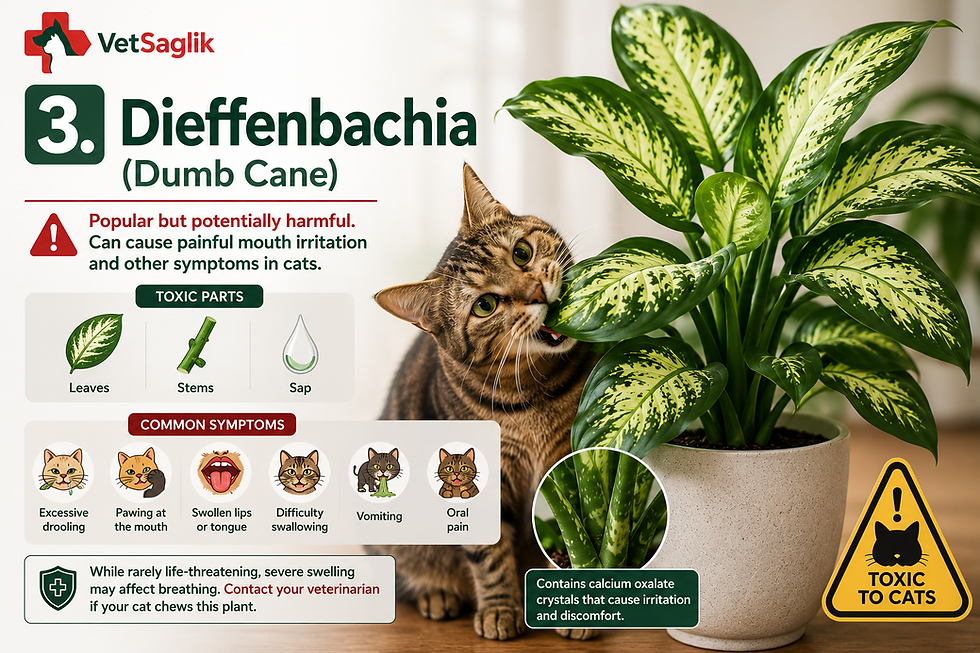
3. Dieffenbachia (Dumb Cane)
Dieffenbachia is a popular indoor plant known for its large decorative leaves. It contains microscopic calcium oxalate crystals that can cause immediate irritation when chewed. Although it rarely causes life-threatening poisoning, it can be extremely painful for cats.
Toxic parts
Leaves
Stems
Sap
Common symptoms
Excessive drooling
Pawing at the mouth
Swollen lips or tongue
Oral pain
Difficulty swallowing
Vomiting
Most cats recover well with supportive veterinary care, but severe swelling can occasionally interfere with breathing and requires urgent evaluation.

4. Pothos (Devil's Ivy)
Pothos is one of the most common houseplants found in homes because it is easy to grow and maintain. Like Dieffenbachia, it contains insoluble calcium oxalate crystals that irritate the mouth and digestive tract when chewed.
Toxic parts
Leaves
Stems
Common symptoms
Drooling
Mouth irritation
Vomiting
Difficulty swallowing
Reduced appetite
While poisoning is usually mild to moderate, cats that continue vomiting or refuse food should be examined by a veterinarian.

5. Peace Lily
Despite its name, the Peace Lily is not a true lily. Unlike true lilies, it does not typically cause kidney failure in cats. However, it still contains calcium oxalate crystals that can produce significant oral irritation and discomfort.
Toxic parts
Leaves
Flowers
Stems
Common symptoms
Excessive drooling
Oral pain
Pawing at the mouth
Vomiting
Difficulty swallowing
Although Peace Lily poisoning is generally less severe than true lily poisoning, veterinary advice is still recommended if your cat has chewed any part of the plant.
What Should You Do If Your Cat Eats a Toxic Plant?
If you believe your cat has chewed or swallowed a toxic houseplant, acting quickly can make a significant difference. Even if your cat seems normal at first, some plant toxins may take several hours before serious symptoms develop.
Follow these steps:
Remove any remaining plant material from your cat's mouth if it can be done safely.
Keep your cat away from the plant to prevent additional exposure.
Do not try to induce vomiting unless specifically instructed by a veterinarian.
Take a photo of the plant or bring a sample with you to help identify the toxin.
Contact your veterinarian or an emergency animal hospital as soon as possible.
Watch for warning signs such as vomiting, drooling, loss of appetite, weakness, tremors, difficulty breathing, or changes in urination. These symptoms may indicate that urgent medical treatment is needed.
When it comes to toxic plants, it is always safer to seek veterinary advice early rather than waiting for symptoms to worsen.

Cat-Friendly Alternatives to Toxic Houseplants
Fortunately, you don't have to choose between decorating your home and keeping your cat safe. Many attractive indoor plants are considered non-toxic to cats and can provide the same natural aesthetic without posing a significant poisoning risk.
Some popular cat-friendly houseplants include:
Spider Plant (Chlorophytum comosum)
Areca Palm (Dypsis lutescens)
Boston Fern (Nephrolepis exaltata)
Calathea species
Prayer Plant (Maranta leuconeura)
Parlor Palm (Chamaedorea elegans)
African Violet (Saintpaulia ionantha)
Even with non-toxic plants, it's still best to discourage cats from chewing leaves, as excessive ingestion may cause mild stomach upset or vomiting.
Choosing pet-safe plants is one of the easiest ways to reduce the risk of accidental poisoning while creating a healthier indoor environment for your cat.
Final Thoughts
Many of the most popular houseplants are surprisingly harmful to cats, and some—such as true lilies and Sago Palms—can become life-threatening after only a small exposure. Knowing which plants are toxic allows you to prevent accidents before they happen.
If you share your home with a cat, regularly check every indoor plant to make sure it is pet-safe. Replacing toxic plants with safer alternatives is a simple step that can protect your cat for years to come.
Finally, remember that any suspected plant poisoning should be treated seriously. If your cat chews an unfamiliar plant or begins showing signs such as vomiting, drooling, weakness, or difficulty breathing, contact your veterinarian immediately. Early treatment offers the best chance of a full recovery.
References
Source | Official Link |
American Society for the Prevention of Cruelty to Animals (ASPCA) – Toxic and Non-Toxic Plants | |
ASPCA Animal Poison Control Center | |
Pet Poison Helpline – Poisonous Plants for Cats | |
Cornell University College of Veterinary Medicine | |
UC Davis School of Veterinary Medicine | |
FDA – Keeping Pets Safe | |
Mersin Vetlife Veterinary Clinic |


Comments