
Dog Potty Training Guide: Effective Techniques for Puppies and Adult Dogs

Why is Toilet Training Necessary for Dogs?
Potty training in dogs is essential for both maintaining household order and the dog's psychological well-being. Dogs experiencing toilet anxiety, not knowing where to urinate, or fearing punishment experience elevated stress hormones, which significantly slows down learning. Therefore, potty training is essential not only for cleanliness but also for establishing a secure bond and a sense of peace within the home.
Potty training also helps your dog establish a daily routine. Dogs thrive on structure; predictable mealtimes, walks, and toilet times reduce their anxiety. Lack of structure can lead to behavioral problems like incontinence, nighttime waking, restlessness, and even marking.
It also provides significant convenience for pet owners. A trained dog will not cause accidents in the long run, will not create stress when guests visit, and will create a much more harmonious home life. Furthermore, properly completed potty training positively impacts a dog's behavioral development, increasing their self-confidence, strengthening their adaptation to their environment, and establishing a much healthier foundation for owner-dog communication.
Therefore, potty training is the first step and the most critical component of dog training. The earlier and more correctly it's started, the more lasting the results will be.

The Age and Appropriate Period for Starting Toilet Training
The success of toilet training depends largely on the age at which it is initiated. Bladder control in puppies is not fully developed at birth; physiological control generally begins to increase from 12 weeks of age , and this period is considered the ideal time to begin toilet training. However, with proper guidance, puppies are also receptive to learning between 8 and 12 weeks of age.
The situation is different in adult dogs. Toilet behavior may have deteriorated due to previously learned habits, a traumatic past, or prolonged inactivity. Success rates in adult dogs are very high, but training requires a longer and more patient approach. This is because introducing a new behavior also requires extinguishing the old one.
Because puppies have fast digestive systems, they may need to go to the bathroom 5–30 minutes after eating. Therefore, training should be planned around the daily routine of eating, playing, and sleeping. In adult dogs, the need to go to the bathroom is often more pronounced upon waking in the morning, during an evening walk, and after eating.
The most important thing to remember during this period is to respect the dog's developmental limits. Very young puppies can't be expected to hold their bowels for extended periods. Generally, the formula "the number of hours they can hold their bowels depends on how old they are" applies roughly. For example, a 3-month-old puppy can hold their bowels for approximately 3 hours; however, this is an average, not a rule.
Training started at the right time reduces stress for both dog and owner and accelerates the learning process. Therefore, the initial phase should be initiated by considering the dog's physiology, age, personality, and daily routine.
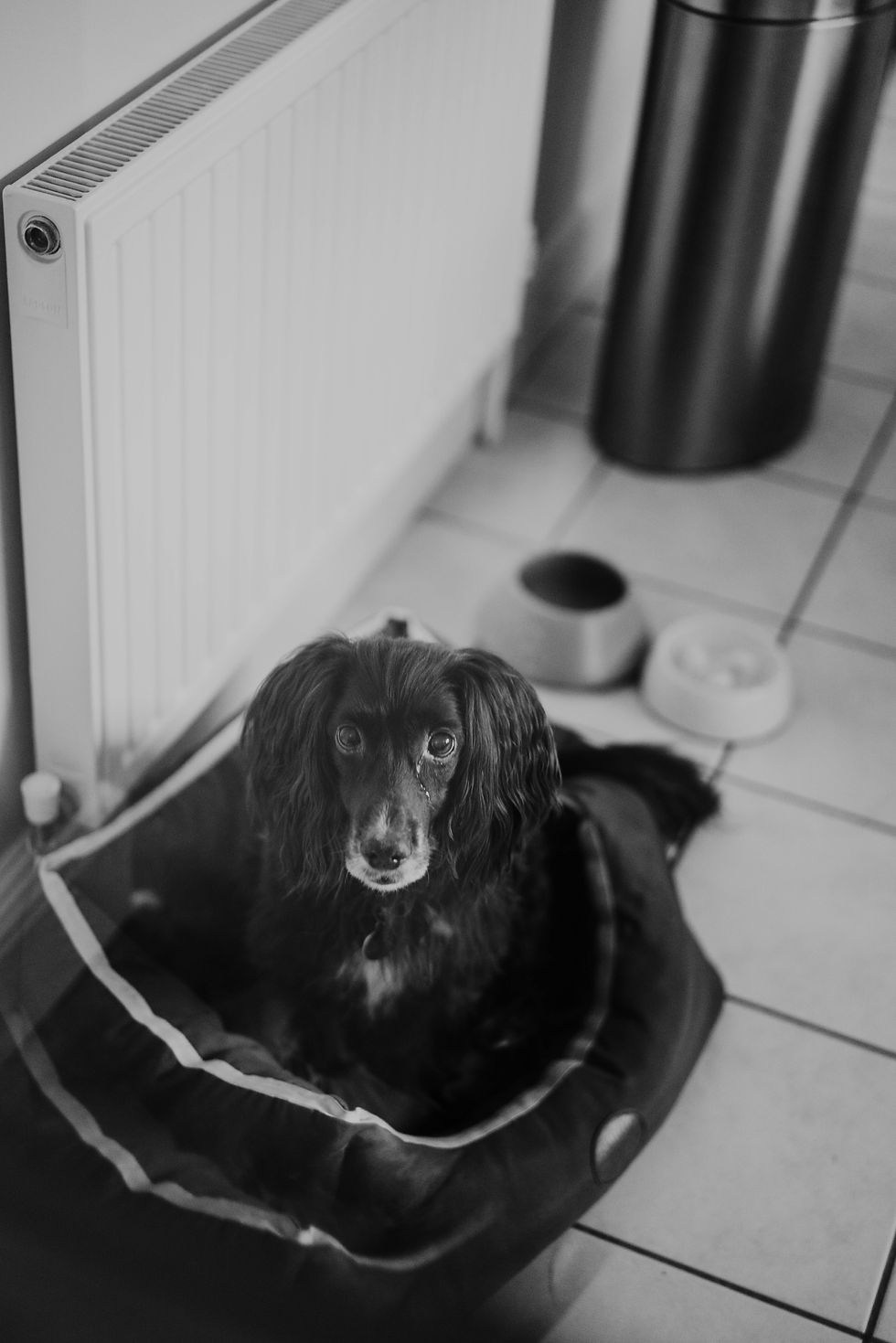
Initial Preparations and Proper Environmental Arrangement at Home
One of the most critical steps to successful potty training in dogs is properly preparing the home before starting training. Dogs develop behavior based on environmental cues; their environment is the strongest cue for determining where they will go to the toilet. Therefore, home organization forms the foundation of the training process.
First, the area where your dog will be housed during the potty training process should be clean, safe, and easily accessible. Large spaces make control difficult, so it's important to establish boundaries from the start. This can be achieved with doors, child gates, pet fences, or crates. The goal is to monitor your dog's wanderings and prevent them from developing erratic potty behaviors.
The toilet spot to be used in the house should be determined from the outset. If indoor pad training is planned, the pad should always be placed in the same spot. Frequently changing the pad's location will confuse the dog and may not establish toilet behavior. If outdoor training is planned, directing the dog outside without installing a temporary pad inside the house is preferable.
Floor selection is also important. Puppies are more prone to accidents on slippery or carpeted floors, and accidents can leave a scent and become landmarks. Therefore, removing carpets during training or limiting the training area to a non-carpeted area is a good option.
The placement of water and food bowls affects litter box routines. Dogs often need to go to the toilet shortly after eating, so establishing a consistent layout between the food and litter box is important. Furthermore, ensuring a peaceful and quiet area for your dog to sleep at night reduces the risk of nighttime accidents.
Finally, appropriate cleaning products must be available during the training process. General cleaning products containing ammonia should not be used, as they mimic the smell of urine and may encourage the dog to return to the same spot. Therefore, enzyme-based odor-eliminating products are recommended.
It's scientifically proven that properly preparing your home speeds up potty training, reduces accidents, and helps your dog form habits more quickly. Preparation before training is half the battle.

Dog Behavior Science: Learning, Habit, and Reward Mechanisms
Potty training is much more than just teaching a dog where and when to go. From a behavioral perspective, this training is based entirely on habit formation, reinforcement, and providing the right reward at the right time. Understanding the principles of dog learning directly impacts the speed and durability of training.
Dogs develop behaviors based on the principles of classical conditioning, operant conditioning, and social learning. Operant conditioning, in particular, is the most decisive method in potty training. In this type of learning, a dog experiences a positive or negative consequence when performing a behavior, and this consequence determines the likelihood of the behavior occurring in the future. In other words, the reward a dog receives when it pottys in the correct location reinforces that behavior; the lack of a consequence when it pottys in the wrong location weakens the behavior over time.
Reward timing is the golden rule in dog behavior. The reward should be given within 1–2 seconds of the behavior occurring. A dog may not associate a delayed reward with the behavior. Therefore, immediate praise, treats, or affection should be given when the dog potties in the correct location. Delayed rewards reduce the effectiveness of training.
The process of forming habits also works very differently in dogs than in humans. Dogs adapt quickly to repetitive routines, so taking them out at the same time every day, establishing a fixed meal schedule, and scheduling walks at specific times accelerate learning. When the routine is disrupted, regression can occur.
Punishment, however, is scientifically ineffective and often backfires. Scolding, nuzzling, or yelling at a dog after an accident causes fear, which in turn inhibits learning. The dog doesn't understand what's wrong; it simply begins to fear its owner. Therefore, in modern behavioral science, the accepted method is not punishment, but guidance and reinforcement .
When potty training is tailored to your dog's brain development, reward centers, and learning style, it produces both rapid and lasting results. Owner-dog communication is strengthened, and your dog becomes more confident and well-adjusted.

Step by Step Dog Toilet Training Methods
Potty training in dogs is a scientific, step-by-step process that achieves success not through random attempts, but through a scientific, step-by-step system. The goal of this training is not only to teach your dog the correct place to go, but also to take control of the process by predicting when the need to potty will arise throughout the day. The following methods are the most effective approaches for in-home or out-of-home training for both puppies and adult dogs.
1. Establishing a regular routine: Taking your dog outside at the same time every day helps establish the concept of "potty time" in their brain. This can be every 2–3 hours for puppies and 4–6 hours for adults. Taking them outside as soon as they wake up, after meals, and after playtime accelerates learning.
2. Timing it right: Because puppies' digestive systems work quickly, they'll need to go to the toilet 5–30 minutes after eating. Observing these intervals and incorporating a routine into their routine will significantly reduce accidents.
3. Choosing a specific litter box: If training outdoors, it's important to take your dog to the same spot each time. The dog learns to identify that area as their litter box through scent. If pad training indoors, the pad should remain in a fixed location.
4. Don't wait until the correct behavior occurs. Allow the dog to wander and sniff; don't rush him. Praise and reward him immediately after he goes to the bathroom. This is the most powerful stage in reinforcing the behavior.
5. Reward after success : The reward should be given immediately after the dog has finished using the toilet. Delay breaks the behavior-reward link. Praise, high-value treats, or affection increase motivation at this stage.
6. Don't ignore mistakes—redirect. If an accident occurs in the house, the dog isn't punished. Simply clean up quietly and leave the room. This doesn't teach the dog anything; the important thing is to reinforce correct behavior.
7. Establishing a nighttime routine: Puppies may not be able to hold their food for long periods at night. Give their last meal early and always take them out just before bed. It may be necessary to take them out once a night.
When these methods are implemented together, your dog will quickly develop proper toilet habits. Systematic training, avoiding emotional reactions, and demonstrating consistency are key to training.
Accidents That Occur in the Home and Proper Cleaning Methods
No matter how well potty training is implemented, accidents are normal in the home. Accidents are inevitable, especially in puppies during their first weeks because bladder control hasn't developed. Approaching these accidents appropriately both protects the dog's psychological well-being and ensures the training is permanent.
Punishing a dog immediately after an accident is scientifically ineffective. The dog can't rationalize the behavior retroactively, so scolding, yelling, or nuzzling the dog only creates fear and insecurity. This negatively impacts both learning and the quality of the owner-dog relationship.
The first thing to do during accidents is to quietly remove the dog from the area. Then, the area must be completely deodorized with the right cleaning products. Cleaning products containing ammonia should not be used, as they mimic the smell of urine and encourage the dog to return to the same area. Instead , enzyme-based odor removers should be used. These products chemically break down the urea and proteins in urine, completely eliminating the odor.
Accidents on carpets require more careful cleaning, as carpets retain odors longer. If necessary, carpet cleaning machines or professional cleaners can be used. If the odor isn't completely removed, the dog will perceive the area as a "marked area," and the likelihood of repeat pottying will increase.
It is also important to analyze accidents. The training program is optimized by looking at when the dog causes accidents:
Right after a meal?
When left alone for long periods of time?
When you get overexcited during a game?
Is it night?
These tips will help you plan your routine more accurately.
Accidents don't mean training has failed; on the contrary, they are a natural part of training. With appropriate response and proper cleaning, accidents will gradually decrease and eventually end completely. The key is calmness, consistency, and maintaining regular routines.
Pee Pad, Crate, and Area Limitation Techniques
The tools and methods used in potty training significantly increase the learning rate, especially in puppies. Pee pads, crate training, and space-limiting techniques are scientifically based methods that facilitate proper habit formation in dogs. Each has a different purpose and should be chosen appropriately based on the dog's age, personality, and daily routine.
Pee pads are ideal for puppies who live in apartments, can't go outside often, or haven't yet received their basic vaccinations. The pad should be in a fixed position; shifting the pad can confuse the puppy. During pad training, reward the puppy immediately when they go to the toilet in the correct location. Over time, the pad area can be reduced and fixed to a single spot. In the later stages of training, the pad can be moved to the doorway and then guided outside. This method is known as "pad-to-outdoor transition."
Crate training is one of the most effective toilet training techniques. Dogs instinctively don't want to soil their sleeping area, so if used correctly, a crate will form a strong habit. The crate should definitely be a safe, secure bed area, not a punishment area. During the time the dog is kept in the crate, bladder control improves, accidents decrease, and nighttime sleep patterns are established. The crate should be large enough for the dog to stand up and turn around in; too large diminishes its effectiveness.
Space-limiting techniques are especially helpful in the first weeks of training. Allowing a puppy to roam freely throughout the house increases the likelihood of errors. Therefore, baby gates, pet fences, or room doors are used to control the dog's space. The more structured the area, the quicker the dog will develop good behavior.
Using these three methods together makes the training process more effective. The best results are achieved with a routine, rewards, correct guidance, and the right tools. Because each dog's personality is unique, the method should be adapted to each dog's characteristics.
The Most Common Mistakes in Toilet Training and Their Solutions
Common mistakes made during potty training can unnecessarily prolong the process and reduce your dog's motivation to learn. Understanding these mistakes and implementing scientifically based solutions will ensure lasting training results.
1. Punishing the dog: This is the most common mistake owners make. When a dog is punished after an accident, it doesn't understand why the behavior was wrong; it simply becomes afraid of its owner. This fear leads to problems like secret urination, stress incontinence, and coming back. The solution: No punishment; just redirection and reward for correct behavior.
2. Creating an inadequate routine. Irregular mealtimes and irregular walks make it difficult for a dog to learn when to go to the bathroom. Dogs learn by routine. Solution: Feed at fixed times and take them out at the same times morning and evening.
3. Giving the reward late. A reward given more than 3–4 seconds after going to the toilet does not establish a connection with the behavior. Solution: Short, clear praise and reward should be given as soon as the behavior is completed.
4. Giving your dog too much space. Allowing him to wander around the entire house in the early stages of training increases the risk of accidents. Solution: Space should be limited in the first weeks, and freedom should be increased as training progresses.
5. Using cleaners containing ammonia. These products mimic the smell of urine, so your dog will continue to use the same spot. Solution: Use enzyme-based odor eliminators.
6. Changing the pad's location frequently. Constantly moving the pad prevents the dog from understanding where the toilet is. Solution: The pad should remain in one fixed spot, and transitions should be controlled.
7. Not reading your dog's signals. When dogs need to go to the bathroom, they often give signals like sniffing, turning around, or running toward the door. Solution: These signals should be observed regularly, and guidance should be given to the toilet area immediately.
8. Giving up too soon. Dogs don't become potty trained overnight; accidents lasting a few days are normal. Solution: Consistency, patience, and routine are essential.
When these mistakes are avoided, training progresses much faster and the dog quickly learns where to go to the toilet safely.
Potty Training Difficulty Levels by Dog Breed
Every dog is unique; personality, environment, and past experiences influence the potty training process. However, some breeds may find potty training easier or more challenging than others due to anatomical, genetic, and behavioral characteristics. This section examines the training difficulty levels of breeds based on their general tendencies.
Easily trainable breeds are generally highly intelligent and owner-oriented. Breeds such as Border Collies, Golden Retrievers, Labrador Retrievers, and Poodles respond quickly to commands and are eager to learn. With a consistent routine and the right reward system, potty training quickly becomes established in these dogs. Furthermore, because these breeds readily perceive environmental cues, outdoor potty training progresses very quickly with guidance to the same area.
Breeds that present moderate challenges may have a more independent nature. Breeds like Beagles, Cocker Spaniels, and Siberian Huskies, due to their strong sense of smell, high energy levels, and tendency to make independent decisions, are more likely to make mistakes early on. Training these dogs requires patience, consistency, and abundant rewards. Post-walk guidance is especially important due to their high energy levels.
Breeds that are difficult to train include miniature breeds and some breeds with independent tendencies. Potty training can take longer for Chihuahuas, Pomeranians, Dachshunds, Shiba Inus, and Terriers. Miniature dogs have smaller bladders, so they need to be taken outside more frequently. Independent breeds, however, may not always respond as well to owner guidance. Environmental structure, space demarcation, and short-interval prompting are even more important for these breeds.
It's important to remember that each dog's temperament, in addition to their breed tendencies, is also a determining factor. Even within the same breed, potty training time can vary significantly. Therefore, the most effective method is to create a training system that takes breed characteristics into account but also adapts to the dog's individual pace.
Nighttime Toilet Routine: Waking Up and Morning Habits
One of the most challenging aspects of potty training is establishing a proper nighttime routine. In puppies, in particular, their bladder capacity isn't yet fully developed, so holding the potty throughout the night may be impossible. Therefore, a nighttime routine is crucial for both reducing accidents and regulating your dog's biological rhythm.
The foundation of a nighttime toilet routine begins with moving mealtimes earlier . Puppies typically have their last meal between 6:00 and 7:00 PM. A short play period should follow immediately after eating, followed by a thorough walk outside. This routine soothes the digestive system and prevents accidents during the night.
Just before bedtime, a final bowel movement should always be performed. Even if the dog doesn't go potty during this period, the ritual itself forms a habit. Puppies may need to go out again during the night. Generally, dogs between 2 and 3 months old may need to be taken out every 3-4 hours. This period increases with age.
Crate training is very effective in preventing nighttime accidents. Dogs instinctively avoid soiling their sleeping area, so they behave more controlledly in a crate. However, the crate should never be used as a punishment area. It should be a quiet area with no soft bedding or water bowls (which can increase nighttime urination).
The morning routine is just as important as the nighttime routine. Your dog's first instinct upon waking is to go potty, so they should be taken outside as soon as possible. Waiting for long periods of time in the morning leads to accidents and slows down learning. Rewarding them after potty training reinforces the habit.
When a nighttime routine is properly established, your dog's biological clock is regulated, accidents are reduced, and training progresses much more quickly. Once your dog is accustomed to a regular sleep-potty cycle, he'll exhibit more controlled behavior both day and night.
Reward, Reinforcement and Correct Communication Strategies
The cornerstone of potty training is reward and the correct reinforcement mechanism. Dogs shape their behavior based on consequences; therefore, the reward given immediately following a correct behavior directly impacts both the speed and retention of training. Timing, tone of communication, and type of reward are critical in this process.
The reward should be given within 1–2 seconds of the correct behavior. This short timeframe is necessary for the dog to associate the behavior with the reward. Delayed rewards can confuse the dog; it won't understand why the reward is being given. Therefore, as soon as it has gone to the toilet in the correct place, a short praise like "Good job!" or "Great!" should be given, followed immediately by a treat.
The value of the reward is also important. During training, small, highly motivating treats can be used instead of low-value treats. For some dogs, affection, play, or verbal praise may be more effective. Therefore, it's important to observe which type of reward your dog responds best to.
During the reinforcement process, the dog should never be angry, and an indecisive tone should be avoided. The owner's tone of voice reassures the dog. A positive, firm, and calm tone ensures the dog clearly understands the behavior. Command words should also be consistent. Choosing a command like "Pee," "Go potty," or "Go potty" and consistently using the same word helps the dog establish the connection more easily.
Over time, as the dog becomes more automatic in its behavior, the amount of reward can be reduced and replaced with verbal praise. However, this transition shouldn't be made too quickly; prematurely decreasing the reward can reduce motivation. In proper training, the reward acts as a guide; once the dog's behavior is established, the reinforcement is gradually withdrawn.
Another aspect of communication strategies is body language. Dogs quickly perceive people's micro-movements, facial expressions, and body positions. An owner's tension, impatience, or excessive excitement can affect the dog. Therefore, a calm and confident approach during training accelerates learning.
As a result, when reward and communication strategies are implemented correctly, the dog quickly develops a permanent toilet habit. The reward is a tool that helps understand the behavior, while affection, patience, and consistency are integral components of the process.
Establishing Outdoor Toilet Training and Walking Habits
Outdoor potty training is the method that most closely aligns with a dog's natural instincts. Dogs learn toileting behavior more quickly by following outdoor scents, environmental stimuli, and the tracks of other animals. However, without proper guidance, the outdoor environment can be distracting for a dog. Therefore, systematic development of walking habits is essential.
The most important step in potty training is to always guide dogs to the same area . Dogs mark areas with their scent and adopt that area as their toilet area. Frequent changes can confuse dogs. Therefore, it's crucial to identify a quiet, safe area close to home and return to that area every time they go to the toilet.
Walks should always begin with control . During the training phase, don't let your dog play or burn off energy; they may forget to go to the bathroom afterward or their attention may wander. The best method is to go to a spot close to home and observe your dog's sniffing and wandering behavior. After they've done so, reward them and then proceed with a longer walk. This way, your dog will perceive the toileting behavior as a natural start to the walk.
Some dogs may become overly excited or distracted. In these cases, leash control and calm direction are essential. If necessary, stop the walk, calm the dog, and guide it back to the target area.
Weather conditions are a critical factor in outdoor potty training. Rain, wind, and noisy environments can cause reluctance in puppies. In these cases, short but frequent outings can be helpful to help your dog get used to the outdoors.
Regular morning and evening toilet visits help regulate a dog's biological clock. Regular walks also contribute to a dog's physical and mental development, reduce stress, and improve social harmony.
When implemented correctly, outdoor potty training yields both fast and lasting results. Your dog will learn to go to the bathroom first on every walk, then return home calmer, letting off some energy. This behavioral pattern creates a healthy routine that lasts even into adulthood.
Establishing Home Routines for Lasting Success in Toilet Training
Achieving lasting success with potty training isn't just about teaching your dog to go to the toilet in the correct place. It's essential to establish a predictable and consistent household routine that continues throughout your dog's life. This routine supports your dog's biological rhythm, reduces stress levels, and ensures the long-term stability of learned behaviors.
The first step to lasting success is establishing consistent feeding times . When dogs eat regularly, their digestive cycles become more regular. Establishing a feeding schedule at specific times, especially in puppies, often requires a bowel movement within 5–30 minutes after each meal, expediting training. Regular morning and evening meals are also the foundation of a toilet routine in adult dogs.
The second critical element is a regular walking schedule . Walks immediately after waking up in the morning, before bed at night, and at regular intervals throughout the day help your dog acclimate to the outdoors. Guiding him to the toilet area first before each outing is essential for this behavior to become a habit. Walk times should be adjusted according to the dog's energy level, but toileting behavior should always be prioritized.
Play and sleep are also integral parts of potty training. Overexcited dogs may leak urine during play, so it's important to include short rest breaks between play sessions. A sleep schedule reduces nighttime accidents. Even if puppies need to be taken out again at night, a regular sleep-potty cycle quickly becomes established.
Establishing a set of rules within the home also supports lasting success. Dogs' free range should be expanded in a controlled manner; the area restricted in the first weeks of training should be gradually increased as the dog acquires appropriate behavior. Removing rugs early in training makes toilet signals easier to detect.
Finally, the owner's attitude is the most powerful determinant of the training process. A calm, consistent, and positive approach helps reinforce good behavior, not just make the dog recognize its mistakes. Lasting success depends on striking the right balance between reward and discipline.
Once these basic routines are established, your dog will become more adaptable, confident, and in control not only in his toileting behavior but also in his overall behavior. This will make toilet training a long-term success.
Frequently Asked Questions (FAQ) - Dog potty training guide
How long does it take to complete toilet training in dogs?
The duration of potty training in dogs varies depending on age, breed, routine, and owner consistency. On average, puppies see significant improvement between 2 and 6 weeks. However, this period may be longer in miniature breeds, independent dogs, or adults who have previously acquired poor habits. The more patient, consistent, and positively reinforced the training, the faster learning will occur.
What is the best age for toilet training in dogs?
The best time to start is between 8 and 12 weeks. During this time, the puppy is still very receptive to learning, and bladder control gradually begins to develop. Potty training is also possible in adult dogs, but the process may take a little longer because old habits need to be changed.
Is toilet training difficult for adult dogs?
No, the difficulty lies in the dog's past experiences. With a patient training plan and clear routines, potty training can be very successful in adult dogs. Adults have the advantage of having a more established learning capacity.
Is it right to punish dogs during toilet training?
This is absolutely not true. Dogs don't associate punishment with behavior; they simply become afraid of their owners. This leads to secret toileting, stress, and behavioral problems. Positive reinforcement, accurate timing, and calm direction are the only effective methods.
Is it harmful to use pee pads for potty training in dogs?
It's harmless and particularly beneficial for puppies and unvaccinated dogs. However, if used for extended periods, it can make it difficult to guide your dog outside. Therefore, pad training should be used to gradually transition them outside.
Does crate training really work for potty training dogs?
Yes, crate training is one of the most scientifically effective methods. Dogs naturally avoid soiling their sleeping area. When used correctly, a crate provides a safe space and reduces both nighttime accidents and uncontrolled wandering during the day.
Is it necessary to wake up at night during toilet training in dogs?
Yes, in puppies. Puppies 2–3 months old cannot hold their bladders for more than a few hours. This period naturally increases with age. Adult dogs can often hold their bladders throughout the night.
Is it normal for dogs to have accidents very often during toilet training?
Yes, it's completely normal, especially in the first few weeks. Accidents are part of the learning process. The important thing is not to get angry about accidents, to clean the area properly, and to ensure your dog can quickly return to their routine.
What is the best reward for potty training dogs?
It depends on the dog's motivation. High-value treats work best. For some dogs, praise, play, or affection can also be powerful reinforcement. The key is to give the reward immediately after the behavior.
Should toilet training in dogs be done outside or on indoor pads?
This depends entirely on living conditions. Pad training may be a good starting point for apartment living. However, if the ultimate goal is to establish a toilet habit outside, a gradual transition from pad to outside is the best method.
What is the ideal walking frequency for toilet training in dogs?
The ideal time for puppies to go to the toilet is every 2–3 hours, and for adults, every 4–6 hours. They should always be taken out in the morning, after meals, and before bed.
Is it possible to go back after toilet training is completed in dogs?
Yes, regression periods are common. Circumstances such as moving house, stress, changes in routine, or the arrival of a new family member can cause temporary disruptions. Once consistent routines are resumed, behavior returns to normal.
Why does toilet training take longer for some dog breeds?
Miniature breeds need to go to the bathroom more frequently due to their smaller bladder capacity. Independent breeds, on the other hand, may be slower to respond to commands. Furthermore, high-energy or scent-focused breeds may be more prone to distraction.
How to understand the dog's signals during toilet training in dogs?
Dogs often show signs of needing to go to the toilet, such as sniffing, circling, turning toward the door, restless movements, or sudden hesitation. When these signals are observed, they should be directed to the toilet area immediately.
Is excitement peeing a sign of lack of toilet training?
No. Excitement urination is a physiological and emotional response. It's especially common in puppies and socially sensitive dogs. It can be controlled with training, but it can't be corrected with punishment.
Does marking behavior indicate a potty training problem?
Most of the time, no. Marking is a natural, hormone-based behavior that occurs in the form of small amounts of urine. Neutering, environmental conditioning, and walking routines can reduce marking.
How much reward should be given for toilet training in dogs?
Initially, every correct behavior is rewarded. As the behavior becomes established, the reward can be gradually reduced to verbal praise. However, prematurely withdrawing the reward can undermine learning.
Is using a punishing tone of voice effective for toilet training dogs?
No. A harsh, intimidating tone of voice will only make your dog nervous and harder to learn. Calm, clear, and positive communication is most effective.
Can carpets be put back in after dogs are toilet trained?
Yes, but only after training is fully established. Puppies may perceive carpets as grass. Therefore, carpets should be put back in after at least a few weeks of accident-free play.
Is it okay to change feeding times during toilet training in dogs?
No. When feeding times aren't consistent, the toilet cycle is also disrupted. Regular mealtimes are the cornerstone of training.
Why is using the wrong cleaner for toilet training a problem for dogs?
Ammonia-containing cleaning agents mimic the smell of urine, so dogs will mark the same area again. Enzyme-based cleaners should be used.
What should be done if toilet training in dogs takes too long?
First, routines and methods should be reviewed, then the possibility of a medical issue should be evaluated. Bladder infections, neurological problems, or stress-related conditions can make training difficult.
Why is the morning routine so important for toilet training in dogs?
Dogs feel the need to potty immediately after waking. Disrupting the morning routine leads to accidents and slows down learning. Therefore, morning wake-up is the most critical step in training.
Why does a dog that is toilet trained outside have accidents at home?
The cause is usually inconsistent walking schedules, excessive waiting, overexcitement, or a medical problem. Once your routine is restored, the problem largely resolves.
Why do dogs have occasional accidents even after toilet training is complete?
Just like humans, dogs can experience exceptions: overexcitement, fear, crowds, prolonged handling, or changes in diet can all lead to one-time accidents. This doesn't mean training has failed.
Sources
American Kennel Club (AKC) – Dog Training & Behavior Guidelines
The Humane Society of the United States – House Training Resources
RSPCA – Puppy Toilet Training Best Practices
ASPCA – Canine Behavior & House-Training Recommendations
Mersin Vetlife Veterinary Clinic – Open on Map: https://share.google/XPP6L1V6c1EnGP3Oc


Comments