
All About the Schnauzer Dog (Miniature, Standard & Giant) – Complete Breed Guide, Price, Care and Temperament

Origin and History of the Schnauzer Dog
The Schnauzer dog is one of the most distinctive and historically rich breeds originating from Germany. Its name comes from the German word “Schnauze,” meaning “muzzle” or “snout,” a direct reference to its iconic bearded face. This breed is not a modern creation but rather a deeply rooted working dog with origins dating back to at least the 14th–15th centuries.
Ratting (controlling rodent populations in barns)
Guarding livestock and property
Assisting farmers during travel and trade
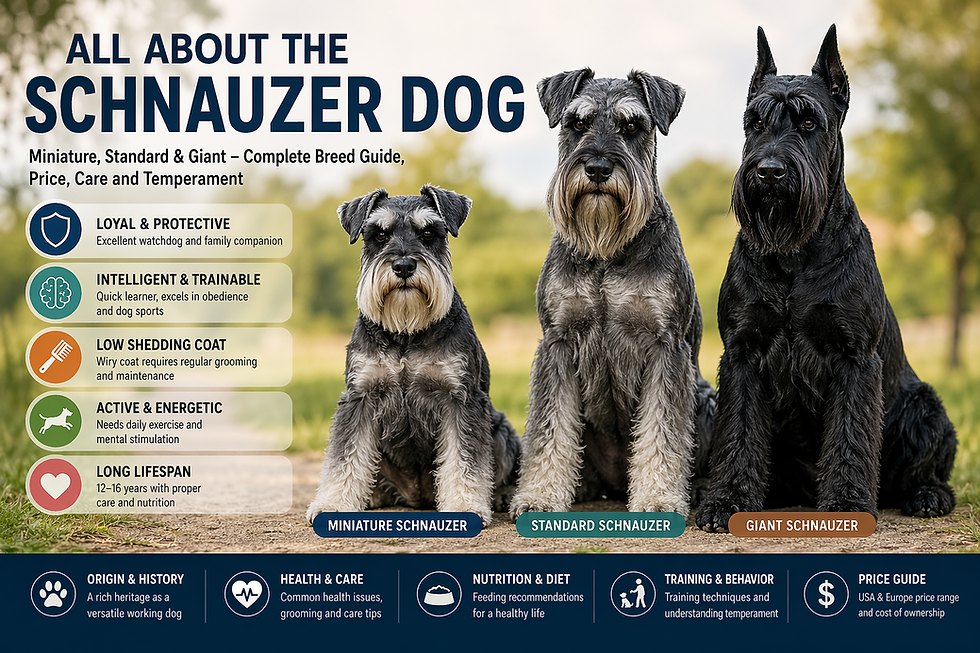
The original Schnauzer type we now call the Standard Schnauzer is considered the foundation of the breed. From this base, two additional size variations were selectively developed:
Miniature Schnauzer: Bred by crossing smaller Standard Schnauzers with breeds like the Affenpinscher and Poodle. The goal was to create a smaller dog suitable for urban homes while maintaining strong ratting instincts.
Giant Schnauzer: Developed by crossing the Standard Schnauzer with larger working breeds such as the Great Dane and Bouvier des Flandres. This version was used for cattle driving and later for guarding breweries and industrial properties.
Historically, Schnauzers were also used in military and police roles, especially the Giant Schnauzer, due to its intelligence, strength, and loyalty. Today, while they are primarily companion animals, they still retain their strong working instincts, making them excellent:
Guard dogs
Watchdogs
Agility and obedience competitors
The enduring appeal of the Schnauzer dog lies in this unique combination of historical utility and modern adaptability. Whether in a rural farm setting or a city apartment, the breed has successfully transitioned across centuries without losing its core identity.

Positive Traits of the Schnauzer Dog
Trait | Description |
Highly Intelligent | The Schnauzer dog is exceptionally smart and quick to learn commands. This makes training efficient, but also requires mental stimulation to prevent boredom. |
Loyal and Protective | Known for strong attachment to its family, the Schnauzer naturally acts as a watchdog. It is alert and will not hesitate to warn owners of unfamiliar activity. |
One of the biggest advantages is its wiry coat, which sheds minimally. This makes it a preferred choice for owners looking for a cleaner home environment. | |
Adaptable to Living Spaces | Whether it is a small apartment or a large house, the Schnauzer dog adapts well as long as its exercise needs are met. |
Energetic and Playful | Schnauzers are lively dogs that enjoy playtime, walks, and interactive games. They are especially good companions for active individuals or families. |
Strong Guardian Instinct | Even the Miniature Schnauzer retains a strong instinct to guard its territory, making it an excellent alert dog despite its size. |
Long Lifespan | Compared to many breeds, Schnauzers—especially Miniatures—tend to live longer, often reaching 12–16 years with proper care. |
Good with Families | When properly socialized, Schnauzers are affectionate and gentle with children, forming strong bonds within the household. |
Versatile Working Ability | From ratting to guarding to modern dog sports, the Schnauzer dog excels in multiple roles thanks to its balanced physical and mental traits. |
Distinctive Appearance | The beard, eyebrows, and square build give the Schnauzer a unique and recognizable look that appeals to many dog enthusiasts. |

Negative Traits of the Schnauzer Dog
Trait | Description |
Stubborn Personality | The Schnauzer dog is intelligent but can also be independent and stubborn. Without consistent training, it may ignore commands or develop dominant behavior. |
Schnauzers are naturally alert and vocal. They tend to bark at strangers, noises, or even minor environmental changes, which can become problematic in apartments. | |
High Energy Levels | This breed requires regular physical and mental stimulation. Without sufficient activity, it may develop destructive behaviors such as chewing or digging. |
Strong Territorial Instinct | Schnauzers can be overly protective of their home and family. This may lead to aggression toward unfamiliar people or animals if not properly socialized early. |
Grooming Demands | Although they shed less, their wiry coat requires regular brushing and professional grooming, including hand-stripping for optimal coat health. |
Not Ideal for Passive Owners | The Schnauzer dog thrives with active, engaged owners. A lack of interaction or training can lead to behavioral issues. |
Chasing Instinct | Due to their history as ratters, Schnauzers have a strong prey drive. They may chase small animals like cats, birds, or rodents if not trained properly. |
Separation Anxiety Risk | Schnauzers form strong bonds with their owners and may develop anxiety when left alone for long periods. This can result in barking, whining, or destructive behavior. |
Dominance Tendencies | Particularly in Standard and Giant Schnauzers, there can be a tendency toward dominance, requiring firm and consistent leadership from the owner. |
Sensitivity to Boredom | A bored Schnauzer dog can quickly become problematic, engaging in unwanted behaviors such as excessive barking, digging, or escaping attempts. |

Physical Characteristics of the Schnauzer Dog
The Schnauzer dog is instantly recognizable due to its distinctive beard, bushy eyebrows, and square, sturdy body structure. Despite the size differences among Miniature, Standard, and Giant Schnauzers, they all share a common physical blueprint.
General Appearance
Body Shape: Square and compact, with a strong, balanced structure
Head: Rectangular with a prominent muzzle
Eyes: Medium-sized, dark, and oval-shaped, expressing alertness and intelligence
Ears: Traditionally cropped in some regions, but naturally folded (V-shaped) in many countries today
Tail: Typically carried upright; docking practices vary by region
Size Variations
Type | Height | Weight |
Miniature Schnauzer | 30–36 cm | 5–9 kg |
Standard Schnauzer | 44–50 cm | 14–20 kg |
Giant Schnauzer | 60–70 cm | 25–48 kg |
Each size serves a different lifestyle:
Miniature: Ideal for apartments and small families
Standard: Balanced choice for both companionship and working ability
Giant: Best suited for experienced owners needing a guard or working dog
Coat and Texture
The Schnauzer dog has a double coat:
Outer Coat: Wiry, dense, and weather-resistant
Undercoat: Soft and insulating
This coat structure protects the dog from harsh environmental conditions but requires regular maintenance, including brushing and occasional professional grooming.
Color Variations
Common coat colors include:
Salt and pepper
Black
Black and silver (especially in Miniature Schnauzers)
Distinctive Features
Beard and Mustache: Functional in origin, helping protect the muzzle during hunting
Bushy Eyebrows: Provide a characteristic expressive look
Strong Jaw Structure: Reflects their historical working and hunting roles
Movement and Posture
The Schnauzer dog exhibits:
Confident, energetic movement
Strong forward drive when walking or running
Balanced posture indicating both agility and strength

Schnauzer Dog Price and Cost Guide (USA & Europe)
The total cost of owning a Schnauzer dog varies significantly depending on the size (Miniature, Standard, Giant), breeder quality, and geographic location. However, the financial commitment goes far beyond the initial purchase price.
Average Purchase Price
Type | USA Price (USD) | Europe Price (EUR) |
Miniature Schnauzer | $800 – $3,000 | €700 – €2,500 |
Standard Schnauzer | $1,000 – $3,500 | €900 – €3,000 |
Giant Schnauzer | $1,500 – $5,000 | €1,200 – €4,000 |
Prices increase depending on:
Pedigree and bloodline quality
Breeder reputation
Show-quality vs pet-quality
Health certifications
Monthly and Annual Costs
Expense Type | Monthly Cost (USD) | Monthly Cost (EUR) |
Food | $40 – $120 | €35 – €100 |
Grooming | $50 – $150 | €40 – €120 |
Routine Care | $30 – $80 | €25 – €70 |
Insurance (optional) | $20 – $60 | €15 – €50 |
Estimated Total Monthly Cost:
USA: $150 – $400
Europe: €120 – €300
Lifetime Cost Estimate
Owning a Schnauzer dog over its lifetime (12–15 years on average) can cost:
USA: $15,000 – $40,000+
Europe: €12,000 – €35,000+
Hidden Costs to Consider
Professional grooming (critical for Schnauzers)
Training classes (especially for Giant Schnauzers)
Unexpected medical expenses
Boarding or pet-sitting during travel
Cost vs Value Insight
The Schnauzer dog is not the cheapest breed to maintain, mainly due to grooming and activity needs. However, its:
Long lifespan
Strong health profile (with proper care)
Multi-role adaptability
make it a high-value long-term companion rather than a short-term expense.

Common Diseases of the Schnauzer Dog
Disease | Description | Risk Level |
Pancreatitis | A common condition in Schnauzers, especially Miniatures, often linked to high-fat diets. Symptoms include vomiting, abdominal pain, and lethargy. | High |
Hyperlipidemia | Elevated fat levels in the blood, frequently seen in Miniature Schnauzers. Can lead to pancreatitis if unmanaged. | High |
A genetic joint disorder more common in Standard and Giant Schnauzers, leading to pain and mobility issues over time. | Medium | |
Progressive Retinal Atrophy (PRA) | A degenerative eye condition that can lead to gradual vision loss and eventual blindness. | Medium |
Cataracts | Clouding of the eye lens, affecting vision. Can occur with age or as a genetic predisposition. | Medium |
Hypothyroidism | A hormonal disorder causing weight gain, lethargy, and coat changes. More common in Standard Schnauzers. | Medium |
Bladder Stones (Urolithiasis) | Schnauzers are prone to urinary stone formation, which can cause pain, blood in urine, and blockage risks. | High |
Epilepsy | Neurological condition causing recurrent seizures. Typically genetic in origin. | Low–Medium |
Can be triggered by food, environment, or parasites, leading to itching and skin irritation. | Medium | |
A life-threatening condition more common in Giant Schnauzers due to deep chest structure. Requires immediate intervention. | Medium–High |
Health Insight
The Schnauzer dog is generally a robust and long-living breed, but:
Miniature Schnauzers → more metabolic issues (fat metabolism, pancreas)
Giant Schnauzers → more structural and critical risks (bloat, joints)
Preventive care, proper diet, and routine monitoring significantly reduce these risks.

Character and Behavior of the Schnauzer Dog
The Schnauzer dog is widely recognized for its bold personality, intelligence, and strong presence. Despite size differences, all three types share a similar behavioral foundation.
Core Personality Traits
Alert and Watchful
Schnauzers are natural watchdogs. They are highly aware of their surroundings and react quickly to unfamiliar stimuli.
Loyal and Attached
They form strong bonds with their owners and often prefer being close to their family members.
Confident and Fearless
Even the Miniature Schnauzer behaves with confidence far beyond its size.
Behavior Differences by Size
Miniature Schnauzer
More playful and social
Better suited for families and apartments
Can be more vocal
Standard Schnauzer
Balanced temperament
Strong working instincts
Requires consistent engagement
Giant Schnauzer
More dominant and protective
Needs experienced handling
Often used as a guard or working dog
Social Behavior
With Family:
Very affectionate and protective
With Children:
Generally good when raised together, but supervision is recommended
With Other Pets:
Can be territorial; early socialization is essential
With Strangers:
Naturally suspicious and reserved
Mental Needs
The Schnauzer dog is not a passive breed. It requires:
Daily mental stimulation
Problem-solving activities
Training sessions
Without these, behavioral issues such as:
Excessive barking
Destructive chewing
Restlessness
may develop quickly.
Trainability
Schnauzers are:
Highly trainable
Quick learners
Responsive to structured routines
However, due to their independent nature:
Training must be consistent and firm
Positive reinforcement works best
Early obedience training is critical
Behavioral Summary
The Schnauzer dog is ideal for owners who:
Want an intelligent and interactive companion
Can dedicate time to training and activity
Prefer a protective and alert dog
It is not ideal for:
Low-energy lifestyles
First-time owners without guidance (especially Giant Schnauzer)

Intelligence and Training of the Schnauzer Dog
The Schnauzer dog ranks among the more intelligent and responsive dog breeds, combining problem-solving ability with strong independence. This combination makes training both rewarding and, at times, challenging.
Intelligence Level
Schnauzers are:
Quick learners
Highly observant
Capable of understanding complex commands
They are often used in:
Obedience training
Agility sports
Guard and protection roles
Their intelligence, however, comes with a trade-off: They think independently and may choose not to obey if they see no benefit.
Training Characteristics
Fast Learning Curve
Commands can be learned quickly, often within a few repetitions
Consistency is Critical
Inconsistent training leads to confusion and stubborn behavior
Strong Memory
Both positive and negative experiences are remembered
Best Training Methods
Positive Reinforcement
Rewards such as treats, praise, or playtime are highly effective
Short, Engaging Sessions
Long sessions may lead to boredom or resistance
Early Socialization
Exposure to different environments, people, and animals is essential
Common Training Challenges
Stubbornness
Selective listening
Over-alertness (barking at stimuli)
These challenges are not due to low intelligence but rather: A combination of confidence + independence
Mental Stimulation Needs
The Schnauzer dog requires:
Interactive games
Regular training exercises
Without these:
Behavioral issues develop quickly
Energy is redirected into unwanted behaviors
Working Ability
Historically a working breed, Schnauzers still excel in:
Guarding
Scent work
Tracking
Competitive obedience
The Giant Schnauzer, in particular, remains one of the top choices for:
Police work
Protection training
Training Summary
The Schnauzer dog is best suited for owners who:
Enjoy training and interaction
Can establish leadership early
Provide both physical and mental challenges
With the right approach, this breed becomes: One of the most loyal, disciplined, and capable companions.

Exercise and Activity Needs of the Schnauzer Dog
The Schnauzer dog is an energetic and working-oriented breed that requires consistent daily activity. Despite differences in size, all three types share a strong need for both physical exercise and mental stimulation.
Daily Exercise Requirements
Type | Daily Exercise Need |
Miniature Schnauzer | 45–60 minutes |
Standard Schnauzer | 60–90 minutes |
Giant Schnauzer | 90–120 minutes |
These durations should include a mix of:
Walking
Playtime
Training exercises
A simple walk alone is not sufficient for this breed. The Schnauzer dog benefits from structured activities that engage both body and mind.
Types of Recommended Activities
Brisk Walks and Jogging
Ideal for maintaining cardiovascular health and preventing weight gain
Interactive Play (Fetch, Tug)
Helps release energy and strengthens the bond with the owner
Agility Training
Especially effective due to the breed’s intelligence and responsiveness
Scent Games and Problem-Solving Tasks
These activities satisfy their natural working instincts
Impact of Insufficient Activity
If a Schnauzer dog does not receive adequate exercise, several issues may develop:
Excessive barking
Destructive chewing
Restlessness
Behavioral problems
This breed does not tolerate inactivity well. A lack of stimulation directly affects both mental and physical health.
Apartment vs Outdoor Living
Miniature Schnauzer:
Can adapt well to apartment living if daily exercise is provided
Standard Schnauzer:
Needs more space but can still adapt with an active routine
Giant Schnauzer:
Best suited for homes with yards and experienced owners
Exercise Summary
The Schnauzer dog requires:
Daily structured exercise
Mental engagement
Consistent routines
Owners who meet these needs will have a balanced, calm, and well-behaved dog.

Feeding and Diet Recommendations for the Schnauzer Dog
Proper nutrition plays a critical role in maintaining the health and longevity of the Schnauzer dog. This breed has specific dietary sensitivities, particularly related to fat metabolism.
General Feeding Guidelines
High-quality, balanced commercial dog food is recommended
Meals should be divided into 2 portions per day
Fresh water must always be available
Dietary Considerations by Size
Miniature Schnauzer
Requires strict fat control due to pancreatitis risk
Low-fat diets are strongly recommended
Standard Schnauzer
Balanced diet with moderate protein and fat levels
Less prone to metabolic issues compared to Miniature
Giant Schnauzer
Higher caloric intake needed due to size and activity
Joint-support nutrients (glucosamine, chondroitin) beneficial
Recommended Nutritional Components
Protein: Supports muscle maintenance and growth
Healthy Fats: Should be controlled, especially in Miniatures
Fiber: Aids digestion and weight control
Vitamins and Minerals: Essential for immune function and overall health
Foods to Avoid
High-fat foods (especially table scraps)
Processed human foods
Excessive treats
Toxic foods such as chocolate, onions, and grapes
Common Dietary Risks
Pancreatitis: Strongly linked to fatty diets in Miniature Schnauzers
Obesity: Can develop quickly without portion control
Digestive Sensitivity: Some individuals may require specialized diets
Feeding Schedule Example
Age | Feeding Frequency |
Puppy | 3–4 meals per day |
Adult | 2 meals per day |
Senior | 2 smaller meals per day |
Diet Summary
The Schnauzer dog benefits from:
Controlled fat intake
Consistent feeding schedule
High-quality nutrition
Diet mismanagement is one of the most common causes of preventable health issues in this breed.

Training Techniques for the Schnauzer Dog
Training a Schnauzer dog requires a structured, consistent, and intelligent approach. This breed is highly capable of learning, but its independent nature means that training must be done correctly from the beginning.
Core Training Principles
Consistency
Commands, rules, and routines must remain the same every day. Inconsistency leads to confusion and disobedience.
Firm but Fair Leadership
Schnauzers respond best to confident handlers. Harsh punishment is not effective, but a lack of authority will result in dominance issues.
Positive Reinforcement
Reward-based training (treats, praise, toys) produces the best long-term results.
Early Training Priorities
Basic Obedience Commands
Sit, stay, come, and heel should be introduced early
Socialization
Exposure to different people, animals, and environments is critical to prevent aggression or fearfulness
Leash Training
Schnauzers can be strong pullers if not trained properly
Advanced Training
Due to their intelligence, Schnauzers excel in:
Agility training
Advanced obedience
Scent work
The Giant Schnauzer is particularly suitable for:
Protection training
Working roles requiring discipline and control
Common Training Mistakes
Allowing inconsistent rules within the household
Ignoring early signs of stubborn behavior
Providing insufficient mental stimulation
Over-reliance on punishment instead of structured guidance
Training Challenges
Selective Listening
The Schnauzer dog may understand commands but choose not to follow them
Stubbornness
Requires patience and repetition
Over-alertness
Can lead to excessive barking if not managed early
Training Summary
Successful training of a Schnauzer dog depends on:
Early start
Consistent structure
Mental engagement
With proper training, the breed becomes highly obedient, reliable, and adaptable.

Coat, Skin, Eye, and Ear Care of the Schnauzer Dog
Area | Recommendation |
Coat Care | Brush at least 2–3 times per week to prevent matting. Professional grooming or hand-stripping is recommended every 6–8 weeks to maintain coat quality. |
Skin Care | Regular checks for dryness, irritation, or allergies. Use breed-appropriate shampoos to avoid skin sensitivity. |
Eye Care | Clean around the eyes regularly to prevent discharge buildup. Monitor for signs of cataracts or vision changes. |
Ear Care | Check ears weekly for wax buildup or infection. Keep ears dry and clean to prevent bacterial or fungal issues. |
Brush teeth multiple times per week to prevent tartar buildup and periodontal disease. | |
Nail Care | Trim nails every 3–4 weeks to prevent overgrowth and discomfort while walking. |
Grooming Insight
The Schnauzer dog’s coat does not shed heavily, but this does not mean low maintenance. On the contrary:
Regular grooming is essential
Neglect leads to matting and skin issues
Professional grooming is often necessary
Care Summary
Proper maintenance of the Schnauzer dog includes:
Routine grooming
Preventive hygiene
Regular health checks
These practices significantly reduce the risk of infections and improve overall quality of life.

General Health and Life Expectancy of the Schnauzer Dog
The Schnauzer dog is generally considered a healthy and long-living breed when provided with proper care, nutrition, and routine monitoring. However, lifespan and overall health can vary depending on the size type.
Average Life Expectancy
Type | Life Expectancy |
Miniature Schnauzer | 12–16 years |
Standard Schnauzer | 12–14 years |
Giant Schnauzer | 10–12 years |
Smaller dogs tend to live longer, which explains the extended lifespan of the Miniature Schnauzer compared to the Giant Schnauzer.
Overall Health Profile
The Schnauzer dog is known for:
Strong genetic foundation
Good adaptability to different environments
Relatively low incidence of severe hereditary diseases (with responsible breeding)
However, health outcomes are heavily influenced by:
Diet quality
Exercise levels
Preventive care practices
Preventive Health Measures
To maintain optimal health, the following are essential:
Regular Health Check-ups
Early detection of diseases significantly improves outcomes
Vaccination and Parasite Control
Protects against common infectious diseases and infestations
Weight Management
Prevents obesity-related complications
Dental Care
Reduces risk of systemic infections linked to oral health
Age-Related Health Changes
As the Schnauzer dog ages, owners may observe:
Reduced activity levels
Joint stiffness or mobility issues
Vision or hearing decline
Increased risk of metabolic conditions
Adjustments in diet, exercise, and routine care are necessary during senior years.
Health Summary
The Schnauzer dog:
Has a long and generally healthy lifespan
Requires proactive care rather than reactive treatment
Benefits significantly from preventive health strategies
With proper management, many Schnauzers live well into their senior years with good quality of life.
Ideal Owner and Living Environment for the Schnauzer Dog
Choosing a Schnauzer dog requires an understanding of its personality, energy level, and care requirements. This breed is not universally suitable for every lifestyle.
Ideal Owner Profile
The Schnauzer dog is best suited for individuals who:
Have an active lifestyle
Can dedicate time to training and interaction
Prefer an alert and protective companion
Are consistent and structured in their approach
This breed thrives under leadership and engagement rather than passive ownership.
Living Environment Suitability
Apartment Living
Suitable mainly for Miniature Schnauzers if exercise needs are met
House with Yard
Ideal for Standard and Giant Schnauzers
Rural or Working Environments
Particularly suitable for Giant Schnauzers due to their working heritage
Family Compatibility
With Children
Generally good when properly socialized, but supervision is recommended
With Other Pets
May show territorial behavior; early socialization is critical
With Strangers
Naturally cautious and protective
First-Time Owners
Miniature Schnauzer
More suitable for beginners with proper guidance
Standard Schnauzer
Requires moderate experience
Giant Schnauzer
Not recommended for inexperienced owners due to strength and dominance tendencies
Lifestyle Compatibility
The Schnauzer dog is ideal for:
Active individuals or families
Owners interested in training and engagement
People seeking a watchdog with strong awareness
It is not suitable for:
Sedentary lifestyles
Owners who are frequently absent
Those unwilling to invest time in grooming and training
Environment Summary
The Schnauzer dog adapts well to different environments, but only when:
Exercise needs are consistently met
Mental stimulation is provided
Clear structure and leadership are maintained

Life Expectancy and Reproduction of the Schnauzer Dog
The Schnauzer dog demonstrates relatively strong reproductive health and predictable breeding patterns when managed responsibly. However, differences exist between Miniature, Standard, and Giant Schnauzers in terms of maturity, litter size, and reproductive risks.
Sexual Maturity
Heat Cycle
Female Schnauzers usually experience:
1–2 heat cycles per year
Each cycle lasting approximately 2–3 weeks
Signs include:
Behavioral changes
Vulvar swelling
Attraction of male dogs
Pregnancy and Litter Size
Type | Average Litter Size |
Miniature Schnauzer | 3–6 puppies |
Standard Schnauzer | 4–8 puppies |
Giant Schnauzer | 6–10 puppies |
Gestation period: ~63 days
Larger breeds generally produce larger litters
Breeding Considerations
Responsible breeding of the Schnauzer dog requires:
Health screening for hereditary conditions
Selection of genetically compatible pairs
Monitoring during pregnancy and delivery
Improper breeding practices increase the risk of:
Genetic disorders
Complications during birth
Weak offspring
Reproductive Risks
Miniature Schnauzer:
Higher risk of metabolic-related complications
Giant Schnauzer:
Increased risk of birthing complications due to size
All Types:
Risk of infections, hormonal disorders, and pregnancy complications if not properly managed
Spaying and Neutering
Spaying or neutering is commonly recommended for:
Population control
Reduction of certain health risks
Behavioral stabilization
Timing should be determined based on:
Size type
Health status
Veterinary guidance
Reproduction Summary
The Schnauzer dog:
Has stable reproductive patterns
Requires controlled and informed breeding practices
Benefits from preventive reproductive management
FAQ – Schnauzer Dog
Is the Schnauzer dog a good family pet?
The Schnauzer dog can be an excellent family pet when properly trained and socialized. It is loyal, protective, and forms strong bonds with its owners. Miniature Schnauzers are generally more suitable for families with children due to their smaller size and more adaptable nature. Standard and Giant Schnauzers can also be good with families, but they require more structured training and supervision, especially around young children. Early socialization plays a key role in ensuring balanced behavior.
Does the Schnauzer dog shed a lot?
No, the Schnauzer dog is considered a low-shedding breed. Its wiry coat sheds minimally compared to many other breeds. However, this does not mean it is low maintenance. Regular grooming, brushing, and professional care are required to keep the coat healthy and prevent matting. Hand-stripping is often recommended to maintain proper coat texture.
Is the Schnauzer dog easy to train?
The Schnauzer dog is highly intelligent and capable of learning quickly, but it is not always easy to train. Its independent and sometimes stubborn nature means that training requires consistency, patience, and a firm approach. Positive reinforcement methods work best. With proper training, Schnauzers can become very obedient and reliable companions.
How much exercise does a Schnauzer dog need daily?
Exercise needs vary by size:
Miniature Schnauzer: 45–60 minutes
Standard Schnauzer: 60–90 minutes
Giant Schnauzer: 90–120 minutes
In addition to physical exercise, mental stimulation is essential. Activities such as training sessions, puzzle toys, and interactive games help prevent boredom and behavioral issues.
Is the Schnauzer dog aggressive?
The Schnauzer dog is not inherently aggressive, but it has strong protective and territorial instincts. Without proper socialization and training, it may show defensive or dominant behavior toward strangers or other animals. Early training and exposure to different environments significantly reduce the risk of aggression.
What are the most common health problems in Schnauzer dogs?
Common health issues include:
Pancreatitis (especially in Miniature Schnauzers)
Hyperlipidemia
Bladder stones
Hip dysplasia (more common in larger types)
Eye conditions such as cataracts and PRA
Preventive care and proper diet are key to minimizing these risks.
Is the Schnauzer dog suitable for apartment living?
Yes, but mainly for the Miniature Schnauzer. It adapts well to smaller spaces if its exercise needs are met. Standard Schnauzers may adapt with an active routine, while Giant Schnauzers generally require larger living spaces and are better suited to houses with yards.
How often should a Schnauzer dog be groomed?
The Schnauzer dog requires:
Brushing 2–3 times per week
Professional grooming every 6–8 weeks
Regular grooming is essential to prevent matting and maintain coat health.
Is the Schnauzer dog good with other pets?
It can be, but early socialization is critical. Schnauzers have a natural prey drive due to their history as ratters, which means they may chase smaller animals. Proper introduction and training can help them coexist peacefully with other pets.
What is the lifespan of a Schnauzer dog?
The lifespan depends on the type:
Miniature Schnauzer: 12–16 years
Standard Schnauzer: 12–14 years
Giant Schnauzer: 10–12 years
With proper care, many Schnauzers live long and healthy lives.
Is the Schnauzer dog hypoallergenic?
The Schnauzer dog is often considered hypoallergenic because it sheds very little. However, no dog is completely hypoallergenic. People with allergies may tolerate Schnauzers better than high-shedding breeds, but individual reactions can vary.
How much does a Schnauzer dog cost?
The cost varies depending on type and location:
Miniature Schnauzer: $800 – $3,000
Standard Schnauzer: $1,000 – $3,500
Giant Schnauzer: $1,500 – $5,000
Additional costs include food, grooming, healthcare, and training.
Keywords
schnauzer dog, miniature schnauzer characteristics, giant schnauzer temperament, schnauzer grooming needs, schnauzer price guide
Sources
Source | Link |
American Kennel Club (AKC) | |
Fédération Cynologique Internationale (FCI) | |
Royal Veterinary College | |
Merck Veterinary Manual | |
Mersin Vetlife Veterinary Clinic |


Comments