
Black Cats: Are They Smarter? Common Traits, Myths, Care Tips


What Is a Black Cat? Coat Color, Genetics, and Appearance
A black cat is a cat whose coat appears black or predominantly black. “Black cat” describes coat color, not a breed. A black-coated cat may be a domestic shorthair, a domestic longhair, or a member of a recognized breed that allows a black coat.
Coat color is shaped by several genes that affect pigment. One of the genes involved, ASIP, helps regulate whether a hair contains bands of black-brown pigment or red-yellow pigment. In cats with a solid-looking coat, a genetic variant can prevent those pigment bands from forming, making the fur appear uniformly dark. The exact shade and pattern still depend on the cat’s wider genetic makeup.
Some black cats have a faint tabby pattern that becomes easier to see in bright light. This does not necessarily mean their coat is changing color: the pattern can be present but hidden by the overall dark appearance of the fur. Black coats can also vary in length and texture, and black cats may have different eye colors.
Because coat color does not identify a breed, it cannot tell you a cat’s likely personality or care needs on its own. To understand an individual cat, consider its behavior, health, age, and background as well as its appearance.

Do Black Cats Have Common Personality Traits?
Black cats do not all share the same personality. Some are sociable and seek attention; others prefer quieter interactions. A black cat may be playful, cautious, vocal, independent, affectionate, or a combination of several traits. These differences occur among cats of every coat color.
Research into feline temperament has explored whether coat color is associated with behavior, but the findings are mixed. Some studies report differences in owner-rated behavior; others find no significant association. A major limitation is that many studies rely on people describing their own cats. Those descriptions can reflect real observations, but they can also be influenced by expectations about what a particular color “means.” A review of cat-temperament research cautions that coat color is not a dependable way to predict an individual cat’s behavior.
A cat’s behavior is shaped by more than appearance. Genetics, early socialization, past experiences, health, age, and the environment all contribute. For example, a cat that hides from visitors may be responding to unfamiliar sounds or a previous stressful experience; that behavior does not show that black cats are naturally shy. Likewise, an affectionate black cat is not proof that all black cats are especially friendly.
When choosing or getting to know a cat, look at the individual in front of you. Notice how it responds to people, whether it approaches or retreats, how it plays, and what kind of handling it appears comfortable with. Give it time to settle, since behavior in a shelter or unfamiliar home may not fully reflect how it will act once it feels safe.
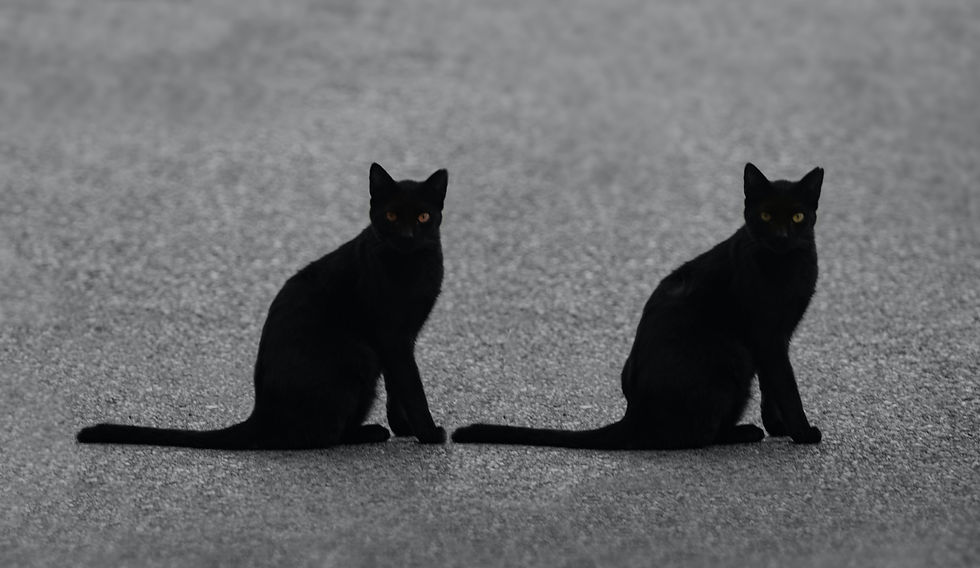
Are Black Cats a Specific Breed?
No. “Black cat” describes a coat color, not a breed. A cat’s fur may be black whether it is a mixed-breed domestic cat or a pedigreed cat. Breed refers to a group with a defined ancestry and a set of physical characteristics; coat color is only one feature of appearance.
The Bombay is the breed most closely associated with an all-black look. Its breed standard calls for a short, sleek black coat, but that does not mean every black cat is a Bombay. Black coats are also accepted in several other breeds, including the British Shorthair, Persian, Maine Coon, and American Shorthair. A black domestic shorthair or longhair may simply have an unknown or mixed ancestry.
A cat’s appearance alone usually cannot confirm its breed. A round face, golden eyes, or glossy black coat may resemble traits associated with a particular breed, but similar features can occur in cats without that pedigree. Reliable breed identification generally depends on documented ancestry, such as registration papers, rather than color or appearance alone.
This distinction matters when considering personality and care. A black coat does not come with one predictable temperament or a special set of health needs. If a cat belongs to a recognized breed, its build, coat length, and known breed-related health considerations may be relevant—but those are linked to its breed and individual history, not simply to being black.

Why Does a Black Cat’s Coat Sometimes Look Brown or Rusty?
A black cat’s fur may appear brown or reddish in certain situations. One common reason is sun exposure: ultraviolet light can gradually fade dark hairs, especially in cats that spend a lot of time in sunny spots or outdoors. Bright light can also reveal warm tones that are less noticeable indoors. As cats age, their coats may change too, including the appearance of gray or white hairs.
Nutrition can sometimes play a role. Cats need the amino acids tyrosine and phenylalanine to produce dark pigment. Research has shown that diets deficient in these nutrients can cause black fur to develop a reddish-brown appearance. That finding does not mean that every rusty-looking coat signals a dietary deficiency. Color changes can have more than one explanation, and an owner cannot reliably diagnose the cause by looking at the fur.
Do not add tyrosine, phenylalanine, or other supplements without veterinary advice. Cats need a complete, balanced diet, and unnecessary supplements or an unbalanced homemade diet can create other problems. If the color change is sudden, patchy, or accompanied by hair loss, itching, skin irritation, weight loss, or a dull coat, arrange a veterinary examination. Your veterinarian can assess the skin and coat, review the cat’s diet and health history, and decide whether any testing or dietary change is appropriate.

Common Myths and Superstitions About Black Cats
One of the best-known beliefs about black cats is that seeing one cross your path brings bad luck. This is folklore, not a fact about cats. Beliefs about black cats have varied across places and periods: while some traditions associated them with witches or misfortune, others treated them as lucky animals or symbols of protection. There has never been one universal meaning attached to their color.
Black cats are also strongly associated with Halloween imagery, including witches, magic, and spooky decorations. That association comes from stories and popular culture; it does not mean black cats are mysterious or behave differently from other cats. They have the same ordinary needs for food, water, veterinary care, play, and a safe home.
A more consequential myth is the idea that a black cat’s coat predicts its temperament—that black cats are more aggressive, less friendly, or somehow “different.” A cat’s appearance cannot tell you whether it will be affectionate, confident, shy, or playful. Those qualities vary between individuals, and a cat’s experiences and environment matter.
Folklore can have real-world consequences when it shapes how people view or choose cats. Some studies have found that people rate black cats less favorably in adoption photographs, while shelter findings vary by location. The fair approach is to meet each cat as an individual and judge its behavior from its actual interactions, not from superstition or appearance.

Do Black Cats Have Different Health or Care Needs?
Being black does not, by itself, mean a cat needs a special diet, a different vaccination schedule, or extra medical treatment. Core care is the same as for other cats: provide a complete and balanced diet, fresh water, a clean litter area, regular opportunities for play, and preventive veterinary care suited to the cat’s age, health, lifestyle, and location.
Routine veterinary visits help monitor weight, teeth, skin, and overall health. Your veterinarian can recommend vaccinations and parasite prevention based on your cat’s individual risk. These decisions should be guided by its health and circumstances—not by the color of its coat.
A black coat may make subtle changes in appearance harder to notice at a glance, so it can help to check the skin and fur regularly while petting or grooming your cat. Look for changes such as new bald patches, persistent itching, sores, unusual lumps, or a coat that becomes dull or greasy. A change in fur color alone does not identify a specific problem, but a sudden change—especially alongside other symptoms—is a good reason to contact your veterinarian.
Coat length, rather than color, usually determines how much brushing is needed. Short-haired cats often need less frequent brushing than long-haired cats, whose coats can mat without regular care. In either case, use gentle grooming to remove loose hair and notice changes early.

How to Groom and Care for a Black Cat
Black cats do not need a special grooming routine just because their coats are dark. The right routine depends mostly on coat length, texture, and the cat’s ability to groom itself. A short-haired cat may need only occasional brushing, while a long-haired cat often needs more frequent sessions to prevent tangles and mats.
Choose a brush or comb that suits your cat’s coat, and introduce it gradually. Keep early sessions short and gentle, especially if your cat is not used to being handled. Brushing removes loose hair and gives you a chance to check the skin for scratches, scabs, lumps, or areas of irritation. If you find a tight mat, do not cut it out with scissors: a cat’s skin can be pulled up into the mat, making it easy to injure. Ask a veterinarian or an experienced groomer for help.
Most healthy cats keep themselves clean and rarely need a bath. If your cat becomes dirty or has a skin condition, ask your veterinarian whether bathing is appropriate and which cat-safe product to use. Avoid human shampoos and scented products unless your veterinarian specifically recommends them.
Regular grooming can also help your cat become comfortable with gentle handling. Stop if your cat becomes distressed, and try again later rather than forcing the session. If you notice persistent itching, bald patches, sore skin, or a sudden change in coat condition, contact your veterinarian.

What to Know Before Adopting a Black Cat
Choose a cat based on its individual temperament, health, and fit with your home—not on coat color alone. Think about the cat’s age and activity level, how much time you can give it, and whether it is likely to be comfortable around children or other pets. Ask the shelter or rescue what staff have observed about the cat’s behavior, medical history, and needs.
A photograph may not show a black cat’s expressions or features clearly, so try to meet the cat in person when possible. Ask whether you can spend time with it in a calm setting. If an in-person meeting is not possible, request more information from the adoption team, such as a video or a detailed description of how the cat behaves with people. Research on adoption perceptions and shelter outcomes has produced mixed findings, so claims that black cats are always harder to adopt should not be treated as a universal rule.
Before bringing your new cat home, prepare a quiet room with food, water, a litter box, a comfortable hiding place, and a scratching surface. Give the cat time to explore at its own pace. If you already have pets, plan gradual introductions instead of expecting them to become comfortable with one another immediately.
Arrange a veterinary checkup after adoption, especially if the cat’s medical history is incomplete. The shelter can tell you which vaccinations, parasite treatments, or follow-up care have already been provided and what still needs to be scheduled. A thoughtful match and a calm transition help any newly adopted cat settle in, whatever its coat color.

Black Cat Names: Ideas Inspired by Their Coat and Personality
A black cat’s name can reflect its dark coat, bright eyes, playful nature, or the personality it reveals after settling in. Some names lean mysterious; others are warm, funny, or simple enough to call across the room. You do not have to choose a name based on whether your cat is male or female—pick one that feels natural to say and suits the individual cat.
Names inspired by darkness and night: Midnight, Shadow, Eclipse, Onyx, Noir, Raven, Panther, Coal, Ink, Velvet, and Cinder.
Playful and affectionate names: Pepper, Bean, Boo, Pickle, Mochi, Noodle, Poppy, and Smudge.
Mythical or literary names: Salem, Luna, Nyx, Binx, and Merlin. These names draw on mythology, books, or popular culture, but they do not mean a black cat is magical or mysterious in real life.
Names that suit any cat: Ash, Coco, Jet, Lucky, Soot, and Storm.
Spend a little time observing your cat before deciding. A quiet cat might suit “Shadow,” while an energetic kitten might grow into “Pepper” or “Noodle”—but there are no rules. Short names with clear sounds are often convenient to say consistently. Once you choose, use the name in a calm, positive way and reward your cat when it looks toward you. Cats may learn to recognize their names, though whether they choose to respond is another matter.

Frequently Asked Questions About Black Cats
Are black cats friendlier than other cats?
There is no dependable evidence that black cats are naturally friendlier. Individual temperament varies: one black cat may seek constant company, while another prefers more space. A cat’s early experiences, socialization, health, and environment can all influence how it behaves around people.
Can black cats have different eye colors?
Yes. Black cats can have different eye colors, including shades of yellow, gold, copper, and green. Coat color alone does not determine an individual cat’s eye color.
Do black cats change color in the sun?
A black coat can gradually look brown or reddish after prolonged sun exposure because dark hairs may fade. Some coat-color changes can also have other causes, including age or nutritional issues. If the change is sudden, patchy, or accompanied by skin or health problems, contact a veterinarian.
Are black cats less likely to be adopted?
Research findings are mixed. Some studies have reported that black cats stayed longer in shelters or were rated less favorably in adoption photographs; other studies have found different patterns. Results can vary between shelters and locations, so it is inaccurate to assume every black cat will be overlooked.
What should I feed a black cat?
A black cat needs the same kind of diet as any other cat: a complete and balanced food appropriate for its life stage and health. A black coat is not a reason to add supplements or change the diet. Ask your veterinarian before making a significant dietary change.

Sources
Source | Open link |
UC Davis Veterinary Genetics Laboratory — Feline Coat Color | |
UC Davis Veterinary Genetics Laboratory — Agouti Gene in Cats | |
American Animal Hospital Association — What Does a Cat’s Color Tell Us? | |
Review — Temperament in Domestic Cats | |
Review — What’s Inside Your Cat’s Head? Cat Cognition Research | |
Tufts University — Why Did My Pet’s Black Hair Coat Turn Red? | |
Research Study — Dietary Tyrosine and Hair Color in Cats | |
Research Study — Human Judgments of Black Cats’ Adoptability | |
Research Study — Coat Color and Cat Outcomes in an Urban U.S. Shelter | |
AAHA/AAFP — Feline Life Stage Guidelines | |
ASPCA — Cat Grooming Tips | |
Smithsonian National Library of Medicine — The Truth About Black Cats | |
The Cat Fanciers’ Association — Bombay Breed Profile |


Comments