
Why Is My Dog's Eye Red? Causes, Symptoms, Treatment, and When It's an Emergency

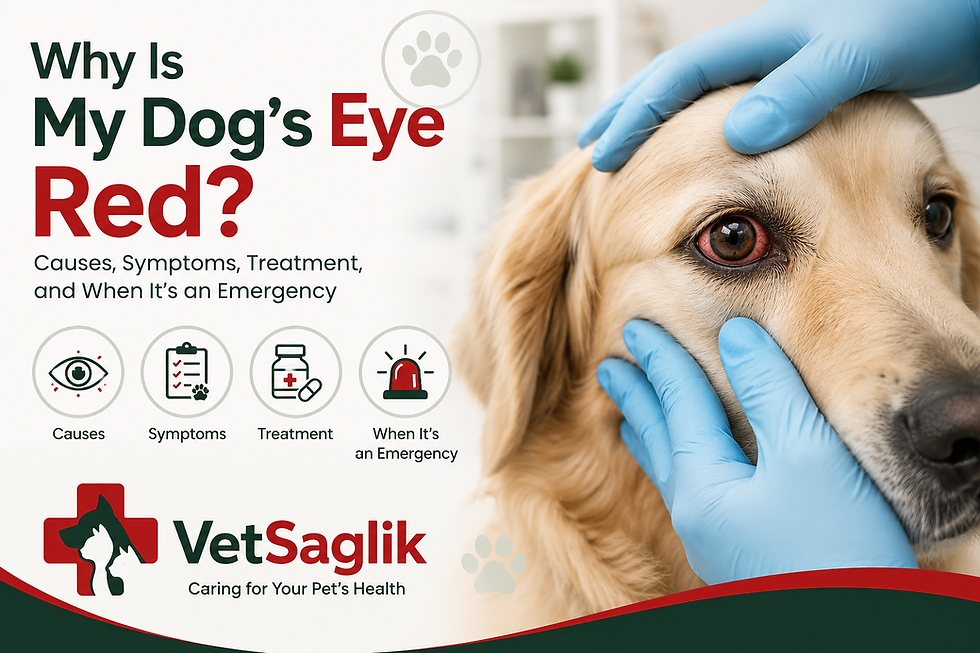
Why Is My Dog's Eye Red?
A dog’s eye may appear red when blood vessels in or around the eye become enlarged, irritated, inflamed, or damaged. The redness may involve the conjunctiva—the thin membrane covering the white part of the eye and lining the eyelids—or it may originate from deeper structures inside the eye.
Redness is not a diagnosis by itself. It is a visible sign that can occur with many different conditions, ranging from minor irritation and allergies to painful, vision-threatening diseases such as a corneal ulcer, uveitis, lens luxation, or glaucoma.
Some dogs develop mild redness after exposure to dust, shampoo, smoke, wind, or other environmental irritants. However, a red eye accompanied by squinting, excessive tearing, discharge, cloudiness, swelling, rubbing, an enlarged eye, or changes in vision should not be ignored. Glaucoma, for example, may begin with relatively subtle redness and squinting but can cause permanent blindness when treatment is delayed.
The location and appearance of the redness can provide useful clues:
Redness around the white of the eye commonly occurs with conjunctivitis, allergies, dry eye, or surface irritation.
A red, cloudy, or bluish eye may suggest corneal inflammation, a corneal ulcer, glaucoma, or inflammation inside the eye.
A red lump in the inner corner of the eye may be cherry eye, caused by prolapse of the third-eyelid gland.
Blood visible inside the eye may result from trauma, severe inflammation, abnormal blood clotting, high blood pressure, or another underlying disease.
Redness affecting only one eye is more commonly associated with an injury, foreign object, ulcer, eyelid abnormality, or localized eye disease.
Redness affecting both eyes may be associated with allergies, dry eye, environmental irritation, or a systemic condition, although this distinction is not absolute.
Because many eye diseases look similar from the outside, it is rarely possible to identify the exact cause based on redness alone. A veterinarian may need to examine the cornea, eyelids, tear production, pupils, retina, and pressure inside the eye before recommending treatment.
Eye problems can worsen quickly. A dog that is squinting, holding the eye closed, showing obvious pain, developing cloudiness, or appearing unable to see should receive prompt veterinary attention.
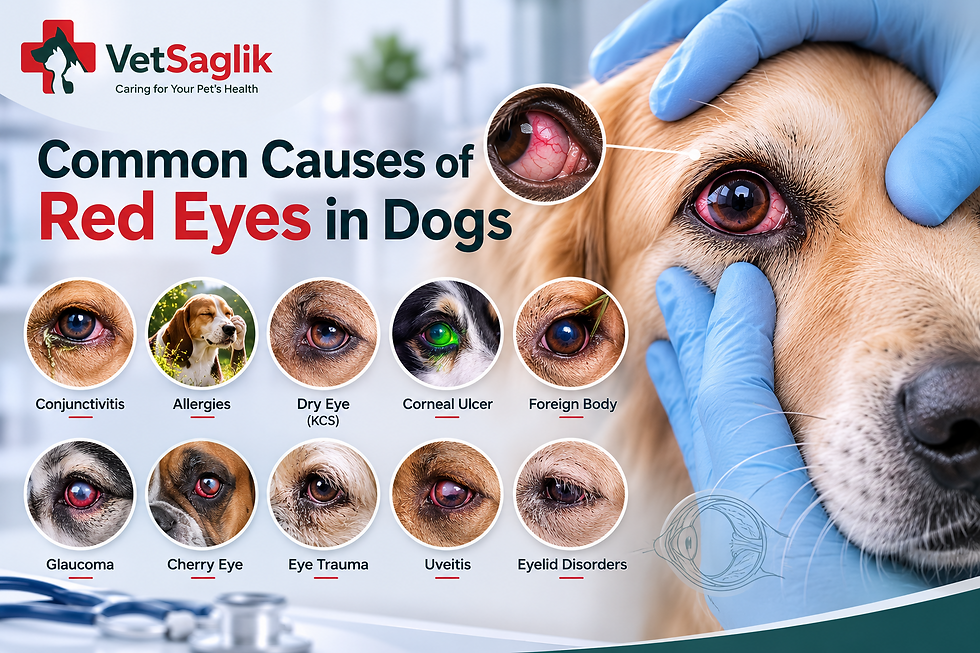
Common Causes of Red Eyes in Dogs
Conjunctivitis
Conjunctivitis is inflammation of the conjunctiva, the moist tissue that covers the white portion of the eye and lines the inside of the eyelids. It can cause redness, swelling, frequent blinking, tearing, and clear, yellow, or green discharge.
Conjunctivitis is not a single disease. It may develop because of allergies, irritation, bacterial infection, dry eye, eyelid abnormalities, foreign material, trauma, or another underlying eye disorder. Treating the redness without identifying the original cause may allow the condition to return or worsen.
Allergies and Environmental Irritation
Pollen, dust, smoke, perfumes, cleaning products, shampoo, grass, and other airborne irritants can cause red, watery, or itchy eyes. Allergic eye irritation often affects both eyes and may occur alongside itchy skin, paw licking, ear problems, sneezing, or seasonal symptoms.
Dogs with irritated eyes may rub their faces against furniture or scratch around the eyes. This can damage the corneal surface and create a secondary ulcer, so persistent itching should be assessed rather than treated only as a minor allergy.
Dry Eye
Keratoconjunctivitis sicca, commonly known as dry eye, occurs when the eye does not produce enough of the watery portion of the tear film. Without adequate tears, the surface of the eye becomes dry, irritated, and inflamed.
Affected dogs may develop redness, discomfort, frequent blinking, thick or sticky discharge, and a dull-looking corneal surface. Untreated dry eye can lead to secondary infection, corneal ulcers, scarring, pigmentation, and permanent loss of vision.
Dry eye is especially important because its thick green or yellow discharge can be mistaken for a simple bacterial infection. Antibiotic drops alone will not correct inadequate tear production.
Corneal Ulcers and Scratches
A corneal ulcer is an open wound or defect in the clear outer surface of the eye. It may result from scratches, foreign material, dry eye, abnormal eyelashes, eyelids that roll inward, chemical irritation, trauma, or exposure of the cornea in dogs with prominent eyes.
Corneal ulcers are usually painful. Common signs include:
Squinting or holding the eye closed
Excessive tearing
Pawing or rubbing at the eye
Redness
Sensitivity to light
Discharge
A cloudy, blue, white, or uneven area on the cornea
Veterinarians commonly use fluorescein dye to detect damage to the corneal surface. The dye adheres to exposed corneal tissue where the protective surface layer has been lost.
Some ulcers remain superficial, while others become infected or deepen rapidly. A deep ulcer may perforate the eye and permanently affect vision. The MSD Veterinary Manual notes that corneal ulcers commonly cause pain, watering, and spasmodic blinking, and that bacterial infection can make them worse.
Foreign Material in the Eye
Grass seeds, sand, dust, plant material, loose hair, and other small objects can become trapped beneath the eyelids or behind the third eyelid. This may cause sudden redness, tearing, blinking, rubbing, or an inability to keep the eye open.
Foreign material can also scratch the cornea. Even when the object is no longer visible, a painful corneal ulcer may remain. Objects embedded in the cornea or located behind the third eyelid may require topical anesthesia and specialized instruments for safe removal.
Eye Trauma
Trauma may occur after a collision, fall, animal fight, scratch, blunt impact, or contact with a sharp object. Injuries can affect the eyelids, conjunctiva, cornea, lens, or deeper structures inside the eye.
Signs may include redness, swelling, bleeding, cloudiness, an irregular pupil, a visible wound, displacement of the eye, or sudden vision loss. Even an eye that initially looks only mildly red may have serious internal damage, particularly after blunt trauma.
Glaucoma
Glaucoma occurs when fluid cannot drain normally from the eye, causing pressure inside the eye to increase. Elevated pressure damages the retina and optic nerve and can lead to irreversible blindness.
Early glaucoma may cause only mild redness, tearing, or squinting. As pressure rises, the eye may become intensely red, cloudy, enlarged, and very painful. The pupil may remain dilated, and the dog may bump into objects or show other signs of impaired vision.
Glaucoma is an ophthalmic emergency. Cornell University notes that rapid treatment may preserve vision, while untreated disease can progress to blindness.
Uveitis
Uveitis is inflammation of the uvea, the vascular tissue inside the eye. It can develop because of trauma, infection, immune-mediated disease, cataracts, tumors, or illnesses affecting other parts of the body.
Possible signs include redness, pain, squinting, tearing, cloudiness, sensitivity to light, a small or irregular pupil, and changes in the eye’s appearance. Uveitis may also cause blood, inflammatory material, or protein to accumulate inside the eye.
This condition requires veterinary evaluation because treatment depends on the underlying cause. Severe or persistent uveitis can lead to cataracts, retinal damage, glaucoma, or permanent vision loss.
Cherry Eye
Cherry eye occurs when the tear-producing gland associated with the third eyelid moves out of its normal position. It usually appears as a smooth, round, pink or red mass in the inner corner of the eye.
The exposed gland may become dry, irritated, and swollen. Discharge and conjunctivitis can develop, especially if the dog rubs the area. Cherry eye is more common in certain young dogs and brachycephalic breeds.
The gland contributes to tear production and should generally be preserved. Surgical replacement is commonly preferred over removing the gland because removal may increase the future risk of dry eye.
Eyelid and Eyelash Disorders
Structural problems involving the eyelids or eyelashes can repeatedly irritate the cornea and conjunctiva. Examples include:
Entropion: The eyelid rolls inward, allowing fur to rub against the eye.
Ectropion: The eyelid turns outward, exposing the conjunctiva to irritation and drying.
Distichiasis: Extra eyelashes grow from abnormal locations and contact the eye.
Eyelid masses: Lumps may rub against the cornea during blinking.
Incomplete eyelid closure: Part of the cornea remains exposed and becomes dry or damaged.
Dogs with these conditions may have chronic redness, discharge, tearing, squinting, corneal pigmentation, or recurring ulcers.
Keratitis
Keratitis means inflammation of the cornea. It may occur because of infection, immune-mediated disease, chronic irritation, trauma, dry eye, or exposure.
Signs can include redness, pain, tearing, squinting, discharge, a constricted pupil, and a white, gray, or bluish appearance over the eye.
Some forms of keratitis cause blood vessels or dark pigment to grow across the cornea. Without treatment, this may reduce corneal transparency and interfere with vision.
Lens Luxation
Lens luxation occurs when the fibers holding the lens in place weaken or break, allowing the lens to shift from its normal position. It may be inherited in some breeds or develop secondary to glaucoma, inflammation, trauma, or cataracts.
An affected eye may become red, painful, watery, hazy, or cloudy. Lens luxation can obstruct normal fluid drainage and trigger secondary glaucoma, making early diagnosis important.
Bleeding in or Around the Eye
Blood may appear beneath the conjunctiva or inside the front chamber of the eye. Possible causes include trauma, severe inflammation, retinal disease, high blood pressure, clotting disorders, toxin exposure, cancer, or systemic illness.
A small conjunctival hemorrhage may look dramatic but remain limited to the surface. Blood inside the eye, however, can obstruct vision and may indicate a more serious underlying problem. Any unexplained ocular bleeding warrants veterinary examination.
Tumors and Other Growths
Tumors involving the eyelids, conjunctiva, third eyelid, tissues behind the eye, or structures inside the eyeball may cause persistent redness. Other signs can include swelling, discharge, bleeding, an abnormal pupil, a visible mass, displacement of the eye, or recurring inflammation.
Not every lump is malignant, but an enlarging, bleeding, pigmented, or irritating growth should be examined and, when appropriate, sampled or removed.
Systemic Diseases
A red eye does not always originate from a problem limited to the eye. Infections, immune-mediated diseases, high blood pressure, blood-clotting disorders, diabetes-related cataracts, and some cancers may cause inflammation or bleeding within the eye.
For example, rapidly developing cataracts in diabetic dogs can trigger severe lens-induced uveitis and may contribute to secondary glaucoma.
When redness is accompanied by lethargy, fever, reduced appetite, bruising, bleeding elsewhere, neurological signs, or changes affecting both eyes, the veterinarian may recommend blood tests and additional diagnostic investigations.
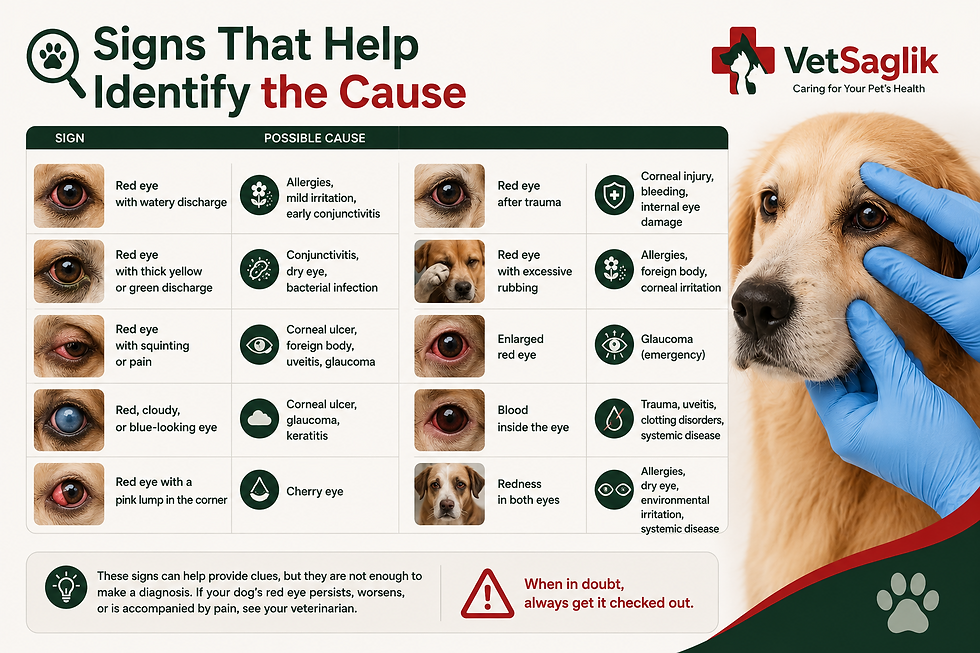
Signs That Help Identify the Cause of Red Eye In Dogs
Although many eye conditions can cause redness, accompanying symptoms often provide important clues about the underlying problem. Keep in mind that these signs are not enough to make a diagnosis, but they can help determine how urgently your dog should be examined.
Symptom | Possible Cause |
Red eye with watery discharge | Allergies, mild irritation, early conjunctivitis |
Red eye with thick yellow or green discharge | Conjunctivitis, dry eye, bacterial infection |
Red eye with squinting or pain | Corneal ulcer, foreign body, uveitis, glaucoma |
Red, cloudy, or blue-looking eye | Corneal ulcer, glaucoma, keratitis |
Red eye with a pink lump in the corner | |
Red eye after trauma | Corneal injury, bleeding, internal eye damage |
Red eye with excessive rubbing | Allergies, foreign body, corneal irritation |
Enlarged red eye | Glaucoma (emergency) |
Blood inside the eye | Trauma, uveitis, clotting disorders, systemic disease |
Redness in both eyes | Allergies, dry eye, environmental irritation, systemic disease |
Because several serious eye diseases share similar symptoms, it is safest to have any painful or persistent red eye examined by a veterinarian rather than trying to determine the cause at home.
When Is a Red Eye an Emergency?
Some causes of eye redness are minor, while others can permanently damage your dog's vision within hours. Seek veterinary care as soon as possible if you notice any of the following:
Your dog suddenly cannot open the eye.
The eye appears cloudy, blue, or white.
The eye becomes enlarged or bulges outward.
There is obvious bleeding inside or around the eye.
Your dog is squinting constantly or appears to be in significant pain.
Vision seems reduced or your dog is bumping into objects.
The redness developed after trauma or chemical exposure.
A foreign object appears to be stuck in the eye.
The redness worsens rapidly or does not improve within 24 hours.
Conditions such as glaucoma, deep corneal ulcers, severe eye injuries, and uveitis require prompt treatment to reduce the risk of permanent vision loss. Early diagnosis often leads to a much better outcome.
How Veterinarians Diagnose Red Eyes in Dogs
Because many eye diseases look alike, your veterinarian will perform a thorough eye examination to determine the exact cause of the redness. Depending on your dog's symptoms, the evaluation may include:
Physical eye examination to assess the eyelids, cornea, conjunctiva, pupils, and surrounding tissues.
Fluorescein stain to detect corneal ulcers or scratches.
Schirmer tear test to measure tear production and diagnose dry eye.
Tonometry to measure intraocular pressure and check for glaucoma or uveitis.
Ophthalmoscope examination to evaluate the lens, retina, and optic nerve.
Additional tests, such as cytology, bacterial culture, blood tests, or ocular ultrasound, if an underlying disease or deeper eye problem is suspected.
Identifying the correct cause is essential because treatments that help one eye disease may worsen another. For example, steroid eye drops should never be used on an undiagnosed red eye, as they can significantly worsen corneal ulcers.
Treatment for Red Eyes in Dogs
Treatment depends entirely on the underlying cause of the redness. While some conditions respond well to medication, others may require emergency treatment or surgery.
Common treatment options include:
Antibiotic eye drops or ointments for certain bacterial infections.
Artificial tears and tear-stimulating medications for dry eye.
Anti-inflammatory medications for allergies or specific inflammatory conditions.
Pain relief medications when the eye is painful.
Glaucoma medications to rapidly reduce eye pressure.
Surgical treatment for conditions such as cherry eye, severe corneal ulcers, lens luxation, or some traumatic injuries.
Removal of foreign material trapped beneath the eyelids or on the cornea.
During recovery, your veterinarian may recommend an Elizabethan collar (E-collar) to prevent rubbing or scratching, which can significantly worsen eye injuries.
Never use human eye drops or leftover pet medications without veterinary advice. Some products, especially steroid-containing eye drops, can cause serious complications if used for the wrong condition.
Can I Treat My Dog's Red Eye at Home?
Home care is only appropriate for mild irritation while you are arranging a veterinary examination. Because many serious eye diseases initially look similar, it is not safe to assume that a red eye is "just an infection" or "just allergies."
While waiting to see your veterinarian, you can:
Gently wipe away discharge with clean gauze dampened with sterile saline.
Prevent your dog from rubbing or scratching the eye by using an Elizabethan collar if needed.
Keep dust, smoke, shampoo, and other irritants away from the affected eye.
Monitor for worsening redness, swelling, cloudiness, or signs of pain.
Avoid trying to treat the eye yourself with:
Human eye drops
Steroid eye drops
Leftover antibiotics
Herbal or home remedies
Using the wrong medication can delay proper treatment and, in some cases, permanently damage your dog's vision.
Can Red Eyes in Dogs Be Prevented?
Not every cause of eye redness can be prevented, but good eye care can reduce your dog's risk of developing many common problems.
You can help protect your dog's eyes by:
Scheduling routine veterinary checkups.
Keeping the hair around the eyes neatly trimmed.
Preventing exposure to smoke, harsh chemicals, and other eye irritants.
Treating allergies and dry eye promptly.
Using protective measures during outdoor activities where eye injuries are more likely.
Seeking veterinary care as soon as you notice redness, squinting, discharge, or cloudiness.
Early treatment is one of the best ways to preserve your dog's vision. Many eye conditions respond well when diagnosed promptly but can become much more serious if treatment is delayed.
Frequently Asked Questions (FAQ)
Can a dog's red eye heal on its own?
Mild irritation may resolve on its own, but persistent redness, pain, discharge, or cloudiness should always be evaluated by a veterinarian.
Why is only one of my dog's eyes red?
A single red eye is often caused by an injury, foreign body, corneal ulcer, glaucoma, or another localized eye problem, although infections and other diseases can also affect only one eye.
Can allergies cause red eyes in dogs?
Yes. Allergies commonly cause redness, watery eyes, and itching, often affecting both eyes at the same time.
Is a red eye always an emergency in dog?
No. However, if redness is accompanied by pain, squinting, cloudiness, vision changes, bleeding, or an enlarged eye, it should be treated as an emergency.
Can I use human eye drops on my dog?
No. Many human eye drops are not safe for dogs, and some can make certain eye diseases much worse. Only use medications prescribed by your veterinarian.
How quickly should my dog see a veterinarian?
If the redness is mild and your dog is otherwise comfortable, schedule an appointment as soon as possible. If your dog is in pain, cannot open the eye, has a cloudy eye, is bleeding, or seems to be losing vision, seek veterinary care immediately.
References
Reference | Official Link |
American College of Veterinary Ophthalmologists (ACVO) | |
Cornell University College of Veterinary Medicine – Ophthalmology | |
Cornell University – Riney Canine Health Center: Glaucoma | |
Cornell University – Riney Canine Health Center: Keratoconjunctivitis Sicca (Dry Eye) | |
Cornell University – Riney Canine Health Center: Primary Lens Luxation | |
Cornell University – Riney Canine Health Center: Canine Cataracts | |
MSD Veterinary Manual – Disorders of the Cornea in Dogs | |
MSD Veterinary Manual – Diagnostic Tests Pertaining to Ocular Medications in Animals | |
UC Davis School of Veterinary Medicine – Keratitis | |
European College of Veterinary Ophthalmologists (ECVO) | |
Mersin Vetlife Veterinary Clinic |


Comments