
Common Toy Poodle Health Problems: Diseases They Are Prone To and Resistant To

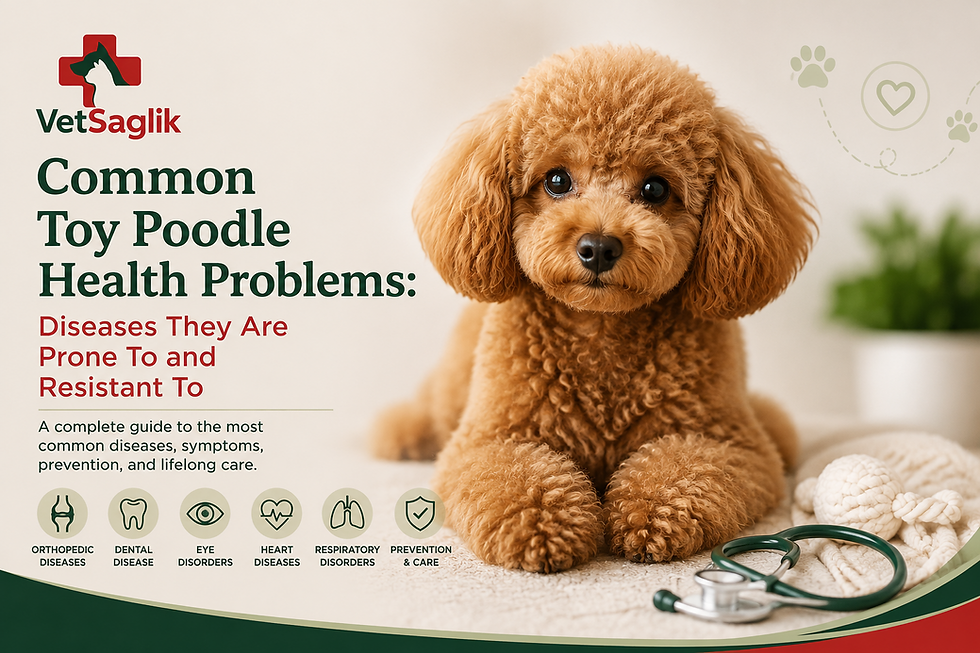
Quick Overview: Toy Poodle Health Problems at a Glance
Toy Poodles are among the most intelligent and longest-living dog breeds. Their small size, trainability, and affectionate personality make them excellent companions for families and individuals alike. Although they are generally healthy dogs, Toy Poodles are genetically predisposed to several orthopedic, dental, eye, cardiac, and endocrine disorders that require lifelong monitoring.
Many of these conditions can be detected early through routine veterinary examinations, genetic screening, and preventive healthcare. Early diagnosis allows owners to manage disease before it significantly affects mobility, vision, heart function, or overall quality of life.
The table below summarizes the most common health problems affecting Toy Poodles.
Disease | Risk Level | Body System | Genetic Link | Screening Available |
Very High | Musculoskeletal | Yes | Orthopedic Examination | |
Very High | Oral Health | Partial | Dental Examination | |
Progressive Retinal Atrophy (PRA) | High | Eyes | Yes | DNA Test & Eye Examination |
Cataracts | Moderate | Eyes | Sometimes | Ophthalmic Examination |
Tracheal Collapse | High | Respiratory | Partial | Clinical Examination & Imaging |
Mitral Valve Disease | High | Cardiovascular | Yes | Cardiac Examination & Echocardiography |
Moderate | Endocrine | Possible | Blood & Urine Tests | |
Cushing's Disease | Moderate | Endocrine | No | Hormonal Testing |
Hypothyroidism | Moderate | Endocrine | Possible | Blood Tests |
Allergic Skin Disease | Moderate | Skin | Partial | Clinical Evaluation |
Moderate | Gastrointestinal | No | Blood Tests & Ultrasound |
Although Toy Poodles are predisposed to several inherited and age-related conditions, most enjoy long, active lives with appropriate preventive care. Routine veterinary checkups, good dental hygiene, weight management, and regular health screening remain the foundation of lifelong wellness.

Most Common Diseases Toy Poodles Are Prone To
Toy Poodles have an increased risk of several inherited and age-related diseases, particularly those affecting the joints, teeth, eyes, heart, and endocrine system. While many of these conditions develop gradually, early recognition and preventive care can greatly improve long-term outcomes.
Because Toy Poodles often live well into their teenage years, maintaining regular veterinary examinations becomes increasingly important as they age. Routine screening allows many diseases to be diagnosed before they produce significant clinical signs.
Disease | Risk Level | Typical Age | Early Signs | Veterinary Priority |
Very High | Puppy to Adult | Skipping gait, intermittent limping | High | |
Periodontal Disease | Very High | Young Adult | Bad breath, tartar buildup | High |
Progressive Retinal Atrophy (PRA) | High | Adult | Night blindness | Moderate |
Tracheal Collapse | High | Adult | Dry "goose honk" cough | High |
Mitral Valve Disease | High | Middle-aged to Senior | Heart murmur, exercise intolerance | High |
Cataracts | Moderate | Adult to Senior | Cloudy eyes | Moderate |
Diabetes Mellitus | Moderate | Middle-aged to Senior | Increased thirst and urination | Moderate |
Cushing's Disease | Moderate | Senior | Increased thirst, abdominal enlargement | Moderate |
Allergic Dermatitis | Moderate | Young Adult | Itchy skin, recurrent ear infections | Moderate |
Pancreatitis | Moderate | Adult | Vomiting, abdominal pain | High |
Hypothyroidism | Moderate | Middle-aged | Weight gain, lethargy | Moderate |
Not every Toy Poodle will develop these diseases. However, choosing puppies from responsible breeders, maintaining excellent dental care, monitoring body weight, and scheduling regular veterinary examinations significantly improve the chances of detecting health problems early and preserving a high quality of life.

Patellar Luxation: The Toy Poodle's Most Common Orthopedic Disease
Patellar luxation is one of the most frequently diagnosed orthopedic disorders in Toy Poodles. The condition occurs when the kneecap (patella) slips out of its normal position within the femoral groove, causing intermittent or persistent lameness. Because Toy Poodles are a small breed with a strong genetic predisposition, patellar luxation is commonly diagnosed in both young and adult dogs.
The severity ranges from occasional kneecap displacement with minimal discomfort to permanent luxation that leads to chronic pain, arthritis, and reduced mobility. Early diagnosis allows many dogs to maintain an excellent quality of life through weight management, physical rehabilitation, or surgical correction when necessary.
Common Orthopedic Diseases
Disease | Typical Age | Main Clinical Signs | Severity |
Puppy to Adult | Skipping gait, intermittent lameness | High | |
Osteoarthritis | Adult to Senior | Joint stiffness, pain | Moderate |
Legg-Calvé-Perthes Disease | Puppy to Young Adult | Hind limb lameness, hip pain | High |
Cranial Cruciate Ligament Injury | Adult | Sudden hind limb lameness | Moderate |
Major Risk Factors
Risk Factor | Why It Matters |
Genetics | Primary cause of patellar luxation |
Small body size | Increases susceptibility to medial luxation |
Shallow femoral groove | Allows the kneecap to dislocate more easily |
Places additional stress on the knee joint | |
Poor limb conformation | Increases joint instability |
Common Clinical Signs
The disease often begins with subtle signs that become more noticeable over time.
Clinical Sign | Possible Cause |
Skipping while walking or running | Patellar luxation |
Sudden lifting of one hind leg | Patellar luxation |
Intermittent lameness | Knee instability |
Difficulty jumping | Joint pain |
Stiffness after rest | Osteoarthritis |
Clicking sensation in the knee | Patellar displacement |
Progressive hind limb weakness | Advanced orthopedic disease |
Prevention and Long-Term Management
Although inherited patellar luxation cannot always be prevented, early diagnosis and appropriate management often produce excellent long-term outcomes.
Preventive Measure | Benefit |
Purchase puppies from health-tested parents | Reduces inherited risk |
Maintain an ideal body weight | Decreases stress on the knee joint |
Routine orthopedic examinations | Detects disease early |
Provide regular low-impact exercise | Strengthens supporting muscles |
Physical rehabilitation when indicated | Improves mobility |
Surgical correction for severe cases | Restores joint stability and reduces pain |
Many Toy Poodles with mild patellar luxation remain active throughout their lives with conservative management. Dogs with more advanced disease often experience excellent improvement following orthopedic surgery, especially when intervention occurs before severe arthritis develops.

Dental Disease: Why Toy Poodles Need Lifelong Oral Care
Dental disease is one of the most common medical conditions affecting Toy Poodles. Due to their small jaws and closely spaced teeth, plaque and tartar accumulate more rapidly than in larger breeds, creating an ideal environment for periodontal disease. Without regular dental care, inflammation of the gums can progress to infection, tooth loss, chronic pain, and even systemic health problems affecting the heart, kidneys, and liver.
Unlike many other health conditions, periodontal disease is largely preventable. Lifelong oral hygiene and routine professional dental cleanings play a crucial role in maintaining overall health.
Common Dental Diseases
Dental Disease | Frequency | Common Signs | Prevention |
Periodontal Disease | Very High | Bad breath, gum inflammation | Daily tooth brushing |
High | Red, swollen gums | Professional dental care | |
Tooth Loss | Moderate to High | Loose or missing teeth | Early treatment of periodontal disease |
Tooth Root Abscess | Moderate | Facial swelling, oral pain | Routine dental examinations |
Dental Calculus (Tartar) | Very High | Yellow or brown deposits on teeth | Regular brushing and scaling |
Common Clinical Signs
Dental disease often progresses silently before obvious symptoms appear.
Clinical Sign | Possible Disease |
Persistent bad breath | Periodontal disease |
Red or bleeding gums | Gingivitis |
Difficulty chewing | Dental pain |
Dropping food while eating | Oral discomfort |
Loose teeth | Advanced periodontal disease |
Excessive drooling | Dental disease |
Pawing at the mouth | Oral pain |
Prevention and Long-Term Management
Routine dental care is one of the most effective ways to improve both lifespan and quality of life in Toy Poodles.
Preventive Measure | Benefit |
Brush teeth daily using veterinary toothpaste | Prevents plaque accumulation |
Schedule professional dental cleanings | Removes tartar below the gumline |
Perform regular oral examinations | Detects disease early |
Provide veterinarian-approved dental diets or chews | Reduces plaque formation |
Treat damaged or infected teeth promptly | Prevents chronic pain and systemic infection |
Maintain routine veterinary wellness visits | Supports lifelong oral health |
With consistent preventive dental care, many Toy Poodles retain healthy teeth well into old age. Daily tooth brushing combined with regular professional dental cleanings remains the gold standard for preventing periodontal disease and preserving long-term oral health.

Eye Diseases in Toy Poodles
Toy Poodles are predisposed to several inherited and age-related eye diseases that may gradually impair vision. Among the most important is Progressive Retinal Atrophy (PRA), a genetic disorder that causes the gradual degeneration of the retina and can eventually lead to complete blindness. Cataracts and glaucoma may also occur, particularly in older dogs.
Because many eye diseases develop slowly and are painless during their early stages, routine ophthalmic examinations are essential. Early diagnosis allows veterinarians to monitor disease progression, provide supportive care, and help breeders reduce the transmission of inherited eye disorders.
Common Eye Diseases
Disease | Frequency | Screening Available | Prognosis |
Progressive Retinal Atrophy (PRA) | High | DNA Test & Eye Examination | Progressive |
Cataracts | Moderate | Ophthalmic Examination | Good with surgery |
Glaucoma | Low to Moderate | Tonometry | Guarded |
Retinal Dysplasia | Low | Eye Examination | Variable |
Corneal Ulcers | Low | Fluorescein Staining | Good with treatment |
Common Clinical Signs
Many eye disorders progress gradually, making routine examinations particularly valuable.
Clinical Sign | Possible Disease |
Difficulty seeing at night | Progressive Retinal Atrophy |
Bumping into furniture | Vision loss |
Cloudy appearance of the eye | Cataracts |
Dilated pupils | Retinal disease |
Excessive tearing | Eye irritation |
Red or painful eye | Glaucoma or corneal ulcer |
Squinting | Corneal disease |
Progressive vision loss | Inherited retinal disease |
Prevention and Long-Term Management
Inherited eye diseases cannot always be prevented, but responsible breeding and regular eye examinations greatly reduce their impact.
Preventive Measure | Benefit |
DNA testing before breeding | Reduces inherited eye disease |
Annual ophthalmic examinations | Detects disease early |
Prompt treatment of eye injuries | Prevents permanent damage |
Monitor vision as dogs age | Detects progressive disorders |
Avoid breeding affected dogs | Improves breed health |
Schedule routine veterinary follow-up | Tracks disease progression |
Many Toy Poodles maintain excellent vision throughout much of their lives. Dogs diagnosed with inherited eye diseases often adapt well when changes occur gradually, especially when owners provide a consistent environment and regular veterinary care.
Tracheal Collapse and Respiratory Disorders in Toy Poodles
Tracheal collapse is one of the most common respiratory disorders affecting Toy Poodles and other small-breed dogs. The condition develops when the cartilage rings supporting the trachea weaken over time, allowing the airway to flatten during breathing. This narrowing restricts airflow and often produces the characteristic "goose honk" cough associated with the disease.
Although tracheal collapse usually progresses slowly, obesity, excitement, exercise, heat, and pressure from neck collars may worsen clinical signs. Early diagnosis and lifestyle modifications can significantly improve quality of life for many affected dogs.
Common Respiratory Diseases
Disease | Frequency | Common Signs | Severity |
Tracheal Collapse | High | Honking cough, exercise intolerance | Moderate to High |
Chronic Bronchitis | Moderate | Persistent cough | Moderate |
Laryngeal Disease | Low | Noisy breathing | Moderate |
Low | Cough, fever, lethargy | High |
Common Clinical Signs
Respiratory disease often develops gradually and may worsen with excitement or physical activity.
Clinical Sign | Possible Disease |
Dry "goose honk" cough | Tracheal collapse |
Coughing after excitement | Tracheal collapse |
Exercise intolerance | Airway disease |
Noisy breathing | Upper airway disorder |
Difficulty breathing | Advanced respiratory disease |
Cyanosis (blue gums) | Severe airway obstruction |
Collapse after coughing | Advanced tracheal collapse |
Prevention and Long-Term Management
Although tracheal collapse cannot always be prevented, appropriate management often slows disease progression and improves comfort.
Preventive Measure | Benefit |
Maintain an ideal body weight | Reduces airway stress |
Use a harness instead of a neck collar | Prevents pressure on the trachea |
Avoid exposure to cigarette smoke | Reduces airway irritation |
Limit strenuous exercise during hot weather | Prevents respiratory distress |
Follow prescribed medications when indicated | Controls coughing and inflammation |
Schedule regular veterinary evaluations | Monitors disease progression |
Many Toy Poodles with mild to moderate tracheal collapse continue to enjoy active lives with appropriate weight management, environmental adjustments, and medical treatment. Dogs with severe airway obstruction may require advanced procedures such as tracheal stenting, although this is reserved for carefully selected cases.
Heart Diseases in Toy Poodles
Toy Poodles are predisposed to several cardiovascular disorders, with Mitral Valve Disease (MVD) being the most common. This progressive degenerative condition affects the mitral valve of the heart, allowing blood to leak backward with each heartbeat. Over time, untreated disease may lead to heart enlargement and congestive heart failure.
Mitral Valve Disease is particularly common in older Toy Poodles and often progresses slowly over several years. Because early disease may cause no obvious symptoms, routine veterinary examinations are essential for detecting heart murmurs before clinical signs develop.
Common Heart Diseases
Disease | Frequency | Screening | Prognosis |
Mitral Valve Disease (MVD) | Very High | Cardiac Examination & Echocardiography | Good with management |
Heart Murmurs | High | Physical Examination | Depends on cause |
Congestive Heart Failure | Moderate | Echocardiography & Chest Radiographs | Variable |
Pulmonary Hypertension | Low | Echocardiography | Variable |
Arrhythmias | Low | ECG | Variable |
Common Clinical Signs
Heart disease often develops gradually, especially in middle-aged and senior dogs.
Clinical Sign | Possible Disease |
Heart murmur | Mitral Valve Disease |
Persistent coughing | Congestive heart failure |
Exercise intolerance | Cardiac disease |
Heart disease | |
Difficulty breathing | Advanced heart failure |
Weakness | Reduced cardiac output |
Collapse | Severe cardiac disease |
Fatigue after activity | Cardiovascular disorder |
Prevention and Long-Term Management
Although degenerative valve disease cannot usually be prevented, early diagnosis allows treatment before severe heart failure develops.
Preventive Measure | Benefit |
Routine veterinary examinations | Detects heart murmurs early |
Echocardiography when indicated | Evaluates heart structure and function |
Maintain an ideal body weight | Reduces cardiac workload |
Provide regular moderate exercise | Supports cardiovascular fitness |
Follow prescribed heart medications | Slows disease progression |
Schedule routine cardiac rechecks | Monitors long-term changes |
Many Toy Poodles with Mitral Valve Disease live comfortably for years following diagnosis. Regular monitoring, appropriate medication, and prompt treatment of worsening symptoms greatly improve both lifespan and quality of life.
Hormonal and Metabolic Disorders in Toy Poodles
As Toy Poodles age, they become more susceptible to several endocrine disorders that affect metabolism, hormone production, and overall health. The most important include Diabetes Mellitus, Cushing's Disease (Hyperadrenocorticism), and Hypothyroidism.
Because these diseases often develop gradually, routine blood testing and careful observation of subtle changes in thirst, appetite, body weight, and energy level are essential for early diagnosis.
Common Hormonal and Metabolic Diseases
Disease | Typical Age | Common Signs |
Diabetes Mellitus | Middle-aged to Senior | Increased thirst, increased urination |
Cushing's Disease | Senior | Increased thirst, pot-bellied appearance |
Hypothyroidism | Middle-aged | Weight gain, lethargy |
Obesity | Adult | Excess body fat, reduced activity |
Hyperlipidemia | Adult | Often detected during blood tests |
Common Clinical Signs
Hormonal disorders frequently progress slowly before becoming obvious.
Clinical Sign | Possible Disease |
Increased thirst | Diabetes or Cushing's Disease |
Increased urination | Diabetes Mellitus |
Weight gain | Hypothyroidism |
Weight loss despite increased appetite | Diabetes Mellitus |
Pot-bellied abdomen | Cushing's Disease |
Hair thinning | Endocrine disease |
Hypothyroidism | |
Poor coat quality | Hormonal imbalance |
Prevention and Long-Term Management
Although endocrine diseases cannot always be prevented, routine screening allows earlier diagnosis and more effective treatment.
Preventive Measure | Benefit |
Maintain an ideal body weight | Supports metabolic health |
Feed a balanced, high-quality diet | Reduces obesity-related disease |
Encourage regular daily exercise | Supports healthy metabolism |
Perform routine blood and urine testing | Detects disease early |
Monitor body weight and drinking habits | Identifies subtle changes |
Seek veterinary evaluation for increased thirst, appetite, or urination | Enables early diagnosis |
Most Toy Poodles with endocrine disorders respond well to lifelong medical management. Early diagnosis, regular monitoring, proper nutrition, and owner compliance allow many affected dogs to maintain an excellent quality of life for years.
Skin Diseases and Allergies in Toy Poodles
Toy Poodles have a dense, continuously growing coat that requires regular grooming to remain healthy. While this unique coat offers certain advantages, it also makes the breed susceptible to several skin disorders, allergies, and secondary infections. Allergic skin disease is among the most common chronic medical conditions diagnosed in Toy Poodles.
Environmental allergens, food allergies, parasites, and inherited skin disorders can all contribute to persistent itching and inflammation. Without proper treatment, chronic skin disease may lead to recurrent ear infections, bacterial infections, and significant discomfort.
Common Skin Diseases
Disease | Risk | Common Signs |
Atopic Dermatitis | High | Persistent itching |
Moderate | Itching, recurrent ear infections | |
Sebaceous Adenitis | Moderate | Hair loss, flaky skin |
Pyoderma | Moderate | Pustules, skin infection |
Moderate | Greasy skin, unpleasant odor | |
Hot Spots | Low to Moderate | Moist, painful skin lesions |
Common Clinical Signs
Many dermatological conditions produce similar clinical signs regardless of the underlying cause.
Clinical Sign | Possible Disease |
Persistent scratching | Allergic dermatitis |
Excessive licking of paws | Environmental allergies |
Hair loss | Sebaceous adenitis or allergy |
Dry, flaky skin | Sebaceous adenitis |
Red, inflamed skin | Atopic dermatitis |
Recurrent ear infections | Allergic disease |
Unpleasant skin odor | Secondary bacterial or yeast infection |
Moist skin lesions | Hot spots |
Prevention and Long-Term Management
Most allergic skin diseases require long-term management rather than permanent cure.
Preventive Measure | Benefit |
Maintain year-round parasite prevention | Reduces flea allergy risk |
Feed a balanced, high-quality diet | Supports skin health |
Groom the coat regularly | Removes debris and prevents matting |
Bathe with veterinarian-approved shampoos | Reduces allergens and inflammation |
Treat ear infections promptly | Prevents chronic complications |
Schedule regular dermatological evaluations | Detects disease early |
Although many Toy Poodles experience chronic allergic skin disease, most respond well to individualized treatment plans that include allergy management, skin care, and routine veterinary monitoring.
Digestive and Gastrointestinal Diseases in Toy Poodles
Toy Poodles generally have a healthy digestive system, but they remain susceptible to several gastrointestinal disorders throughout life. Their small size, curious nature, and tendency to consume inappropriate foods increase the risk of digestive upset and intestinal obstruction.
Most digestive diseases are mild and respond well to treatment, but conditions such as pancreatitis or foreign body obstruction may require emergency veterinary care. Prompt recognition of gastrointestinal symptoms is essential for preventing serious complications.
Common Digestive Diseases
Disease | Emergency | Risk Level |
Pancreatitis | Sometimes | Moderate |
Acute Gastroenteritis | Sometimes | Moderate |
Foreign Body Obstruction | Yes | Moderate |
Food Intolerance | No | Moderate |
Inflammatory Bowel Disease (IBD) | No | Low |
Dental Disease-Related Eating Problems | No | Moderate |
Common Clinical Signs
Digestive disorders often present with nonspecific symptoms that require veterinary evaluation.
Clinical Sign | Possible Disease |
Gastroenteritis, pancreatitis | |
Gastrointestinal disease | |
Digestive disorder | |
Abdominal pain | Pancreatitis |
Excessive drooling | Nausea |
Difficulty chewing food | Dental disease |
Weight loss | Chronic digestive disease |
Systemic illness |
Prevention and Long-Term Management
Proper nutrition and routine preventive care significantly reduce the risk of digestive disease.
Preventive Measure | Benefit |
Feed a balanced, highly digestible diet | Supports gastrointestinal health |
Avoid feeding fatty table scraps | Reduces pancreatitis risk |
Prevent access to small foreign objects | Lowers obstruction risk |
Introduce dietary changes gradually | Minimizes digestive upset |
Maintain routine dental care | Improves eating comfort |
Seek veterinary care promptly for persistent vomiting or diarrhea | Improves treatment outcomes |
Most Toy Poodles recover well from common digestive disorders when treatment begins early. However, persistent vomiting, repeated diarrhea, severe abdominal pain, or inability to keep food or water down should always be considered reasons for immediate veterinary evaluation.
Diseases Toy Poodles May Be More Resistant To
Although Toy Poodles are predisposed to several orthopedic, dental, eye, and cardiac disorders, they are less commonly affected by certain diseases that occur frequently in other breeds. Their body structure, genetics, and moderate skull conformation reduce the likelihood of several well-known breed-specific conditions.
It is important to remember that lower risk does not mean complete immunity. Individual Toy Poodles may still develop these diseases, but the breed as a whole is generally less predisposed compared with high-risk breeds.
Disease / Condition | Toy Poodle Risk | High-Risk Breeds | Notes |
Low | Labrador Retriever, German Shepherd | Less common in Toy Poodles due to small body size. | |
Elbow Dysplasia | Very Low | Labrador Retriever, Bernese Mountain Dog | Rare in toy breeds. |
Very Low | Great Dane, Weimaraner | Small body size greatly reduces risk. | |
Dilated Cardiomyopathy (DCM) | Very Low | Doberman Pinscher, Boxer | Mitral valve disease is far more common in Toy Poodles. |
Degenerative Myelopathy | Very Low | German Shepherd, Pembroke Welsh Corgi | Rarely reported. |
Exercise-Induced Collapse (EIC) | Very Low | Labrador Retriever | Not considered a common Toy Poodle disorder. |
Very Low | Bulldog, Pug, French Bulldog | Normal muzzle anatomy minimizes risk. | |
Copper Storage Disease | Very Low | Bedlington Terrier | Rare in the breed. |
Why Are These Diseases Less Common?
Toy Poodles have a balanced skull shape and lightweight body, which reduce the likelihood of conditions commonly associated with giant breeds, brachycephalic breeds, or breeds carrying specific inherited mutations. While they face their own characteristic health concerns—particularly patellar luxation, periodontal disease, Progressive Retinal Atrophy (PRA), and Mitral Valve Disease—they are generally less susceptible to disorders such as hip dysplasia, gastric dilatation-volvulus, and dilated cardiomyopathy.
Regular preventive healthcare, responsible breeding, routine dental care, and annual veterinary examinations remain the most effective strategies for maintaining lifelong health in Toy Poodles.
Health Screening Checklist for Toy Poodles
Routine health screening is one of the most effective ways to detect inherited and age-related diseases before they significantly affect a Toy Poodle's quality of life. Because this breed is predisposed to orthopedic, dental, eye, cardiac, and endocrine disorders, regular preventive care should begin early and continue throughout life.
The following screening tests are commonly recommended for Toy Poodles.
Screening Test | Detects | Recommended For | Suggested Frequency |
Complete Physical Examination | General health abnormalities | All Toy Poodles | Every 6–12 months |
Orthopedic Examination | Patellar Luxation | All dogs | Every wellness visit |
Comprehensive Dental Examination | Periodontal Disease | All dogs | Every 6–12 months |
Professional Dental Cleaning | Dental disease | Adult dogs | As recommended |
Ophthalmic Examination (CAER) | PRA, Cataracts, Eye Disease | Adult & breeding dogs | Annually |
DNA Test (PRA) | Progressive Retinal Atrophy | Breeding dogs | Once |
Cardiac Examination | Heart murmurs, Mitral Valve Disease | Adult and senior dogs | Annually |
Echocardiography | Mitral Valve Disease | Dogs with murmurs | As recommended |
General health assessment | Adult and senior dogs | Annually | |
Kidney, liver, endocrine disorders | Adult and senior dogs | Annually | |
Blood Glucose & Urinalysis | Diabetes Mellitus | Middle-aged and senior dogs | As recommended |
Recommended Health Screening by Age
Age | Recommended Evaluations |
Puppy (0–12 months) | Physical examinations, patella evaluation, vaccination program |
Young Adult (1–3 years) | Dental examination, eye examination, baseline blood work |
Adult (4–7 years) | Annual blood testing, cardiac examination, dental cleaning, ophthalmic examination |
Comprehensive blood work, cardiac evaluation, eye examination, endocrine screening |
Routine health screening improves early detection of many common Toy Poodle diseases. Early diagnosis allows treatment to begin before irreversible damage occurs and helps maintain excellent quality of life throughout the dog's lifespan.
Warning Signs Toy Poodle Owners Should Never Ignore
Toy Poodles often hide discomfort until disease becomes more advanced. Recognizing subtle changes in movement, breathing, eating habits, vision, or behavior allows veterinary treatment to begin before serious complications develop.
The following warning signs should never be ignored.
Clinical Sign | Possible Disease | Veterinary Attention |
Skipping or hopping on one hind leg | Patellar Luxation | Prompt evaluation |
Persistent bad breath | Periodontal Disease | Dental examination recommended |
Difficulty chewing | Dental disease | Prompt evaluation |
Dry "goose honk" cough | Tracheal Collapse | Veterinary examination |
Difficulty breathing | Advanced respiratory or heart disease | Emergency |
Cloudy eyes or vision loss | PRA, Cataracts | Prompt evaluation |
Increased thirst and urination | Diabetes Mellitus, Cushing's Disease | Veterinary examination |
Heart murmur | Mitral Valve Disease | Cardiac evaluation |
Persistent vomiting | Pancreatitis | Prompt evaluation |
Collapse | Severe heart or respiratory disease | Emergency |
Severe lethargy | Systemic illness | Veterinary examination |
Sudden loss of appetite | Multiple systemic diseases | Prompt evaluation |
When Should You Contact a Veterinarian?
Toy Poodles should be examined promptly whenever owners notice changes in gait, breathing, appetite, vision, or behavior. Persistent coughing, worsening dental disease, increased thirst, repeated vomiting, or unexplained weight changes all warrant veterinary attention.
Emergency care should be sought immediately if a Toy Poodle develops severe breathing difficulty, collapse, repeated vomiting with weakness, or sudden inability to stand. Early intervention greatly improves the prognosis for many orthopedic, cardiac, respiratory, and endocrine disorders.
How to Reduce Health Risks in Toy Poodles
Although some Toy Poodle health problems are inherited, many can be prevented—or their severity reduced—through responsible breeding, excellent dental care, weight management, and regular veterinary examinations. Lifelong preventive care is particularly important because Toy Poodles often live well into their mid-to-late teens.
Daily dental hygiene, routine cardiac monitoring, regular eye examinations, and maintaining a healthy body condition provide the greatest long-term health benefits.
Preventive Measure | Primary Benefit |
Choose puppies from health-tested parents | Reduces inherited disease risk |
Brush teeth daily | Prevents periodontal disease |
Schedule professional dental cleanings | Preserves oral health |
Maintain an ideal body weight | Protects joints, heart, and airway |
Use a harness instead of a neck collar | Reduces pressure on the trachea |
Perform annual eye examinations | Detects inherited eye disease early |
Monitor heart health during routine exams | Detects Mitral Valve Disease early |
Feed a balanced, high-quality diet | Supports lifelong health |
Encourage regular daily exercise | Maintains healthy weight and muscle tone |
Seek veterinary care promptly when abnormalities develop | Improves treatment outcomes |
Long-Term Health Tips
Toy Poodles are among the longest-living dog breeds, and many remain active for 15 years or more with proper preventive care. Daily oral hygiene, regular exercise, balanced nutrition, and routine veterinary wellness visits significantly reduce the impact of many common diseases.
Owners should also monitor subtle changes in mobility, breathing, vision, and appetite. Early diagnosis remains the most effective strategy for preserving mobility, preventing chronic pain, maintaining heart function, and ensuring an excellent quality of life throughout a Toy Poodle's senior years. common toy poodle health problems
Frequently Asked Questions About Common Toy Poodle Health Problems
What are the most common health problems in Toy Poodles?
The most common health problems include patellar luxation, periodontal disease, Progressive Retinal Atrophy (PRA), tracheal collapse, Mitral Valve Disease, cataracts, diabetes mellitus, Cushing's disease, and allergic skin disease.
Are Toy Poodles prone to patellar luxation?
Yes. Patellar luxation is one of the breed's most common inherited orthopedic disorders and may cause intermittent limping, knee instability, and arthritis if left untreated.
Why do Toy Poodles develop dental disease so often?
Toy Poodles have small jaws with closely spaced teeth, allowing plaque and tartar to accumulate rapidly. Without routine dental care, periodontal disease may develop early in life.
Are Toy Poodles prone to tracheal collapse?
Yes. Toy Poodles have a relatively high risk of tracheal collapse, particularly as they age. Maintaining a healthy weight and using a harness instead of a neck collar may help reduce airway stress.
What eye diseases are common in Toy Poodles?
Progressive Retinal Atrophy (PRA), cataracts, glaucoma, and other inherited retinal disorders are among the most frequently diagnosed eye diseases in the breed.
What health tests should Toy Poodles have?
Recommended screening includes physical examinations, orthopedic evaluation for patellar luxation, dental examinations, CAER eye examinations, DNA testing for PRA, cardiac evaluations, blood work, and endocrine screening as dogs age.
How long do Toy Poodles usually live?
The average lifespan of a Toy Poodle is approximately 14–18 years, making it one of the longest-living dog breeds. Genetics, preventive healthcare, dental care, nutrition, and maintaining a healthy body weight all contribute to longevity.
References
Source | Open Link |
American Veterinary Medical Association (AVMA) | |
American Kennel Club (AKC) – Toy Poodle | |
Poodle Club of America | |
Orthopedic Foundation for Animals (OFA) | |
WSAVA Global Guidelines | |
VetCompass Programme – Royal Veterinary College | |
Mersin Vetlife Veterinary Clinic |


Comments